The U.S. lineup now spans compact AWD crossovers built for gravel roads and trailheads all the way up to body-on-frame 4WD trucks designed for genuinely demanding terrain. This guide compares the 4Runner, Land Cruiser, Tacoma, Tundra, Sequoia, and the off-road-oriented RAV4 Woodland so you can match the vehicle to the trail, not the other way around. Specs and pricing shift by model year, so confirm current trim details before you buy.
Key Takeaways
- 4Runner balances everyday usability with serious trail hardware for most shoppers.
- Choose the Land Cruiser for standard full-time 4WD and heritage-driven engineering.
- Tacoma is the most maneuverable pick for trail driving and gear hauling.
- Full-size towing or passenger capacity favors the Tundra and Sequoia.
- RAV4 Woodland handles light trails and gravel better than technical rock crawling.
Overview of Toyota Off-Road Vehicles in the U.S. Market
What actually makes a vehicle "off-road capable"? It's not a marketing label. It comes down to hardware:
- Drivetrain configuration (part-time 4WD, full-time 4WD, or AWD)
- Low-range gearing, where available
- Ground clearance and suspension travel
- Underbody protection and skid plates
- Tire type and traction-control software
- Overall body dimensions and approach/departure angles
Body-on-frame vs. unibody matters more than people realize. Body-on-frame construction, used in the 4Runner, Land Cruiser, Tacoma, Tundra, and Sequoia, separates the body from a dedicated truck frame. That design handles twisting, uneven terrain better and supports heavier towing.
The RAV4, by contrast, uses unibody construction, where the body and chassis are one integrated structure. Edmunds' off-road guide draws this same distinction between truck-based SUVs and unibody crossovers. Unibody vehicles are lighter and more fuel-efficient, which suits pavement and light gravel better than rock crawling.

TRD Off-Road, TRD Pro, Trailhunter, and Woodland are not interchangeable badges. Each adds different hardware, and that hardware changes by model year. Always verify exactly what's included on the trim you're looking at before assuming it matches last year's spec sheet.
Here's how the six models stack up against real buyer needs, not a single "best overall" ranking.
Top Toyota Off-Road Vehicles and SUVs
These picks weigh trail hardware, traction management, clearance and geometry, vehicle size, powertrain, towing or cargo utility, daily comfort, and U.S. market availability. No single model wins every category.
4Runner
The 4Runner remains Toyota's most well-rounded off-road SUV. It uses reinforced body-on-frame construction on the TNGA-F platform, with part-time or full-time 4WD depending on trim. Power comes from a 278-hp i-FORCE gas engine or a 326-hp/465-lb-ft i-FORCE MAX hybrid.
Trail equipment varies significantly by trim, so don't assume every 4Runner comes loaded:
- TRD Off-Road, TRD Pro, and Trailhunter all include standard electronic rear lockers
- Multi-Terrain Select, Crawl Control, and Downhill Assist Control come on off-road-focused trims
- The Stabilizer Disconnect Mechanism (SDM) improves wheel articulation; it's standard on Pro and Trailhunter, optional on the hybrid Off-Road Premium
- Trailhunter adds steel underbody and fuel-tank protection, an onboard air compressor, and an ARB roof rack
Toyota lists a 6,000-lb maximum tow rating and up to 90.2 cubic feet of cargo space with seats folded, though third-row availability depends on trim. Current listed off-road base MSRPs run from roughly $50,690 for Off-Road up to $68,600 for TRD Pro, with Trailhunter starting around $68,400.
Best for: Drivers who want one SUV that handles the commute Monday through Friday and a rocky trail on Saturday. Trade-offs include a firmer ride on Pro and Trailhunter suspensions, and pricing that climbs quickly once you add the serious hardware.
Land Cruiser
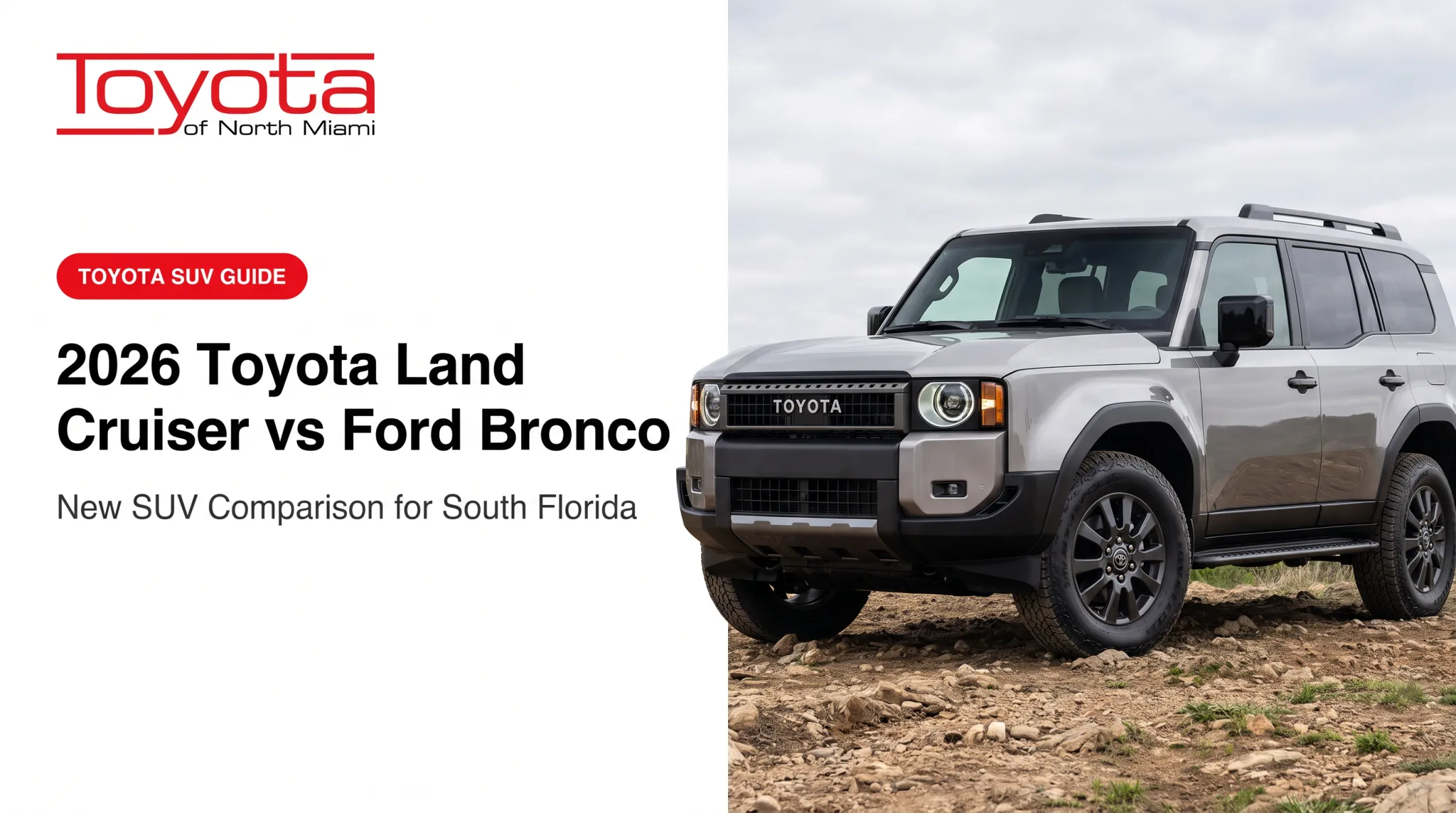
Toyota brought the Land Cruiser back to the U.S. with full-time 4WD standard across its grades, a configuration that puts it in a different category from the 4Runner's part-time setup on lower trims.
Key equipment on current U.S. models:
- Standard center and rear locking differentials
- A two-speed transfer case with genuine low range
- Crawl Control and Multi-Terrain Select on the Land Cruiser grade
- The same 326-hp/465-lb-ft i-FORCE MAX hybrid powertrain found in the 4Runner
Toyota lists a 6,000-lb max tow rating, five-passenger seating, and a 112.2-inch wheelbase. Listed base MSRPs run from roughly $58,180 to $64,255.
Compared to the 4Runner: Land Cruiser standardizes the hardware the 4Runner reserves for upper trims, which simplifies shopping but limits seating to five versus the 4Runner's available seven. If you don't need third-row capacity and want full-time 4WD without chasing the right trim, Land Cruiser is the simpler choice. If you want more configuration options or extra seats, stick with the 4Runner.
Tacoma
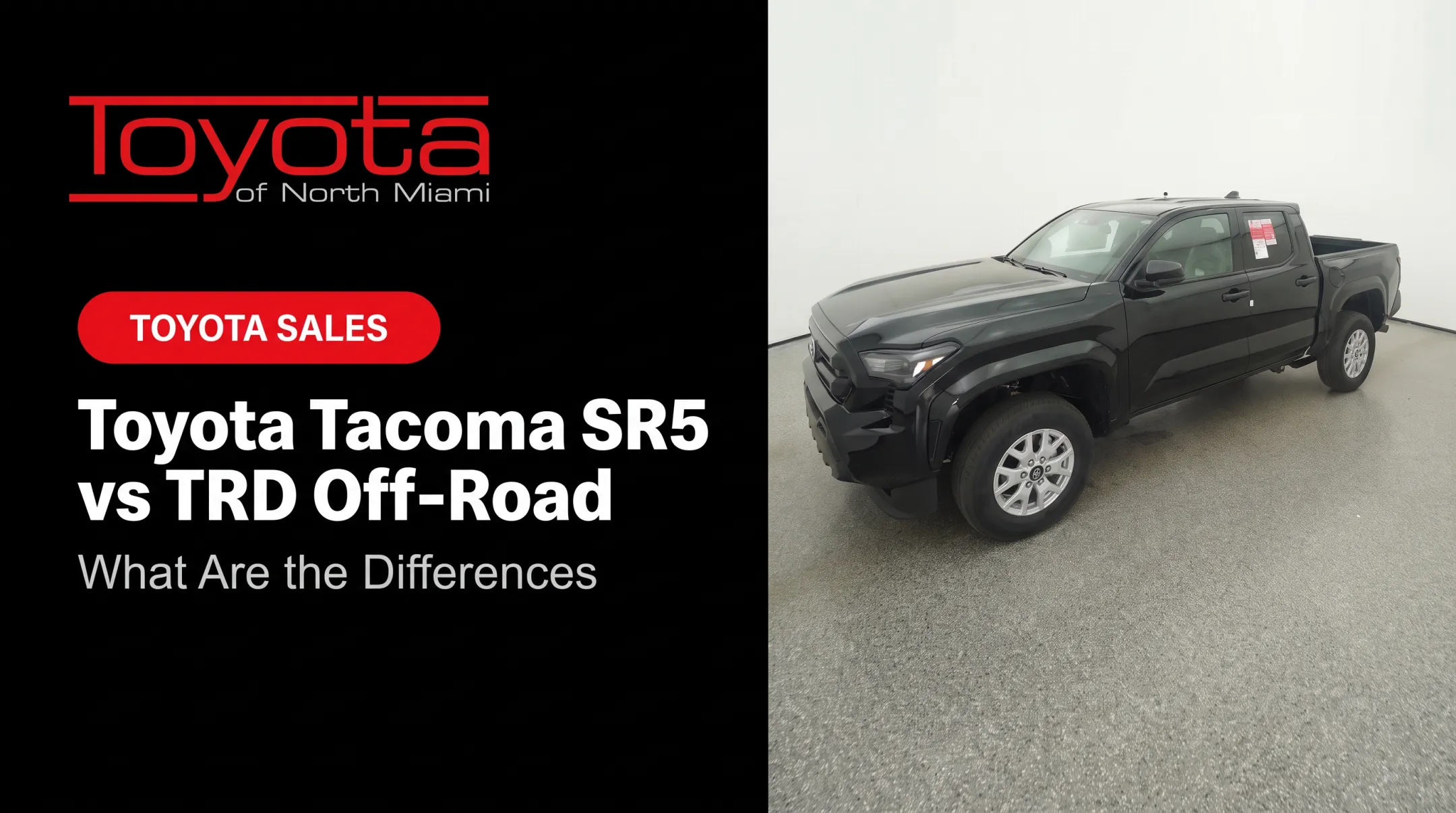
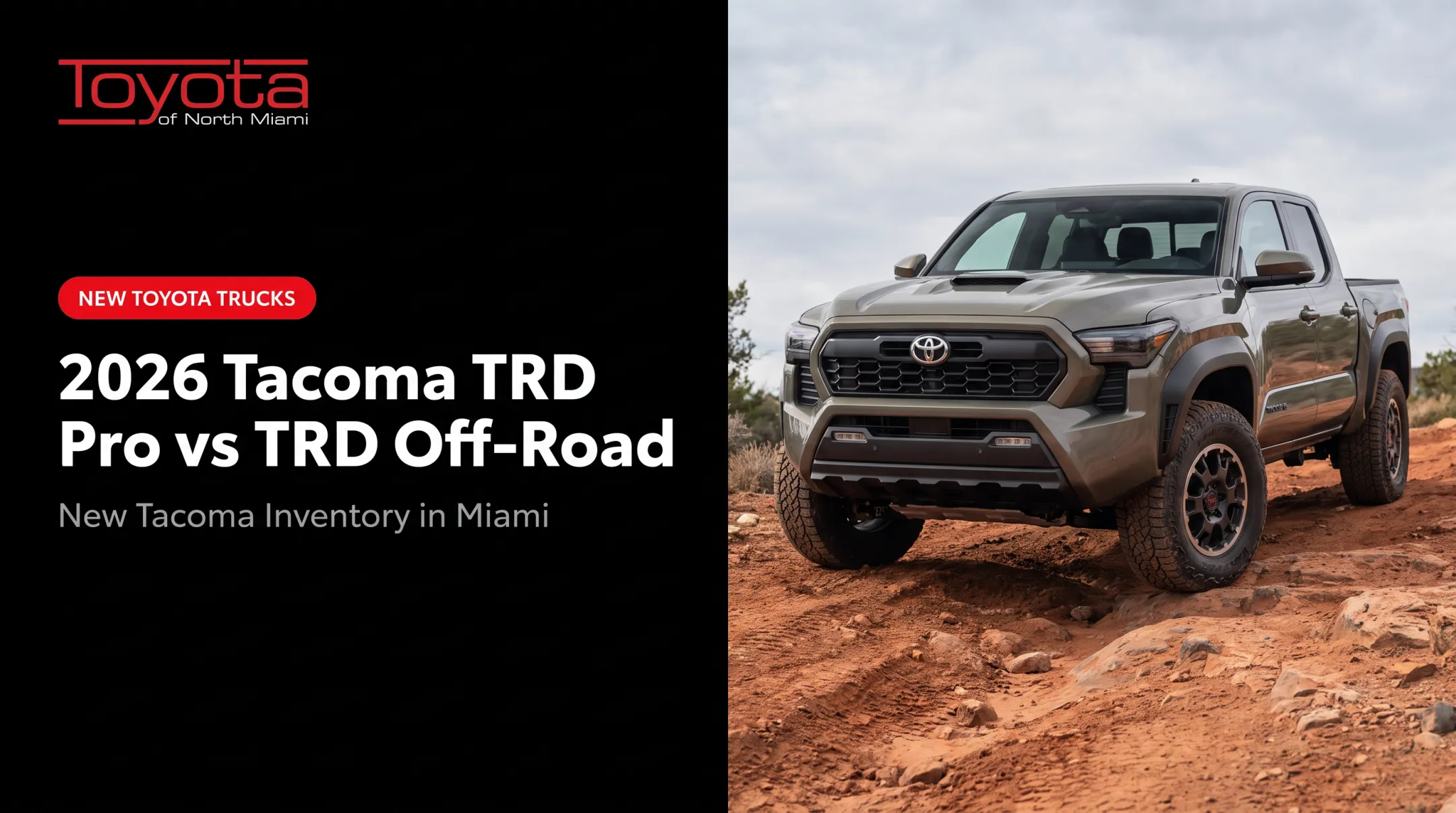
For buyers who need an open bed plus real trail chops, the fourth-generation Tacoma delivers. It's built on the same TNGA-F architecture as the 4Runner, with TRD Off-Road, TRD Pro, and Trailhunter as the relevant 4WD trims.
Trail hardware breakdown:
- Part-time 4WD with an electronically controlled two-speed transfer case (high/low range)
- Electronically controlled locking rear differential
- Multi-Terrain Select, Crawl Control, and Downhill Assist Control
- SDM standard on Pro and Trailhunter, available on Off-Road
- Trailhunter-specific gear: Old Man Emu suspension, an ARB steel rear bumper with recovery points, a modular sport bar with MOLLE panels, and a high-mounted air intake
Toyota's lineup-wide max tow rating is 6,500 lb, though exact figures shift by cab and bed configuration. Listed off-road base MSRPs range from about $42,815 for Off-Road to $64,750 for TRD Pro, with Trailhunter starting near $63,750.
Truck vs. SUV trade-offs: An open bed means you can haul muddy gear without hauling the mud into your cabin, but you lose the enclosed, weatherproof storage an SUV offers. Tacoma's shorter wheelbase than a full-size truck also makes it noticeably easier to place on narrow switchbacks.
Tundra
When towing a travel trailer or hauling heavy gear matters more than squeezing through tight trails, Tundra takes over.
Current TRD Off-Road and TRD Pro both include:
- Rear locking differential
- Multi-Terrain Select, Crawl Control, and Downhill Assist Control
- Multi-Terrain Monitor
Suspension is the main split: Off-Road uses Bilstein shocks, while Pro steps up to 2.5-inch FOX Internal Bypass shocks. Powertrain options include a 389-hp twin-turbo V6 or a 437-hp/583-lb-ft i-FORCE MAX hybrid, with towing capacity up to 12,000 lb when properly equipped.

That capability comes with size:
- 80.2-inch width
- 145.7-inch wheelbase
- 24.3-foot turning radius
The trade-off is clear: Tundra's towing ceiling dwarfs everything else in this lineup, but that same width and wheelbase make it a handful on tight, technical trails where a Tacoma or 4Runner would simply be easier to drive.
Sequoia
Sequoia is the three-row answer for families who still want to reach the campsite, not just the paved parking lot. Every 2026 Sequoia runs the 437-hp/583-lb-ft twin-turbo i-FORCE MAX hybrid, and the off-road package is 4x4-only.
Off-Road and TRD Pro models both include a rear locker, Multi-Terrain Select, Crawl Control, and Multi-Terrain Monitor. Pro upgrades to 2.5-inch FOX coil-overs with rear reservoir shocks, versus the standard Bilstein setup. Toyota lists a 9,520-lb max tow rating across the lineup, with seating up to eight (seven on Pro).
The compromise: the third row doesn't fold completely flat because of the hybrid battery pack, leaving around 22.3 cubic feet of cargo space behind it. If you're loading coolers, bikes, and camping gear for a family of six, test-fit your actual gear before you buy. Sequoia's size also means less maneuverability and higher running costs than a 4Runner.
RAV4 Woodland (or Current Off-Road-Oriented Trim)
The RAV4 Woodland isn't trying to be a rock crawler, and that's fine. It's built for gravel roads, muddy access roads, snow, and trailhead parking lots.
The redesigned Woodland trim offers:
- AWD in both hybrid and plug-in hybrid form, with a dedicated rear electric motor for Electronic On-Demand AWD
- 8.5 inches of ground clearance
- Dunlop GrandTrek all-terrain tires on 18-inch wheels
- A standard 2-inch hitch receiver with up to 3,500 lb of towing capacity
- Drive modes including Trail and Snow, though these are software-based, not a true low-range transfer case
Best buyer fit: Someone who wants fuel efficiency, easy city parking, and the occasional dirt-road adventure without sacrificing comfort. If your trips involve rock ledges or deep mud, a body-on-frame 4WD model like the 4Runner or Tacoma is the better call. RAV4 handles the drive to the trailhead; it's not built for the trail itself.
How We Chose the Best Toyota Off-Road Vehicles
"Best" should be judged against how and where you'll actually drive, not horsepower numbers or styling. Paying for a TRD Pro suspension you'll never test off-pavement doesn't make sense if your trips are mostly dirt roads to a lake house.
The factors that determine trail performance:
- 4WD versus AWD, and whether low-range gearing is included
- Locking differentials and traction-control software
- Suspension travel and ground clearance
- Approach and departure angles
- Underbody protection and tire design
Vehicle size matters just as much as hardware. A shorter wheelbase and narrower body, like the Tacoma's, make tight switchbacks far less stressful. A larger vehicle like the Tundra or Sequoia sacrifices that agility but gains towing capacity and passenger room.
| Model | Drivetrain | Key Trail Equipment | Max Towing |
|---|---|---|---|
| 4Runner | Part-/full-time 4WD | Rear locker, SDM on select trims | 6,000 lb |
| Land Cruiser | Full-time 4WD, low range | Standard center/rear lockers, Crawl Control | 6,000 lb |
| Tacoma | 4WD trail grades | Multi-Terrain Select, Crawl Control, Trailhunter overland gear | 6,500 lb |
| Tundra | Part-time 4WD | Locker, Multi-Terrain Select, Crawl Control | 12,000 lb |
| Sequoia | Part-time 4WD | Locker, Multi-Terrain Select, Crawl Control | 9,520 lb |
| RAV4 Woodland | AWD (hybrid/PHEV) | All-terrain tires, raised clearance | 3,500 lb |

Towing figures are model-wide maximums, not guarantees for every off-road trim. Confirm the specific configuration before pricing a trailer.
Ownership factors worth weighing before you sign:
- Off-road tires wear faster and cost more to replace than standard all-seasons
- Underbody protection reduces repair risk but adds weight and can affect fuel economy
- Modifications beyond factory-installed equipment may affect warranty coverage
- Factory trail packages (like Trailhunter) often cost less than building the same capability aftermarket
Before buying:
- Compare the exact trim and configuration you want
- Inspect current inventory and take a real test drive
- Confirm which equipment is included on that specific unit
Conclusion
Match the vehicle to how you actually drive:
- 4Runner and Land Cruiser: Serious trail capability in an SUV body
- Tacoma: Truck utility with the maneuverability tighter trails demand
- Tundra and Sequoia: Towing capacity or larger family seating takes priority
- RAV4 Woodland: Lighter adventure use without body-on-frame cost or fuel use
Drivetrain, tires, clearance, trail geometry, and towing capacity should drive your decision, not a trim badge or an aggressive-looking grille.
If you're weighing these options in South Florida, Toyota of North Miami carries new and pre-owned inventory across this lineup, along with Toyota Certified Used Vehicles backed by Gold and Silver certification programs. Confirm current trim availability and specifications with the dealership before visiting or purchasing, since equipment and pricing shift by model year.
Frequently Asked Questions
Which Toyota model is best for off-roading?
It depends on your terrain and priorities. The 4Runner suits all-around trail use, the Land Cruiser offers standard full-time 4WD, the Tacoma balances a usable bed with maneuverability, and the RAV4 Woodland handles light trails and gravel roads.
Is Tundra or Tacoma better for off-roading?
Tacoma is more maneuverable and easier to place on narrow, technical trails. Tundra offers far greater towing capacity and power but is wider and harder to maneuver on tight terrain.
Is TRD Pro or TRD Off-Road better?
TRD Pro typically adds more specialized factory suspension and recovery hardware, while TRD Off-Road offers strong core trail capability at a lower price. Verify exact equipment for your specific model year.
Which Toyota 4x4 is the most reliable?
Reliability varies by model year and isn't the same as off-road capability. Check maintenance history, open recalls, and independent reliability data for the specific model year you're considering.
What is the highest rated Toyota SUV?
Ratings depend on the publication and category being measured. Clarify whether you mean off-road capability, family utility, comfort, safety, or overall ownership satisfaction before comparing scores.