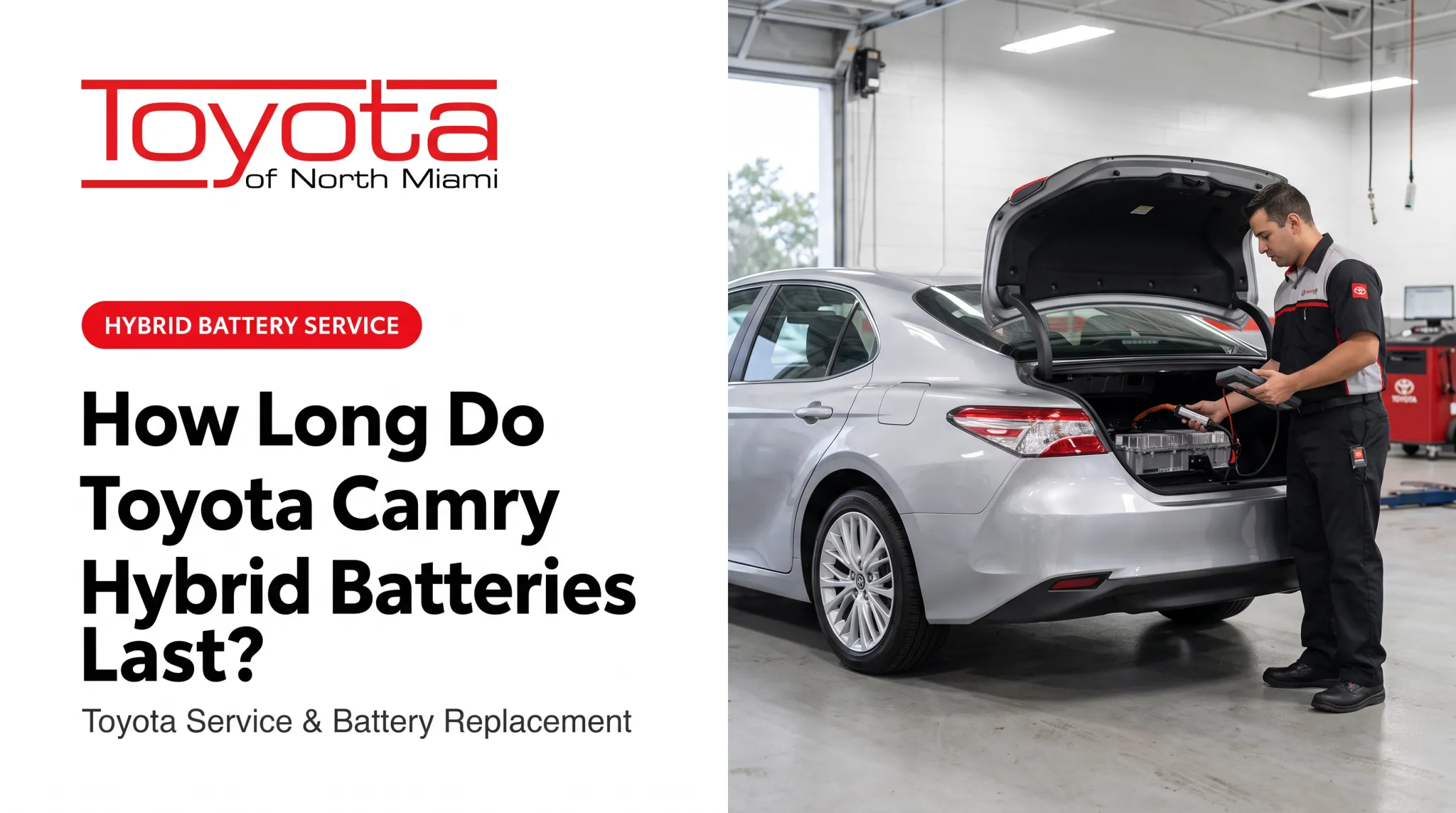
The final price depends on your Camry's model year, the battery's condition, whether you choose new or remanufactured parts, labor rates, and whether a quote includes installation, diagnosis, and fees. This guide breaks down realistic cost ranges, what drives the price up or down, how long these batteries typically last, and how to decide between repair options and replacing the vehicle entirely.
Key Takeaways
- Hybrid battery costs swing widely based on new versus remanufactured parts, labor, and warranty terms
- Model year matters: coverage and part availability differ between 2007–2011, 2012–2017, and newer Camry Hybrids
- Battery lifespan depends on climate, cooling-vent condition, mileage, and driving habits, not a fixed mileage cutoff
- A warning light should trigger a full hybrid-system diagnosis before anyone authorizes a battery swap
- Paying more for a newer, longer-warrantied battery often makes sense only if the rest of the car is sound
How Much Does a Toyota Camry Hybrid Battery Replacement Cost?
There's no single nationwide price tag for this repair, and that trips up a lot of owners doing research online. A number you find on a parts website might cover the battery pack alone. A quote from a dealer or independent shop usually bundles in diagnosis, labor, programming, and disposal fees. Comparing the two directly is comparing apples to oranges.
What Typically Drives the Total
Based on current parts listings and installed-service pricing from hybrid specialists, here's what the total bill generally includes:
- Diagnosis to confirm the battery, not another component, is actually the problem
- The replacement battery itself, new, remanufactured, or used
- Removal and installation labor, which runs longer than a standard battery swap due to high-voltage safety steps
- Programming or calibration in some cases, though not every shop itemizes this separately
- Taxes, shipping, and a refundable core charge on the old pack
- Towing, if the vehicle can't be driven to the shop
New, Remanufactured, or Used: What You're Actually Paying For
Pricing tiers generally break down like this:
- New OEM battery, installed: The priciest option, but it comes with the strongest warranty and the most consistent cell performance.
- Remanufactured or refurbished pack, installed: Existing OEM modules that have been deep-cycled, balanced, and load-tested. Mid-range pricing with a shorter warranty than new.
- Used/salvage pack: The cheapest option upfront, but there's limited standardized testing for these units industry-wide, and warranty support is typically thin.
A cheaper advertised price often means a shorter or less certain warranty. That's not automatically a bad deal, but it's a trade-off you should understand going in.
Why Model Year Changes the Math
Older 2007–2011 Camry Hybrids use a different battery design than 2012–2017 or newer models. Part numbers, availability, and sourcing options vary by generation, so a price quote for one model year isn't a reliable stand-in for another. Always verify the exact battery part number against your VIN before comparing quotes.

Questions to Ask for an Itemized Quote
Before accepting any estimate, ask:
- Is this price installed, or parts-only?
- What warranty applies, and what does it actually cover?
- Is the battery new, remanufactured, or used?
- Are diagnostics included in this price?
- Are core charges, shipping, disposal, or tax extra?
Toyota of North Miami's service department uses factory-trained technicians, genuine Toyota parts, and Toyota-specific diagnostic tools to evaluate hybrid batteries. Rather than quoting a flat price over the phone, the shop can pull up your VIN and give you a specific, itemized estimate.
Key Factors That Affect Toyota Camry Hybrid Battery Replacement Cost
Pricing isn't arbitrary. It reflects technical compatibility, parts availability, labor complexity, warranty risk, and the overall condition of the car.
Camry Model Year and Battery Compatibility
The 2026 Camry Hybrid uses a sealed lithium-ion traction battery rated at 251.6 volts across 68 cells at 3.7 volts per cell, and the 2025 model shares the same specification. Older generations use different chemistry and pack architecture entirely.
A battery that fits a 2015 Camry won't fit a 2022 model, and discontinued packs from the earliest hybrid Camrys can be harder to source than current-generation parts. Always confirm the part number against your specific VIN rather than trusting a generic "fits all Camry" listing.
New, Remanufactured, or Used Battery
Toyota's own parts classifications are worth knowing before you shop around:
- New OEM parts are made by the manufacturer or a licensee and carry the full manufacturer warranty
- Remanufactured parts are used components restored to like-new condition through repair and rebuilding
- Used or salvage parts are pulled from another vehicle with no standardized quality or safety regulation
Toyota is explicit that its warranties do not cover damage or failures caused by imitation or used salvage parts. That's a meaningful detail if you're weighing a bargain option against a documented, warrantied one. A written warranty, clear return policy, and installer support matter more than the sticker price alone.
Labor, Diagnosis, and Installation Location
Hybrid battery work involves insulated tools and high-voltage safety procedures that a standard oil-change technician isn't trained for. Labor rates and required expertise vary between dealership service departments, independent hybrid specialists, and general repair shops.
Shop labor rates across the country commonly fall in the $120 to $159 per hour range, according to PartsTech's 2025 survey. That figure reflects general repair shops broadly, not a dealer-specific or hybrid-certified rate.
Warranty, Coverage, and Vehicle Condition
Before paying anything out of pocket, check your remaining coverage. Toyota's hybrid battery warranty structure has changed over the years:
- Model-year 2020 and later Camry Hybrids carry 10 years/150,000 miles battery coverage nationwide
- The 2026 Camry's warranty guide lists the high-voltage electrical system at 96 months/100,000 miles, with the traction battery itself covered at 120 months/150,000 miles
- Hybrid-related components like the battery control module, hybrid control module, and inverter/converter are covered separately at 8 years/100,000 miles

Coverage terms shifted meaningfully with this update, according to Toyota's warranty announcement. If your Camry falls inside these windows, you may not need to pay for the battery at all. Also weigh the condition of everything else: mileage, engine, transmission, brakes, and tires. A battery replacement makes less sense if another major repair is likely right behind it.
Climate, Cooling, and Driving Conditions
Heat and blocked cooling vents are a documented risk factor for hybrid battery health. Toyota's own technical bulletin addresses malfunction codes P0A80 and P0A7F on 2015–2016 Camry Hybrids caused by dust and debris clogging the battery's cooling fan and internal filter, confirmed in NHTSA's technical bulletin.
Pet hair, dust accumulation, and long stretches of inactivity can all interfere with cooling and battery charge. South Florida's heat and humidity make this a relevant concern for local owners, though it doesn't guarantee a specific failure rate for any individual car.
Low-Cost vs High-Cost Toyota Camry Hybrid Battery Replacement Options
A cheap quote isn't automatically the smart move, and an expensive one isn't automatically the safest bet. The right call depends on warranty strength, installation quality, and how long you plan to keep the car.
Lower-Cost Replacement
A used, refurbished, or remanufactured battery may suit:
- Owners of a high-mileage Camry who want to keep the car running for a limited stretch
- Drivers planning to sell or trade in within a year or two
- Budget-constrained repairs where the car's overall value is modest
Risks to weigh:
- Uncertain usage history on used packs
- Inconsistent cell condition across modules
- Shorter or vaguer warranty terms
- Possible compatibility issues requiring repeat labor
- Limited manufacturer support if something goes wrong
Higher-Cost Replacement
A new or OEM-equivalent battery typically includes newer components, stronger testing documentation, and a longer warranty. This option makes more sense when:
- The Camry is otherwise in strong mechanical condition
- You plan to keep the vehicle for many more years
- You want full parts support if the pack underperforms
Performance, Safety, and Long-Term Value
A properly diagnosed and installed replacement can restore electric-assist function and smoother hybrid operation that had degraded due to a failing battery. Avoid shops that promise a specific fuel-economy improvement, since that depends on too many variables to guarantee.
One safety point worth repeating: high-voltage hybrid battery work requires insulated equipment and trained technicians. This isn't a casual DIY weekend project, and attempting it without the right protective gear is genuinely dangerous.
A cheap battery that fails again within a year often ends up costing more in repeat labor than paying for a better-warrantied unit upfront.
How to Estimate the Right Budget and Avoid Hidden Costs
Start with the basics: your Camry's exact year, VIN, mileage, any warning messages or diagnostic codes, service history, and how long you intend to keep the car.
Before assuming it's the battery:
Get a written diagnosis first. The real culprit could be the 12-volt battery, a clogged cooling fan, a failed sensor, wiring, the inverter, or even a software issue. Don't authorize a full battery replacement based on a warning light alone.
Compare at least two itemized estimates using identical criteria:
- Battery type (new, remanufactured, or used)
- Installation and diagnosis fees
- Warranty duration and exclusions
- Taxes, shipping, disposal, and core charges
- Expected turnaround time
Weighing Repair Against Replacement
Compare the repair cost against your Camry's current market value and the full cost of buying another dependable vehicle. Include financing, registration, insurance, and repairs the replacement car may need soon.
A commonly cited rule of thumb flags a repair as worth reconsidering once it approaches half the vehicle's value, according to Edmunds' repair guidance. That is a screening tool, not an automatic verdict. Repairing an existing car is still often cheaper than financing a new one.
Overlooked expenses that can blow the budget:
- Towing to the shop
- Rental transportation while the car is in the bay
- Repeat labor if a low-cost pack fails early
- Cooling-fan cleaning or repair alongside the battery
- Post-installation diagnostic or calibration work
A simple decision rule: replacement is easier to justify when the rest of the Camry is sound and you plan to keep driving it. It deserves more scrutiny when the car has several other looming issues or the estimate creeps close to the vehicle's realistic resale value.

Conclusion
Toyota Camry Hybrid battery replacement costs vary substantially based on model year, battery choice, labor, diagnosis, warranty coverage, and the condition of the rest of the car. Get a vehicle-specific, itemized quote before you commit to a new, remanufactured, or used battery, or another repair path.
If your Camry Hybrid is showing a warning light or you're just trying to plan ahead, Toyota of North Miami's service team can run a proper diagnostic with factory-trained technicians and genuine Toyota parts. Schedule an inspection or request an estimate before you decide what to do next.
Frequently Asked Questions
How much does it cost to replace the battery in a Toyota Camry Hybrid?
Pricing varies widely depending on whether you choose new, remanufactured, or used, and whether the quote includes labor and diagnosis. Always confirm if a price is parts-only or fully installed, and verify it against your specific model year and VIN.
How much does it cost to replace a Toyota hybrid battery?
Costs differ across Toyota's hybrid lineup since battery size, chemistry, and labor time aren't identical between models. A quote for a Prius or RAV4 Hybrid shouldn't be treated as a stand-in for Camry Hybrid pricing.
How long will the battery last in a Toyota Camry Hybrid?
There's no universal mileage or age cutoff. Climate, cooling-vent condition, driving habits, and maintenance all influence how long a pack lasts, and some tested packs have shown meaningfully different degradation at similar mileage.
How long do Toyota hybrid batteries usually last?
Toyota's warranty on batteries from model-year 2020 onward runs 10 years or 150,000 miles, whichever comes first. That coverage window isn't the same as the battery's expected failure point. Many packs outlast their warranty term.
Is it worth replacing a Toyota hybrid battery?
Replacement often makes financial sense when the rest of the Camry is reliable and you plan to keep it. Factor in a confirmed diagnosis, the car's market value, upcoming repairs, and remaining warranty before deciding.
Will a hybrid run with a dead battery?
A fully discharged or failed traction battery can prevent the hybrid system from starting normally, or push the car into a reduced-power, fail-safe mode. Don't keep driving on a high-voltage warning. Get it diagnosed by a qualified hybrid technician.