Introduction
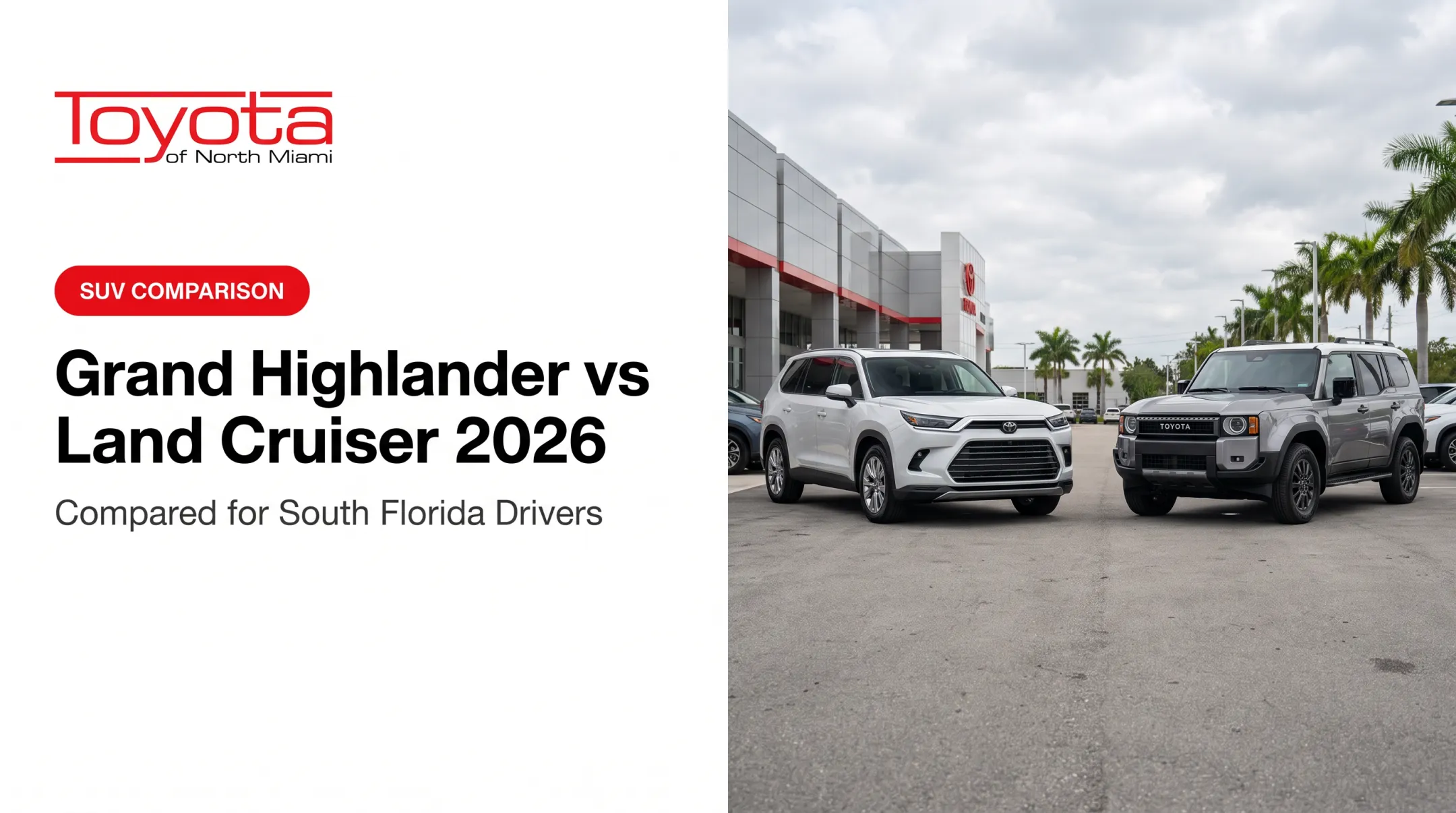
The Toyota Grand Highlander comes in two core setups: a gas-only engine and a standard hybrid system. A separate Hybrid MAX option exists too, but that is a performance play, not an efficiency one.
Both configurations seat up to eight and share the same three-row body, so the real decision comes down to what is under the hood. Shoppers often weigh a lower starting price and higher towing ceiling on the gas model against the hybrid’s lower fuel use in stop-and-go city driving.
This guide breaks down price, EPA fuel economy, performance, towing, drivetrain options, and ownership costs for both powertrains. Specs vary by model year, trim, and drivetrain, so treat the figures here as a starting point for your own research.
Key Takeaways
- The gas Grand Highlander wins on lower entry cost, familiar driving feel, and towing capacity.
- The standard hybrid trades some towing capability for noticeably better fuel economy, especially in traffic.
- Annual mileage, driving conditions, and towing needs should drive your decision more than sticker price alone.
- Hybrid MAX is a separate, power-focused option and shouldn't be confused with the standard hybrid.
- Always confirm current pricing, EPA ratings, and trim availability before you buy.
Grand Highlander Gas vs. Hybrid: Quick Comparison
Purchase Price
Toyota's 2026 lineup lists the gas Grand Highlander starting at $42,260, while the standard Hybrid starts around $44,710 — a premium of roughly $2,450 at the base trim level. At the XLE trim, the gap narrows to about $1,750 between comparable gas and hybrid configurations.
Dealer listings show how that premium plays out in practice:
- A 2026 Grand Highlander Limited FWD (gas) lists at a total SRP of $53,762
- A 2026 Grand Highlander Hybrid Limited AWD lists at $58,030
Weigh that premium against fuel savings over however long you plan to keep the vehicle. MSRP, destination charges, and incentives change often, so verify current numbers before comparing trims.
Fuel Economy and Driving Range
This is where the hybrid earns its keep. Here's how EPA ratings compare across trims, according to fueleconomy.gov's data:
| Configuration | City / Highway / Combined MPG |
|---|---|
| Gas FWD (LE/XLE/Limited) | 21 / 28 / 24 |
| Gas AWD (LE/XLE) | 21 / 27 / 23 |
| Gas AWD (Limited/Platinum) | 20 / 26 / 22 |
| Standard Hybrid FWD | 37 / 34 / 36 |
| Standard Hybrid AWD | 36 / 32 / 34 |
The combined-MPG gap, roughly 12 to 14 mpg, adds up fast for anyone racking up highway miles or sitting in Miami traffic daily.
Based on Toyota's listed 17.8-gallon tank, that translates to a theoretical range difference of well over 200 miles between a gas AWD model and a hybrid FWD model on a full tank.

Real-world results will vary. Traffic, cold weather, tire choice, cargo load, and whether you're running AWD can all shift your actual mpg up or down from the EPA sticker.
Powertrain and Driving Character
The two powertrains don't just differ in efficiency. They feel different behind the wheel.
Gas-only Grand Highlander:
- 2.4-liter turbocharged 4-cylinder engine
- 265 hp at 6,000 rpm, 310 lb-ft of torque at 1,700-3,600 rpm
- Direct Shift-8AT 8-speed automatic transmission
Standard Hybrid:
- 2.5-liter gas engine paired with electric motors and a battery
- 245 combined net horsepower
- Electronically controlled continuously variable transmission (ECVT)
The hybrid leans on electric assistance at low speeds, which makes it quieter pulling away from a stoplight and smoother in school-pickup-line traffic. The gas model, with its conventional turbo and 8-speed, feels more familiar during sustained highway acceleration and passing.
Towing and Utility
Towing capacity is one of the clearest dividing lines between the two. According to Toyota's official press materials:
- Gas-powered grades: up to 5,000 lbs.
- Standard Hybrid grades: up to 3,500 lbs.
- Hybrid MAX grades: up to 5,000 lbs.
If you regularly tow a boat, camper, or trailer near that 5,000-lb ceiling, the standard hybrid likely isn't enough. You'd be choosing between the gas model and Hybrid MAX, not the efficiency-focused hybrid.
Always confirm the exact towing rating for your specific trim and hitch setup rather than assuming "Grand Highlander" means one universal number.
Drivetrain and Ownership Considerations
Drivetrain availability also shifts by powertrain:
- FWD: Available on gas LE, XLE, and Limited trims, and on Hybrid XLE
- AWD (Dynamic Torque Control): Available on gas LE, XLE, Limited, and Platinum
- Electronic On-Demand AWD: Available on Hybrid grades
- Full-time electronic AWD: Standard on Hybrid MAX
On the ownership side, hybrid coverage includes:
- Hybrid battery: 10-year/150,000-mile warranty
- EV drive components: Transaxle, inverter, and battery capacity below 70%, covered for 8 years/100,000 miles
Check the current Warranty and Maintenance Guide for your model year, since terms can be updated.
What Are the Grand Highlander Gas and Hybrid Models?
Gas Grand Highlander
The gas-only Grand Highlander is the conventional option: a turbocharged engine, an 8-speed automatic, and none of the added hybrid hardware. It's built for shoppers who want a familiar driving experience, a lower starting price, or maximum towing flexibility.
It offers straightforward refueling and predictable engine behavior. That suits drivers who spend most of their time on the highway or regularly haul heavy loads.
Fuel use runs higher than the hybrid, especially in stop-and-go traffic. Estimate annual fuel costs with your actual mileage and local gas prices before you decide.
Gas makes the most sense if you:
- Tow regularly or need maximum towing capacity
- Want to minimize purchase price
- Drive mostly highway miles with modest annual mileage
- Prefer a conventional driving feel
Standard Grand Highlander Hybrid
The standard hybrid pairs a gas engine with electric motors, a battery, and regenerative braking that captures energy normally lost during braking. No plug-in charging is required. It simply recharges itself as you drive.
This setup shines for families doing school runs, errands, and city commuting, where regenerative braking gets the most use.
The standard hybrid is tuned for efficiency, not power. Hybrid MAX takes a different path, trading some fuel economy for 362 net horsepower and quicker acceleration.

Practical notes:
- Higher starting price than the gas model
- Towing capped at 3,500 lbs on standard hybrid trims
- Trim availability can be more limited, so check current inventory
- Compare the price premium against realistic fuel savings before deciding
Grand Highlander Gas vs. Hybrid: What Is Better for You?
Compare Total Cost of Ownership
A rough break-even calculation looks like this: take the hybrid's price premium, divide it by your estimated annual fuel savings (based on your yearly mileage, the mpg difference, and local fuel prices), and see how many years it takes to recoup the difference.
That said, don't treat fuel savings as the only variable. Financing terms, insurance, taxes, maintenance costs, resale value, and manufacturer incentives can all shift the real-world math in either direction.
Choose Gas If Capability and Upfront Cost Matter Most
The gas Grand Highlander is the better fit if you:
- Tow close to the vehicle's maximum rating
- Prefer a conventional powertrain feel
- Drive relatively few miles per year
- Want to keep the purchase price as low as possible
Match towing needs to the exact trim and hitch configuration you're buying, not just the "Grand Highlander" name. Capacity swings significantly between gas, standard hybrid, and Hybrid MAX.
Choose the Standard Hybrid If Fuel Savings and City Driving Matter Most
The standard hybrid is the stronger pick for high-mileage commuters, families doing frequent stop-and-go driving, and buyers planning to keep the SUV long enough to recoup the price premium through fuel savings. No charging cords, no plugs, just a self-charging system that works in the background.
Still, verify the hybrid's towing capacity meets your needs before ruling out the gas model entirely.
Consider Performance, Comfort, and Road-Trip Use
According to Car and Driver's testing, the gas Grand Highlander runs 0-60 mph in about 7.0 seconds, while the standard hybrid comes in at 7.8 seconds. Hybrid MAX is quicker still at 5.6 seconds, but that's a different powertrain entirely and shouldn't factor into a gas-versus-standard-hybrid decision.

Both versions keep the same three-row layout and family-friendly cabin, so this really is a powertrain and pricing decision, not a seating one. A back-to-back test drive, covering stop-and-go traffic, highway merging, braking feel, and third-row access, will tell you more than any spec sheet.
Real-World Buying Examples
Family Commuter
Think of a family doing daily school drop-offs, weekend errands, and about 12,000 miles a year, mostly around town.
A 2026 Grand Highlander Hybrid XLE FWD, listed around $51,080 total SRP with 37/34 mpg city/highway, can justify its premium over a comparable gas model once you factor in local fuel prices and how long you plan to keep the vehicle.
Road-Trip and Towing Buyer
For a buyer who tows a travel trailer a few times a year and logs heavy highway miles, the gas model is the stronger fit.
A 2026 Grand Highlander Limited FWD (gas), listed around $53,762 with 21/28 mpg city/highway, offers the towing headroom the standard hybrid can't match. If you want more power with towing, a Hybrid MAX Platinum AWD (around $63,325) is worth cross-shopping too.
Consumer Reports has noted that observed mpg for the related Highlander Hybrid ran close to its EPA rating, suggesting Grand Highlander Hybrid owners can expect similarly consistent real-world results, though your mileage will still depend on driving style and conditions.
Ready to compare actual inventory instead of spec sheets? Toyota of North Miami lets you browse current Grand Highlander gas and hybrid stock, value a trade-in, explore financing, and schedule a test drive before you commit.
Conclusion
The gas Grand Highlander generally fits buyers who want a lower upfront price, conventional performance, and maximum towing capacity. The standard hybrid makes more sense for drivers prioritizing fuel efficiency and frequent city driving.
Your final call should weigh:
- Annual mileage and how much city driving you do
- Towing requirements and payload needs
- Upfront budget versus long-term fuel savings
- How long you plan to keep the vehicle
- The exact trim and drivetrain you're considering
Before you decide, confirm current Toyota specifications and take both versions for a test drive. Toyota of North Miami's online tools can help you compare trims, value a trade-in, and explore financing as your next step.
Frequently Asked Questions
Is the Grand Highlander Hybrid worth the extra cost?
It depends on your annual mileage, fuel prices, and driving conditions. High-mileage city drivers often recoup the premium through fuel savings, while low-mileage or highway-heavy drivers may not. Run the numbers using current pricing before deciding.
Why is the Grand Highlander cheaper than the Grand Highlander Hybrid?
The gas model uses a conventional powertrain with simpler manufacturing costs. The hybrid adds electric motors, a battery pack, and additional hybrid-system hardware, which raises the price. Exact differences vary by model year and trim.
Which is better, the Grand Highlander or the Grand Highlander Hybrid?
The gas model tends to win on upfront cost and towing capacity, while the standard hybrid wins on fuel savings and urban driving comfort. Compare specific trims, current EPA ratings, and your intended use before choosing.