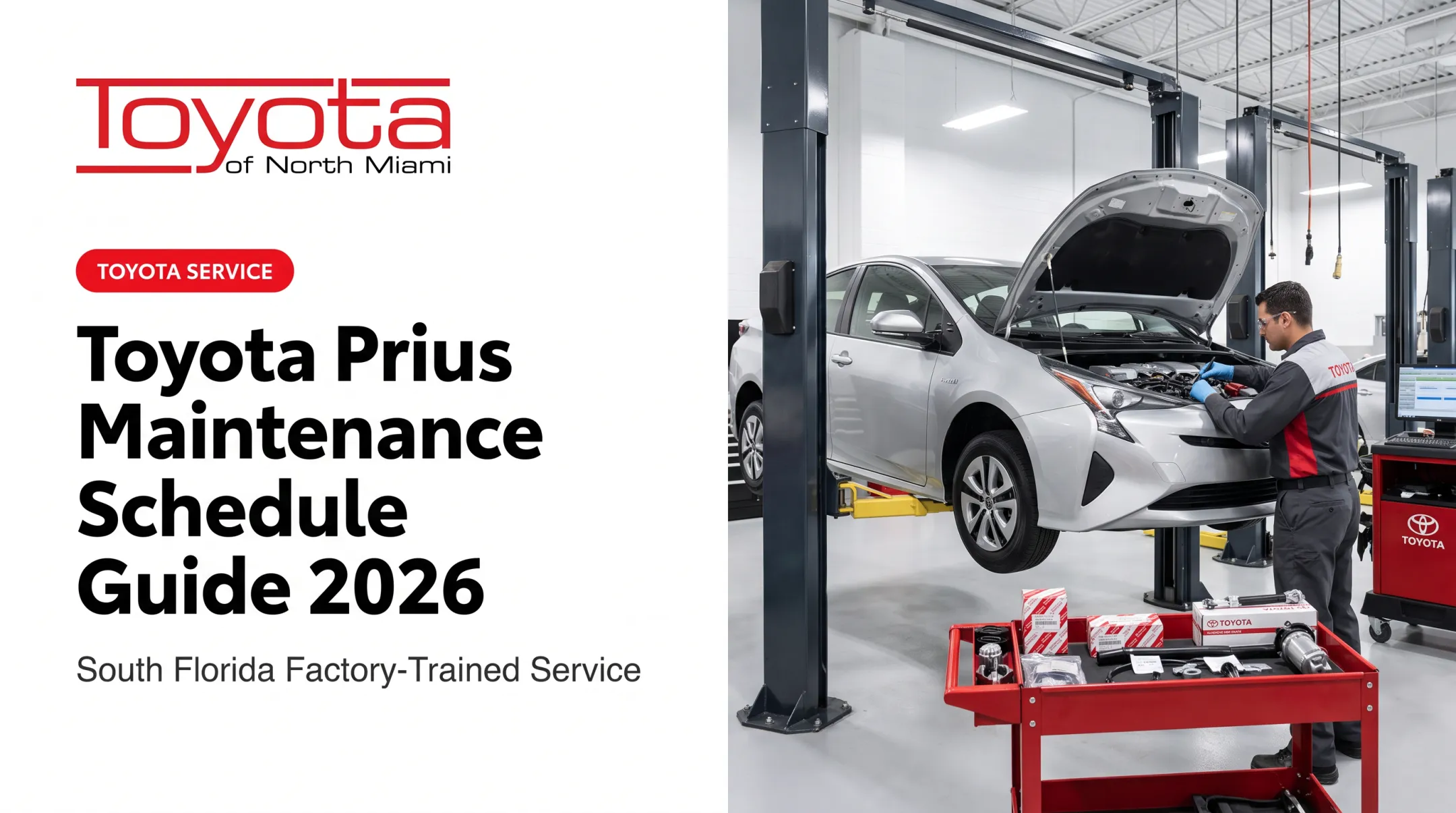
Routine work like oil changes, tire rotations, brake inspections, and coolant service is fairly easy to budget for. Hybrid battery, inverter, air-conditioning, and electronic-system repairs are a different story. These can show up as large, one-time bills that catch owners off guard.
This guide separates routine maintenance from major repairs, breaks down what drives Prius pricing, and shows what to check before buying a high-mileage model. All figures below are current U.S. estimates from industry pricing sources, not quotes for your specific vehicle.
Key Takeaways
- Routine Prius maintenance averages well below many midsize competitors, but major hybrid repairs can still run into the thousands.
- Your maintenance interval, generation, mileage, and choice of repair shop all swing the final bill significantly.
- A high-mileage Prius can be a smart buy with strong records, a healthy battery, and no open warning lights.
- Thorough diagnostics upfront usually cost less than fixing a misdiagnosed repair later.
How Much Does Toyota Prius Maintenance Cost? Pricing Overview and Cost Breakdown
There's no single number that answers "what does Prius maintenance cost." Pricing shifts based on model year, generation, mileage, your local labor rate, and whether you're driving a standard Prius or the plug-in Prius Prime. A 2010 Prius and a 2023 Prius don't share a maintenance schedule, a battery design, or a repair bill.
Don't budget off the purchase price alone. Underbudgeting leads to skipped maintenance, which snowballs into bigger repairs. On the flip side, an unclear estimate can lead you into paying for services you didn't actually need.
Typical Cost Categories
Routine and mileage-based maintenance covers most of what a Prius owner pays for in a given year:
| Service | Estimated Cost | Notes |
|---|---|---|
| Oil and filter change | $136–$196 | Based on a 2016 Prius estimate; varies by ZIP code |
| Coolant flush | $259–$323 | Engine coolant only, not inverter coolant |
| Spark plug replacement | $256–$366 | Excludes taxes and fees |
| Wheel alignment | $110–$167 | Varies by shop and region |
| Transmission/transaxle fluid service | $266–$376 | Toyota doesn't universally require a full flush |
| Pre-purchase inspection | $183–$269 | Worth every dollar on a used Prius |
Major repairs sit in a different category entirely. These include:
- Brake booster replacement: roughly $1,034–$1,194 on older model years
- Head gasket replacement: approximately $2,586–$3,564
- A/C refrigerant line replacement: around $778–$885
- Hybrid traction battery replacement: $1,250–$2,250 for a standard Prius pack; Prime high-voltage packs can run $15,394–$15,581 at dealer rates, depending on generation and warranty

Always ask whether a quote includes diagnostic fees, shop supplies, taxes, hazardous-material charges, software programming, towing, or a rental car. These add-ons can turn a "reasonable" estimate into a surprise.
Cost Breakdown by Expense Type
Think of Prius costs in four buckets:
- Scheduled service: oil changes, tire rotations, and multi-point inspections tied to your Maintenance Guide, not dealer upsells.
- Recurring ownership costs: tires, fuel, insurance, and registration (worth knowing, though this guide stays focused on maintenance and repair).
- Maintenance and repairs: brakes, fluids, filters. Regenerative braking reduces wear on pads in stop-and-go driving, but it doesn't eliminate the need for inspections or eventual repairs.
- Periodic replacements: the 12-volt battery, tires, wiper blades, and filters wear out on a schedule, separate from unexpected failures.
At Toyota of North Miami, full synthetic oil and filter changes start around $59.99 with current specials, a useful benchmark for dealer pricing versus an independent shop.
Key Factors That Affect Toyota Prius Maintenance and Repair Costs
A low average repair bill doesn't guarantee every Prius repair will be cheap. Several variables determine where you land on the cost spectrum.
Model Year, Generation, and Powertrain
Each Prius generation uses different battery chemistry, engines, and cooling architecture:
- Gen 2 (2004–2009): NiMH battery packs, simpler electronics
- Gen 3 (2010–2015): 1.8-liter engine, 28 NiMH modules at roughly 201.6V
- Gen 4 (2016–2022): Li-ion or NiMH options, redesigned transaxle
- Gen 5 (2023+): 2.0-liter engine, newly developed Li-ion battery
The Prius Prime complicates things further. It carries a larger battery (8.8 kWh on 2017 models, 13.6 kWh starting in 2023), plug-in charging hardware, and its own warranty terms.
Battery defect coverage runs 10 years or 150,000 miles on 2020-and-later hybrids and Primes, while other hybrid components carry 8 years or 100,000 miles, according to Toyota's battery warranty announcement. Gradual capacity loss on the Prime, though, isn't a covered defect.

Mileage, Age, and Maintenance History
Age and mileage both take a toll, just on different parts. Rubber hoses, seals, and drive-shaft boots deteriorate with time regardless of miles driven. Brakes, tires, and the 12-volt battery wear with use.
A complete service history tells you more than the odometer ever will. Two Prius models with 120,000 miles can be in completely different condition depending on whether fluids were changed on schedule or deferred for years.
Hybrid Battery and Electrical-System Condition
It helps to know what you're actually dealing with under the hood:
- High-voltage traction battery: powers the hybrid drive system
- 12-volt auxiliary battery: runs accessories and starts the system
- Inverter: converts battery power for the electric motors
- Battery cooling system: keeps the traction battery within operating range
Watch for hybrid-system warning lights, a noticeable drop in fuel economy, unusual battery-state fluctuations, or cooling-fan noise. None of these alone confirms a failing battery, but any of them justifies a professional scan before you keep driving on it.
Service Provider, Parts, and Diagnostic Approach
Dealer, independent hybrid specialist, or DIY: each comes with trade-offs.
- Dealers bring factory training, genuine parts, and warranty-backed work
- Independent specialists can be competitive on price but vary widely in hybrid expertise
- High-voltage repairs require proper safety procedures, so don't cut corners on qualifications
Genuine Toyota parts, accurate scan-tool diagnosis, and a written estimate all protect you from the price creep that comes with guesswork repairs.
Driving Conditions and Climate
Stop-and-go traffic, short trips, extreme heat, and long idle periods all affect tires, brakes, fluids, and battery cooling differently.
Toyota's own service bulletins call for inspecting the hybrid battery's intake filter every 5,000 miles and cleaning it every 20,000 miles on applicable models. Dust and debris buildup can restrict cooling and hurt fuel economy.
Low-Cost vs High-Cost Prius Ownership — What's the Difference?
Two Prius models with the same mileage can cost dramatically different amounts to own. The difference usually comes down to history, not luck.
Routine-Service Prius
A lower-cost Prius typically has:
- Timely scheduled maintenance with documented records
- Normal, consistent tire and brake wear
- A hybrid system that operates without warning lights
- No deferred fluid changes
Higher-Repair-Risk Prius
A higher-cost Prius often shows:
- Aging traction battery or inverter issues
- Neglected coolant or fluid service
- Accident history or body damage
- Multiple unresolved warning lights
- Gaps in the maintenance record
Long-Term Value
The cheapest repair quote or purchase price isn't always the lowest total cost. Weigh the repair cost against the vehicle's remaining service life, its resale value, and what it would cost to replace it outright. A $2,000 repair on a Prius worth $12,000 with clean records is a very different decision than the same repair on a $4,000 car with an unclear history.

For owners weighing a repair decision, Toyota of North Miami can inspect the car with factory-trained technicians, genuine Toyota parts, and dealer-level diagnostic equipment. Online scheduling and express-maintenance options make it easier to get a clear answer. A proper inspection beats guessing, and no shop should promise a specific repair price before looking at the vehicle.
How to Estimate the Right Prius Repair Budget and Avoid Missed Costs
Start with specifics, not averages. You'll want:
- The exact model year, trim, and Prius or Prius Prime designation
- Odometer reading and VIN
- Any active warning lights
- Full maintenance records
- How long you plan to keep the vehicle
Build Separate Budget Lines
Don't rely on one annual average number. Instead, plan for:
- Routine scheduled maintenance: oil, filters, rotations
- Normal wear items: tires, brakes, wipers, 12-volt battery
- Diagnostic inspections: especially before buying used
- Unexpected major repairs: the category you hope to avoid but should still fund
Compare your specific model year's maintenance schedule against any written estimate. It should clearly separate labor, parts, fees, and taxes, and distinguish recommended work from required work.
Pre-Purchase Checklist for a Used Prius
Before buying a used Prius, budget for:
- A pre-purchase inspection (typically $183–$269)
- A hybrid-system scan and battery-condition assessment
- Tire tread measurement and brake inspection
- A check for fluid leaks, accident history, and open recalls
- Confirmation that maintenance records are complete
Commonly overlooked costs add up fast if you don't plan for them:
- Diagnostic fees and 12-volt battery replacement
- Alignment after tire work and cooling-fan cleaning
- Towing, rental transportation, and post-repair calibration or programming
When to Repair, When to Get a Second Opinion
Repairing generally makes sense when:
- The vehicle has documented history and the issue is isolated
- The body and interior are in good shape
- Remaining service life justifies the cost
Pause and get a second opinion when:
- Several unrelated systems need work at once
- The estimate approaches the car's market value
- Battery diagnosis seems inconclusive, or the shop can't clearly explain the recommendation
Conclusion
Toyota Prius maintenance costs are easiest to manage when you separate routine scheduled service from the occasional major repair. Budget for both up front rather than reacting after something fails.
Model year, mileage, battery condition, service history, driving conditions, parts quality, and labor rates all shape the final bill.
Before approving expensive work or buying a high-mileage Prius:
- Pull the maintenance records
- Match them to the manufacturer's service intervals
- Get a professional hybrid-system diagnosis
- Insist on a written estimate
That preparation costs far less than guessing. Factory-trained technicians at Toyota of North Miami can run the hybrid check with genuine OEM parts and put the numbers in writing before you commit.
Frequently Asked Questions
How much does a full service for a Toyota Prius cost?
It depends on model year, mileage, which scheduled items are due, local labor rates, and how the shop defines "full service." Ask for an itemized estimate rather than a flat number.
Is the Toyota Prius expensive to maintain?
Routine maintenance is affordable, with annual repair costs averaging around $408 compared to $652 across all models, according to RepairPal's reliability index. Hybrid-system, battery, or inverter repairs can still be costly when they occur.
What maintenance does a Prius need at 100,000 miles?
Check your specific model year's schedule, but expect fluid and filter service, brake and tire inspections, spark plugs where applicable, and a look at hybrid-system operation. Confirm there are no open recalls or unresolved warning lights.
How much does it cost to replace a Prius Prime battery?
Pricing varies widely by model year, battery availability, labor, and warranty coverage, ranging from roughly $2,500 for a remanufactured pack to over $15,000 through some dealer estimates. Confirm the diagnosis before committing to a replacement.
Is it worth buying a Prius with 200,000 miles?
It can be, if service records are complete, the hybrid battery and drivetrain check out, there's no accident history, and the purchase price reflects likely future repairs. A pre-purchase inspection is non-negotiable at this mileage.
Can a Prius last over 300,000 miles?
Some Prius models reach 300,000-plus miles with consistent care. Consumer Reports documented a second-generation Prius exceeding 200,000 miles in its own testing. Longevity depends more on maintenance and driving conditions than on mileage alone.