
That decision got more complicated this year. The 2026 Toyota RAV4 dropped its gas-only engine entirely, moving to an all-electrified lineup built around standard hybrid and plug-in hybrid powertrains. Toyota's materials for the new model year were updated as recently as May 2026, so specifics can shift between now and your purchase date.
This guide breaks down every 2026 RAV4 trim, compares the models shoppers most often confuse, and helps you match a configuration to your budget, driving habits, and charging access. Always confirm final availability and pricing before you buy.
Key Takeaways
- Trim level sets equipment and styling; powertrain and drivetrain are separate choices you'll make alongside it
- 2026 lineup spans LE, SE, XLE Premium, Woodland, XSE, and Limited, each hybrid or plug-in hybrid
- Choose the trim you'll use daily, not the one with the longest feature list
- Always compare MSRP, destination charges, packages, and current incentives before signing anything
What Are 2026 RAV4 Trim Levels and Why Do They Matter?
A trim level is a specific equipment package attached to a model name. It sets your wheels, seating material, infotainment screen size, safety tech, and starting price in one bundle.
Toyota doesn't let you mix and match freely between trims, so know what each one includes before you lock onto a price tag.
The 2026 model year adds another layer: powertrain choice. The RAV4 comes as a standard hybrid (HEV) or a plug-in hybrid (PHEV), and not every trim is offered both ways.
- Standard hybrid: No charging required, refuels like a regular gas vehicle, lower upfront cost
- Plug-in hybrid: Needs regular charging to maximize savings, higher purchase price, longer electric-only range
A higher trim isn't automatically the right call. Someone who rarely uses heated seats or a panoramic sunroof shouldn't pay extra for them. Meanwhile, a family doing daily school runs might find a power liftgate genuinely worth the upgrade.
When comparing trims, look past the name. Drivetrain (FWD vs. AWD), optional packages, and regional inventory all change the real-world price and feel. Two "XLE Premiums" on the same lot can differ by thousands depending on what is installed.
Confirm current MSRP, EPA fuel-economy ratings, and warranty terms with Toyota before you buy, since published figures can change mid-model-year. The sections below break down each 2026 RAV4 trim so you can match features to your budget and driving needs.

2026 Toyota RAV4 Trim Levels Compared
The six 2026 RAV4 trims move from value-focused to comfort-driven, sport-styled, adventure-ready, and premium configurations. Plug-in hybrid versions of several of these trims add a distinct, higher-capability branch to the lineup.
LE
The LE is the entry point, built around a 2.5-liter hybrid system producing 226 net combined horsepower in FWD form or 236 hp with AWD. It comes standard with Toyota Safety Sense 4.0, Blind Spot Monitor with Rear Cross-Traffic Alert, a 10.5-inch touchscreen with six speakers, and a 12.3-inch digital gauge cluster.
Other standard features include:
- 17-inch alloy wheels
- Fabric-trimmed seats
- Backup camera with dynamic guidelines
- 60/40 split fold-flat rear seat
Toyota lists LE's official starting MSRP at $31,900 before destination charges. Dealer inventory pricing varies by configuration; Toyota of North Miami's lot has shown LE FWD examples around $34,500 and AWD versions near $35,900 once freight and equipment are factored in.
Who should buy it? Shoppers who want the lowest possible entry price while keeping modern safety tech intact. What you give up: power seats, upgraded audio, a power liftgate, and the convenience features found on every trim above it.
SE
SE builds on the LE with sportier styling and real comfort upgrades, not just cosmetic trim. Standard equipment includes 18-inch black sport alloy wheels, blue interior stitching, heated front seats, an 8-way power driver's seat, and front/rear parking assist with automatic braking.
Blind Spot Monitor is already standard on both LE and SE, so it is not an SE-only upgrade. The real jumps are heated seats, power driver positioning, and parking assist.
SE's base MSRP sits at $34,700, roughly $2,800 above LE. For shoppers who'll actually use heated seats through winter or appreciate the sportier wheel design, that premium is easy to justify. If none of those features matter to you, LE remains the stronger value play.
XLE Premium
XLE Premium shifts focus toward comfort. It adds SofTex-trimmed seating, a height-adjustable power liftgate with jam protection, heated front seats, and front/rear parking assist with automatic braking. Base MSRP is $36,100.
This trim suits families and daily commuters who want a more refined cabin without chasing sport styling or off-road capability. The power liftgate alone is a meaningful upgrade for anyone regularly loading groceries or strollers with their hands full.
Woodland
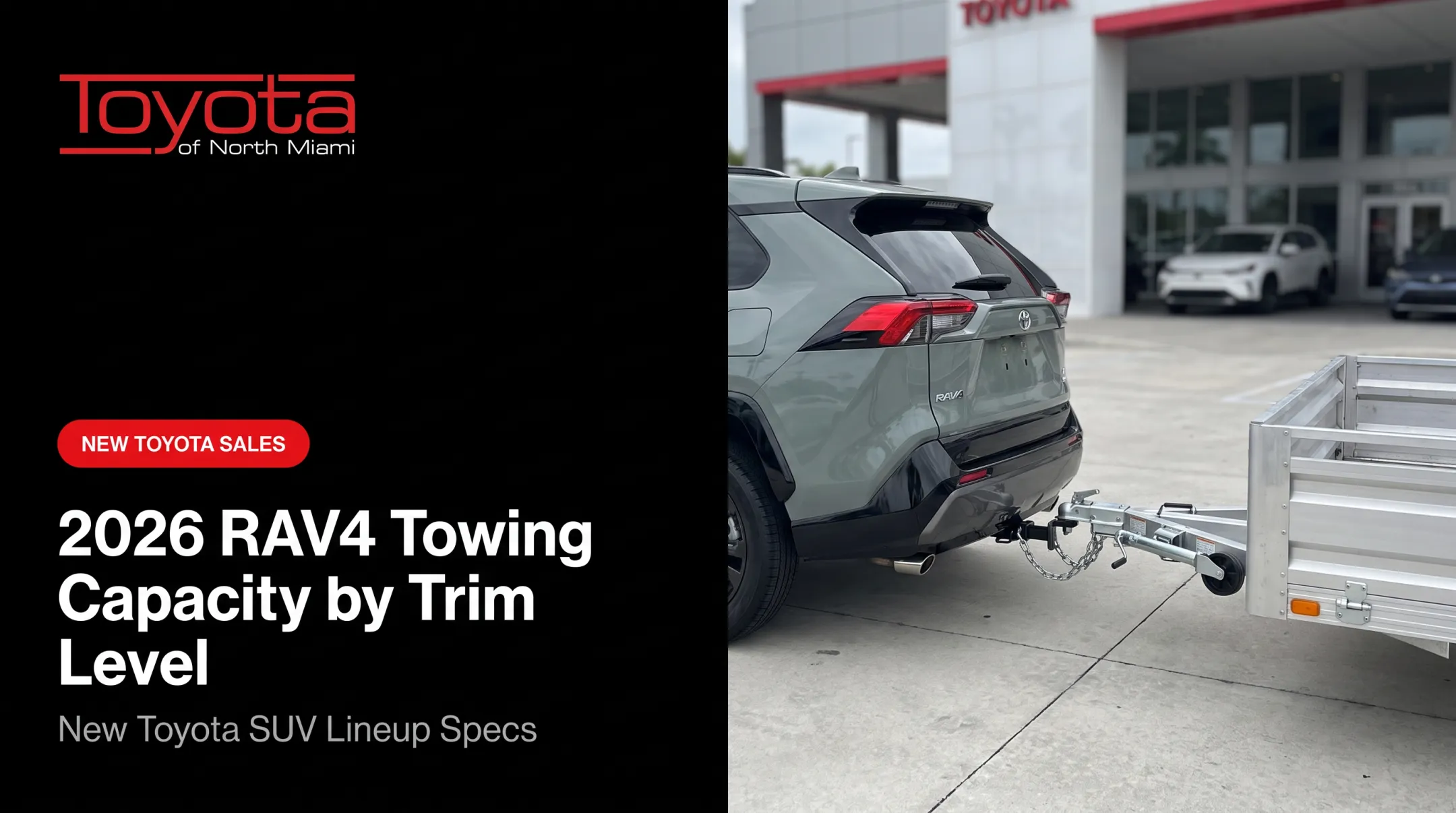
Woodland is Toyota's adventure-styled trim, and it's genuinely different under the skin. It comes standard with AWD, Dunlop GrandTrek all-terrain tires, raised black roof rails with crossbars, and a 2-inch rear tow-hitch receiver with wiring harness already installed.
Key Woodland specs:
- Ground clearance: 8.5 inches (vs. 8.1 inches on LE AWD)
- Towing capacity: 3,500 lb
- Base MSRP: $39,900
Rugged styling and all-terrain tires aren't the same as a dedicated off-roader. Woodland handles gravel roads, light trail use, and towing small trailers comfortably, but it is not built for rock crawling or serious backcountry work.
Expect slightly more road noise from those all-terrain tires and a small efficiency hit versus the standard hybrid trims. Test-drive one before you commit.
XSE
XSE leans into sport-premium styling with standard AWD, 20-inch black sport alloy wheels, and Ultrasuede/SofTex seating. It gets the larger 12.9-inch Toyota Audio Multimedia display, an 8-way power driver's seat with memory, and heated/ventilated front seats. Base MSRP is $41,300.
Toyota's head-up display is available on the plug-in hybrid XSE, not the standard hybrid version. If a HUD matters to you, look at the PHEV trim instead.
Compared with SE, XSE's appeal is almost entirely about styling, display size, and seat comfort rather than added capability. Compared with Limited, XSE trades some convenience tech for sportier wheels and suspension tuning.
Limited
Limited is the top standard-hybrid trim, built for buyers who want maximum convenience. Standard features include a 9-speaker JBL Premium Audio system with subwoofer, SofTex seating, heated and ventilated front seats, heated rear outboard seats, and a 3D Panoramic View Monitor with Advanced Park.
Additional driver-assistance tech includes Front Cross-Traffic Alert, Lane Change Assist, and Traffic Jam Assist. Base MSRP lands at $43,300.
Limited makes sense for buyers who'll genuinely use advanced parking assistance or premium audio regularly. If your priority is simply a comfortable, capable hybrid without the extra tech layer, XLE Premium delivers most of the daily-use comfort for roughly $7,000 less.
Plug-in hybrid trims
The 2026 RAV4 Plug-in Hybrid comes in four grades: SE, Woodland, XSE, and GR SPORT. All are standard AWD with 324 net combined horsepower and a Toyota-estimated 0-60 mph time of 5.4 seconds.
| PHEV Grade | MSRP | EPA-Est. Electric Range | Onboard Charger |
|---|---|---|---|
| SE | $41,500 | 54 miles | 7 kW |
| Woodland | $45,300 | 49 miles | 11 kW |
| XSE | $47,200 | 52 miles | 11 kW |
| GR SPORT | $48,500 | 49 miles | 7 kW |

Woodland and XSE add DC fast-charge capability, cutting a 10%-to-80% charge to roughly 30 minutes under ideal conditions. SE and GR SPORT rely on Level 2 home charging, taking about 4 hours for the same charge.
A PHEV makes sense if you can charge regularly at home, drive mostly short trips within the electric range, and are comfortable paying more upfront for lower running costs.
According to IRS guidance, the federal Clean Vehicle Credit isn't available for vehicles acquired after September 30, 2025. Don't assume a 2026 RAV4 PHEV purchase automatically qualifies. Verify eligibility directly before factoring any incentive into your budget.
How to Choose the Right 2026 RAV4 Trim
Start with your priorities, not the trim's prestige. Are you after the lowest cost, the most comfort, sportier looks, outdoor capability, or electric-driving savings? That answer narrows the field fast.
Budget and total ownership cost
MSRP is only the starting point. Add destination charges, dealer fees, financing or lease terms, insurance, and expected fuel or electricity costs before comparing trims honestly.
- Lower monthly payments can hide longer terms, mileage overage fees, or more cash due at signing
- A recent RAV4 LE lease example ran $299 per month for 36 months with about $4,993 due at signing, excluding tax, tag, and dealer fees
- Always confirm what is bundled into an advertised payment before you compare trims
Daily driving and powertrain needs
If you don't have reliable access to home or workplace charging, a standard hybrid will likely serve you better day-to-day than a PHEV sitting unplugged.
Drivetrain choice is the other daily filter. FWD suits most paved commutes and delivers slightly better fuel economy, while AWD earns its keep in snow, rain, or when you tow regularly.
Comfort, technology, and family use
Match features to how you'll actually use the vehicle:
- A power liftgate matters if you load kids and cargo constantly
- Heated rear seats matter when passengers ride in cold weather often
- A 12.9-inch screen is nice, but it won't change your commute the way a power liftgate will
Outdoor and capability requirements
If you regularly haul gear or hit unpaved roads, Woodland deserves a close look. But verify the official towing rating, cargo dimensions, and roof-load guidance for your exact configuration rather than relying on marketing language about "adventure-ready" styling.
Compare the finalists in person
Numbers only tell part of the story. Before deciding, sit in the driver's seat, check second-row space, test the parking-camera view, and get a feel for ride quality on an actual test drive.
Toyota of North Miami carries new RAV4 inventory spanning LE through Limited, plus plug-in hybrid configurations as they arrive. Their team can walk you through current availability, run financing or lease numbers side by side, and get you behind the wheel of two or three finalists the same day.
What to Check Before Finalizing a Trim
Before you sign anything, confirm that the specific vehicle in front of you matches what you expect, not just the trim name.
- Verify the build sheet - Confirm trim, drivetrain, installed packages, MSRP, and destination fee match what was advertised
- Check feature dependencies - Some equipment is package-only or tied to a specific drivetrain; don't assume a feature is standard just because a higher trim has it
- Think past the purchase - Factor in charging access for a PHEV, replacement-tire costs for all-terrain rubber, and expected insurance differences
- Match against real inventory - Not every color, package, or drivetrain combination is sitting on the lot; some may require a factory order and extra wait time
Don't choose the most loaded trim just because it has the longest feature list. Pick upgrades you'll use often enough to justify the extra cost.

Conclusion
The cleanest way to understand the 2026 RAV4 lineup is to separate four things: trim level, powertrain, drivetrain, and optional packages. Each answers a different question about what you're buying.
- LE or SE for the best value
- XLE Premium for everyday comfort
- Woodland for light-duty adventure use
- XSE for sportier premium styling
- Limited for maximum convenience tech
- Plug-in hybrid if you charge regularly and want that electric range
Specifications and pricing can shift during the model year, so confirm current numbers before you commit. Compare available inventory at Toyota of North Miami and schedule a test drive to see which trim feels right once you're in the driver's seat.
Frequently Asked Questions
What are the different models of the Toyota RAV4?
The 2026 RAV4 hybrid lineup includes LE, SE, XLE Premium, Woodland, XSE, and Limited. Plug-in hybrid versions are offered in SE, Woodland, XSE, and GR SPORT. Confirm current availability with Toyota, since naming and offerings can shift.
Which model of Toyota RAV4 is the best to buy?
There's no single best trim. It depends on your budget, how often you'll use comfort features, whether you can charge a plug-in hybrid regularly, and whether you need Woodland's light off-road equipment.
What are the key differences between the RAV4 LE and SE trim levels?
SE adds 18-inch sport wheels, heated front seats, an 8-way power driver's seat, and parking assist with automatic braking for roughly $2,800 more than LE. Blind Spot Monitor is standard on both trims.
Is RAV4 SE or XLE better?
SE suits buyers who want sportier styling and strong value, while XLE Premium leans toward comfort with SofTex seating and a power liftgate. Neither is objectively better; it depends on what you'll use daily.
Which is better, RAV4 XLE or Limited?
XLE Premium delivers strong everyday comfort at a lower price, while Limited adds premium JBL audio, ventilated seats, and advanced parking tech for about $7,000 more. Limited suits buyers who'll use that extra tech regularly.
Is the RAV4 Prime worth the extra money?
A plug-in hybrid RAV4 is worth it if you can charge regularly at home and your trips fall within its electric range, typically 49 to 54 miles. Factor in the higher purchase price and check current incentive eligibility before deciding.