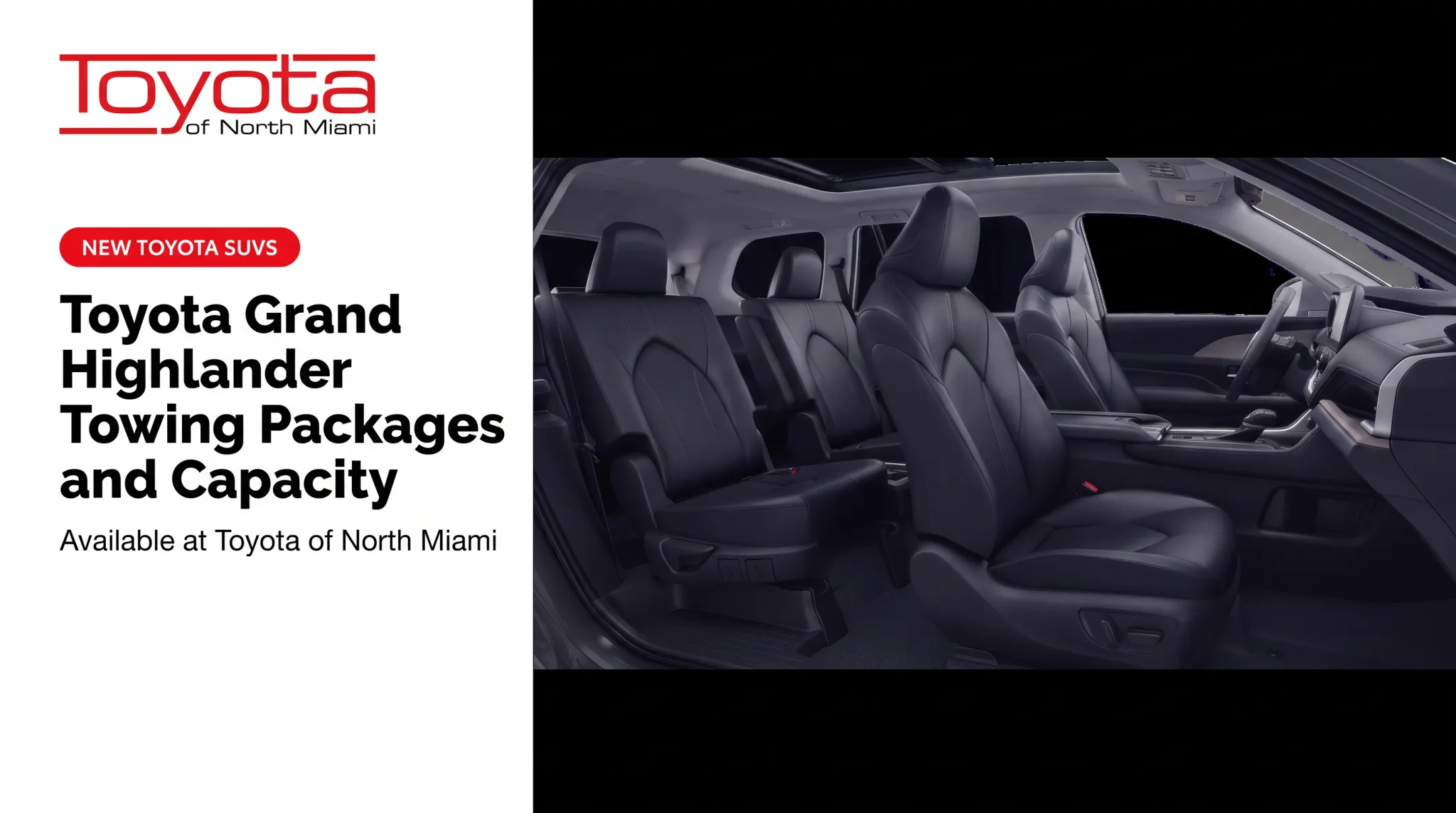
Towing capacity on the 2026 Toyota Highlander changes based on powertrain, drivetrain, installed tow equipment, and how much weight is already riding inside the cabin. Many buyers assume the headline figure applies across the board, then find out at the dealership — or worse, at the hitch — that their configuration rates lower.
Toyota's own disclosures make this explicit: maximum towing depends on curb weight plus the weight of cargo, passengers, and any added equipment. That's not a fixed number. It's a ceiling that moves depending on how the vehicle is built and loaded.
This guide breaks down the verified 2026 figures, what triggers them, the related weight ratings you need to check alongside towing capacity, and how to confirm your exact Highlander before you hook up a trailer.
Key Takeaways
- Gas-powered 2026 Highlanders (2.4L turbo, AWD) reach up to 5,000 lbs of towing capacity
- Hybrid 2026 Highlanders (2.5L, AWD) max out at 3,500 lbs
- Every 2026 Highlander comes standard with AWD — there's no FWD configuration this model year
- Your owner's manual, certification label, and VIN-specific build sheet override any general marketing figure
- Payload, tongue weight, GVWR, and GCWR all need checking alongside the headline tow rating
What Towing Capacity Represents and What Affects It
Towing capacity isn't the weight stamped on a trailer at the factory. It's the maximum loaded trailer weight (hitch, cargo, water tank, batteries, and all) that Toyota certifies as safe for that specific vehicle configuration, under conditions the manufacturer specifies.
That distinction matters because trailer listings often advertise dry weight (empty, no supplies). A trailer that looks fine on paper can exceed your Highlander's limit once it's packed for a trip.
Towing capacity functions as a system-wide constraint, not a single component spec. It accounts for:
- Engine and transmission output under sustained load
- Cooling system capacity for extended climbs or hot weather
- Chassis, suspension, and brake performance with added weight
- Hitch rating and tire load limits
- Stability and traction control calibration
Towing capacity, payload, and GVWR are three different numbers. Payload is what's left for passengers, cargo, and gear after subtracting curb weight from Gross Vehicle Weight Rating (GVWR).
Every passenger and suitcase you add reduces the trailer weight you can safely tow. The combined vehicle-plus-trailer weight still has to stay under Gross Combined Weight Rating (GCWR).
Factors That Influence the 2026 Highlander's Rated Capacity
The 2026 Highlander ships with a 2.4-liter turbocharged four-cylinder gas engine producing 265 horsepower and 310 lb-ft of torque, paired with an 8-speed Direct Shift automatic transmission. All-wheel drive is now standard across the entire lineup. There's no front-wheel-drive Highlander this year, gas or hybrid.
A few things shift the real-world number:
- Tow package equipment: frame-mounted hitch receiver, wiring harness, and related hardware help the vehicle reach its rated capacity
- Driving conditions: hills, heat, elevation, and stop-and-go traffic demand more from the cooling system and brakes than flat highway miles
- Load distribution: how cargo sits inside the trailer affects tongue weight and stability, independent of total trailer weight
- Vehicle condition: worn tires, aftermarket wheels, or a tired cooling system can drop your practical limit below the certified rating
Toyota calculates these ratings using the SAE J2807 towing-capacity method, an industry testing protocol built specifically to standardize how manufacturers measure maximum trailer weight across different vehicle types.
2026 Toyota Highlander Towing Capacity Range
Here's the figure most shoppers actually want, broken down by powertrain, since the two aren't close.
Nominal Capacity by Configuration
| Configuration | Maximum Towing Capacity | Notes |
|---|---|---|
| Gas 2.4L Turbo, AWD | Up to 5,000 lbs | Toyota's 2026 brochure ties this figure to the turbo engine |
| Hybrid 2.5L, AWD | Up to 3,500 lbs | Confirmed via Toyota's hybrid pressroom |
The gas-powered Highlander carries the highest rating in the 2026 lineup. Toyota's published materials don't break the 5,000-lb figure down grade-by-grade across the four gas trims, so don't assume every gas Highlander hits that number without checking the individual vehicle's certification label.
Hybrid models top out at 3,500 lbs, a full 1,500 lbs lower than gas. If you're cross-shopping a hybrid for fuel savings but plan to tow a travel trailer or larger boat, that gap can rule out the hybrid entirely depending on your trailer's loaded weight.
Neither figure assumes an empty cabin. Toyota's manual bases these ratings on a vehicle with one driver, one front passenger, and the towing package installed (not a stripped-down test mule).

Allowable Limits and Operating Margin
The rated maximum is a ceiling, not a target. A loaded trailer at exactly 5,000 lbs with passengers, cargo, and a loaded cooler on board can push the combination over GCWR even though the trailer alone is "within limits."
Related ratings that apply on top of the headline number, per the 2026 Owner's Manual:
- GCWR: 10,600 lbs (gas configuration): the combined weight of loaded vehicle and loaded trailer
- Unbraked towing limit: 1,000 lbs: trailers above this weight need their own functioning brakes
- Tongue weight: 9%–11% of gross trailer weight is Toyota's recommended range
Short trips at the rated limit on flat terrain are a different situation than repeated towing up mountain grades in summer heat. Your hitch rating, trailer brake condition, and tire load limits can all create a practical ceiling lower than the vehicle's headline rating, so check all of them, not just the biggest number.
Key Towing Properties and How to Verify Them
A published rating tells you what's possible. It doesn't tell you what's installed on your specific Highlander.
Identifying the Correct Vehicle Rating
Start with the driver-door certification label. It lists GVWR and axle weight ratings specific to that VIN, not the trim level in general. Then cross-reference:
- The owner's manual section covering your exact engine and drivetrain
- Toyota's official weights-and-capacities specification page
- VIN-specific build information from the dealer
- The window sticker, if the vehicle hasn't been sold yet
Confirm the engine (gas vs. hybrid), trim, and any factory-installed tow equipment before comparing against a trailer's loaded weight. A Highlander Limited and a Highlander XLE can carry different equipment even within the same powertrain.

Checking the Hitch and Tow Package
Toyota's Tow Hitch Receiver with Wire Harness is engineered specifically to help the Highlander reach its maximum rating. It includes a step pad for rear access and a complete wiring harness for trailer lights. Trailer balls come in 1⅞-inch or 1-inch diameters depending on coupler size.
A visible hitch doesn't confirm the full package is installed. Look for:
- The frame-mounted receiver (positioned high for ground clearance)
- A functioning trailer wiring connector, not just a receiver tube
- Toyota-listed mounting hardware rather than a generic aftermarket bracket
Adding a receiver or wiring after the fact does not raise the factory-rated towing capacity. Confirm compatibility through Toyota documentation or a qualified technician, not assumption.
Measuring the Actual Trailer Load
Use the trailer's actual loaded weight: water tank full, propane tanks filled, gear packed, batteries installed. Dry weight from a trailer brochure is close to meaningless once you've loaded it for a trip.
Before towing, run through this checklist:
- Tire pressures on both vehicle and trailer
- Wheel and trailer-light function
- Safety chains properly crossed and secured
- Coupler latched and locked
- Breakaway cable attached
- Brake controller calibrated, if your trailer has electric brakes
- Mirrors adjusted for trailer width
- Cargo secured and weight distributed toward the axle
Toyota's disclosures are blunt about this: never exceed load capacity, since doing so risks tire damage and blowouts. The only way to know your exact curb weight is to actually weigh the vehicle.
Service and Purchase Verification
If you're unsure whether a package, wiring, or rating applies to your Highlander, have a qualified Toyota service technician inspect it. Toyota of North Miami can check towing equipment and confirm fitment as part of routine service for drivers across Miami-Dade and Broward County.
Shopping for a new or used Highlander specifically to tow? Confirm the exact VIN's towing equipment and rating before you buy — don't assume every 2026 model on the lot carries the same capability.
Risks of Exceeding the Recommended Range and Common Misinterpretations
Overloading a tow vehicle doesn't fail gracefully. It degrades multiple systems at once:
- Braking distance increases while stopping power decreases
- Acceleration and passing power drop off
- Transmission and cooling systems run hotter under sustained strain
- Tires face excess load, raising blowout risk
- Hitch and suspension components wear faster
- Trailer sway becomes harder to control
A trailer that looks small or light isn't automatically within limits. Loaded weight, tongue weight, and whether the trailer has functioning brakes all matter more than the trailer's physical size.
Common Misinterpretations to Correct
- The advertised maximum doesn't apply to every powertrain: gas and hybrid Highlanders differ by 1,500 lbs
- Dry trailer weight and the vehicle's towing capacity measure two different things entirely
- An aftermarket hitch, helper springs, or larger tires don't raise Toyota's certified rating
- Vehicle capability and legal compliance are separate questions; brake thresholds, lighting rules, and safety-chain requirements vary by state
California's DMV towing guide, for instance, requires brakes on trailers at 1,500 lbs gross weight or more. Check your own state's rules before you hit the road.
Safe Operation Near the Limit
Towing close to the rated maximum calls for a more conservative approach than towing well under it:
- Distribute cargo toward the trailer axle, keeping tongue weight within the 9%–11% range
- Allow extra stopping distance. loaded combinations don't brake like an unloaded vehicle
- Monitor temperature gauges and dashboard warnings throughout the trip
- Reduce speed in wind, rain, heavy grades, or when you feel trailer sway starting
Pull over and reassess if you notice overheating, unusual braking behavior, excessive sway, or any warning light. Your owner's manual is the first reference; a qualified technician is the second.

Conclusion
The 2026 Highlander's towing capacity isn't one number. It shifts with powertrain, drivetrain, and installed equipment. Gas models reach 5,000 lbs; hybrids top out at 3,500 lbs. Neither figure is automatic.
Safe towing means checking the loaded trailer against towing capacity, payload, tongue weight, GVWR, GCWR, hitch rating, and tire limits together, not just the biggest number on the spec sheet.
Before you tow near any limit, verify your exact vehicle using current Toyota documentation and get a qualified technician involved if anything's unclear.
Frequently Asked Questions
What is the Toyota Highlander's towing capacity?
The 2026 Highlander tows up to 5,000 lbs with the gas 2.4L turbo engine and up to 3,500 lbs with the hybrid 2.5L system, both in AWD. Confirm your specific vehicle's rating in the owner's manual before towing.
How can I tell if my Highlander has a tow package?
Check for a frame-mounted hitch receiver, a functioning trailer wiring connector, and Toyota-listed mounting hardware — not just a generic receiver tube. A hitch alone doesn't confirm the full package; verify through your VIN-specific build sheet or a dealer.
How much does it cost to add a tow package to a Toyota Highlander?
Cost depends on your trim, whether OEM components and wiring are already installed, and labor at your dealer. Get a vehicle-specific quote, and remember that adding equipment doesn't change Toyota's factory-rated towing capacity.