Introduction
Standing in a dealership lot, every car shopper eventually faces the same fork in the road: a standard used car with the lowest sticker price, or a certified pre-owned (CPO) vehicle with extra inspection and manufacturer-backed protection.
This choice shapes your upfront cost, financing terms, warranty coverage, and how much repair risk you're willing to carry. Get it wrong, and you could pay more for peace of mind you didn't need, or save a few thousand dollars only to face a surprise transmission bill six months later.
Recent Cox Automotive data shows CPO sales remain a large share of the used-car market nationally. Plenty of buyers pay for that extra layer of assurance.
This guide breaks down both options so you can decide based on your budget, risk tolerance, and how much warranty coverage actually matters to you.
Key Takeaways
- "Used" and "pre-owned" both mean previously owned vehicles; CPO is the subset that passes a manufacturer certification program
- Standard used cars offer more price flexibility, but buyers handle inspection and history checks themselves
- CPO vehicles cost more upfront in exchange for inspection standards, warranty coverage, and added benefits
- Choose based on total ownership cost and protection, not just the window-sticker price
Used vs Certified Pre-Owned Cars: Quick Comparison
Price
A non-CPO used car almost always carries a lower advertised price. Age, mileage, trim level, accident history, and local demand all push that number up or down — a five-year-old sedan with 80,000 miles will cost far less than a two-year-old model with 20,000.
Certification adds a premium. According to Edmunds' 2026 analysis, a three-year-old non-luxury CPO vehicle costs about $1,328 more on average, a 4.3% premium over a comparable traditional used car. That's an industry-wide figure, not a guarantee for every brand or trim, so compare actual listings before assuming the gap.
Inspection and Reconditioning
With a standard used car, the inspection responsibility falls on you. Before buying, request or arrange:
- A vehicle history report showing title status, accident records, and prior ownership
- An independent mechanical inspection covering brakes, suspension, and engine diagnostics
- A check of fluid levels, tire tread, and brake pad wear
- Documentation of any prior collision repairs
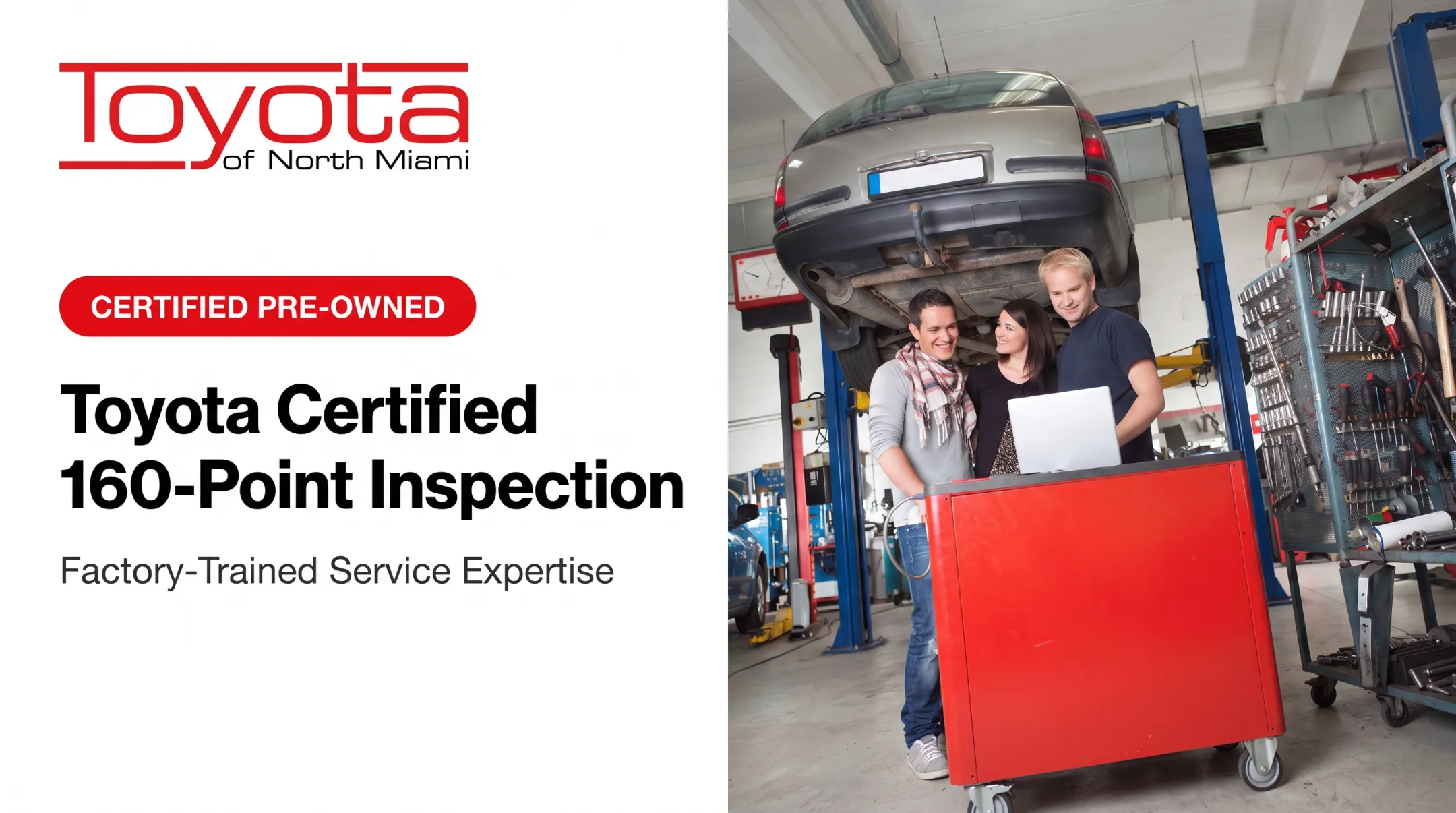
CPO vehicles go through a defined, manufacturer-mandated process instead. Toyota's Gold Certified program, for example, requires a 160-point Quality Assurance Inspection, while Silver Certified vehicles undergo a 136-point inspection. Reconditioning happens according to the automaker's own standards before the car ever reaches the lot.

Warranty and Ownership Protection
A used car's coverage depends entirely on what's left. That might mean:
- Remaining factory warranty (if the car is young enough)
- A dealer-added warranty or service contract
- Nothing at all — an "as is" sale with zero protection
Read every exclusion and mileage cap before signing. CPO programs build coverage in from the start. Toyota's Gold tier pairs a 12-month/12,000-mile comprehensive warranty with a 7-year/100,000-mile powertrain warranty, plus 24-hour roadside assistance for the same term. Silver includes a 12-month/12,000-mile powertrain warranty and matching roadside assistance, but skips the comprehensive coverage entirely.
Vehicle History and Condition
A clean history report is reassuring, but it doesn't catch everything. It won't flag poor driving habits, deferred maintenance, or every flood or fire event. This applies to both used and CPO vehicles alike.
Certification adds a screening layer, not a guarantee. The FTC's used car guide notes that a mechanical inspection is still a good idea even on a certified, warrantied vehicle. Review the certification checklist, open recalls, and warranty start date regardless of which type you're buying.
Financing and Availability
Used-car shoppers get the widest net — more ages, trims, mileage ranges, and price points to choose from. Financing terms shift based on the vehicle's age, your credit profile, and your down payment.
CPO buyers sometimes gain access to manufacturer-backed finance programs. Toyota Financial Services, for instance, offers standard new-car financing rates on qualified Gold Certified purchases. Compare the full picture — APR, loan term, fees, and total amount financed — not just the monthly payment number.
What Is a Used Car?
A used car is any previously owned vehicle sold through a dealership, private seller, or other channel. "Pre-owned" is the same thing dressed in friendlier marketing language: both terms point to a vehicle that's already had at least one owner.
The advantages are straightforward:
- Lower entry price than a comparable new vehicle
- Access to discontinued trims, colors, or feature packages
- A wide selection spanning ages, mileage, and budgets
That flexibility comes with homework. Buyers need to verify:
- Title status and odometer accuracy
- Ownership and maintenance records
- Accident or flood history
- Open recalls
- Tire and brake condition
- Any remaining warranty coverage
Toyota of North Miami's used inventory, for example, spans everything from a 2022 Corolla LE at $16,615 with 54,773 miles to a 2023 RAV4 XLE at $28,950 with a CARFAX 1-Owner badge and 25,568 miles. That range illustrates the point: "used" covers a lot of ground, and the right fit depends on what you're checking under the hood, not just the price tag.

Use Cases of a Used Car
A standard used car tends to make the most sense when:
- Minimizing purchase price is the top priority
- You're hunting for a specific older model, trim, or feature combination no longer sold new
- You have access to a trusted independent mechanic who can verify condition
- Your budget has room for unexpected maintenance down the line
If you're comfortable pulling a vehicle history report, arranging your own inspection, and budgeting for the occasional repair, a well-maintained non-CPO car can deliver real savings without meaningful added risk.
What Is a Certified Pre-Owned Car?
A certified pre-owned vehicle is a used car that meets an automaker's eligibility rules and passes that manufacturer's required inspection, with reconditioning completed to the program's documented standards. Not every "certified" label means the same thing, though. Some dealers use third-party certification backed by independent warranty companies rather than factory programs.
Toyota runs two distinct tiers, and the differences matter:
| Feature | Gold Certified | Silver Certified |
|---|---|---|
| Age/mileage eligibility | Up to 6 model years, 85,000 miles or less | Up to 10 model years, 60,000–125,000 miles |
| Inspection points | 160-point minimum | 136-point minimum |
| Comprehensive warranty | 12 months/12,000 miles | Not included |
| Powertrain warranty | 7 years/100,000 miles | 12 months/12,000 miles |
| Roadside assistance | 7 years/100,000 miles | 12 months/12,000 miles |
| Deductible | $0 | $0 |
Both tiers include a free CARFAX Vehicle History Report and coverage honored at more than 1,400 Toyota dealers across the continental U.S. and Canada. Gold also adds travel protection: up to $50/day for substitute transportation and $100/night for lodging if a covered repair happens more than 150 miles from home. Silver's reimbursements run lower, at $35/day and $50/night.
CPO isn't bulletproof, though. Certification doesn't guarantee an accident-free history, doesn't cover every component (brake pads, tires, and glass are typically excluded), and usually narrows your color and trim choices compared to the full used inventory.
Use Cases of a Certified Pre-Owned Car
CPO tends to fit buyers who:
- Want a late-model vehicle with warranty backing, without paying full new-car price
- Have low tolerance for surprise repair bills
- Plan to keep the car long-term and value predictable costs
- Prefer manufacturer-supported service over guesswork
If that fits, review Toyota of North Miami's Gold Certified and Silver Certified inventory and confirm each vehicle's certification paperwork, warranty terms, and included benefits before you buy.
Used vs Certified Pre-Owned: Which Is Better for You?
Start with the numbers that actually matter:
- Maximum budget
- Target monthly payment
- Desired warranty protection
- Acceptable vehicle age and mileage
- How long you plan to keep the car
Choose a Standard Used Car If:
- The lowest possible purchase price is your main goal
- You want the widest selection of ages, trims, and brands
- You have the mechanical knowledge (or a trusted mechanic) to evaluate condition yourself
Leave room in your budget for maintenance, get an independent inspection, and compare total ownership cost against a similarly equipped CPO alternative before deciding.
Choose a Certified Pre-Owned Car If:
- You want a defined inspection process and documented warranty protection
- Roadside assistance and purchase confidence are worth the price premium to you
- The gap in total financed cost is reasonable given what's included
CPO makes the most sense when the included coverage meaningfully reduces your repair exposure relative to what you're paying extra.
Compare the Paperwork Before Deciding
Whichever route you take, line up these documents side by side:
- Buyer's order and dealer fees
- Vehicle history report
- Inspection or certification checklist
- Warranty booklet (check exclusions, deductibles, and transferability)
- Service records
- Finance disclosures and any optional service contract
Pay close attention to repair-authorization rules, covered components, expiration terms, and where warranty work can actually be performed.
Real-World Scenarios
Scenario 1: A budget-focused buyer finds a well-maintained, independently inspected used sedan, maybe a 2024 Nissan Sentra SV at $18,027 with 62,611 miles. They verify the history report, set aside a maintenance reserve, and save several thousand dollars versus a comparable certified model.
Scenario 2: A buyer who values predictable costs compares a Toyota Gold Certified RAV4 against a similar non-CPO unit. The price difference is a few thousand dollars, but the 7-year/100,000-mile powertrain warranty and roadside assistance tip the decision toward certified.
What the data shows: Consumer Reports' study of reliability and owner-satisfaction survey responses found that CPO vehicles reported about 14% fewer problems than other used cars in its last analysis. That's a broad, aggregate finding, not a Toyota-specific repair forecast, and model-level reliability still matters more than the certification label alone.

Ready to compare your options? Browse Toyota of North Miami's current used and certified inventory, run the numbers on financing, or call the dealership with questions about what each certification level actually covers.
Conclusion
A standard used car wins on upfront savings and selection. A CPO vehicle wins on inspection rigor and built-in protection. Neither label tells the whole story on its own.
Before you commit, dig into the specific vehicle:
- Pull the history report
- Read the inspection results
- Review the warranty documents line by line
- Check the financing terms against your budget
The car's actual paperwork matters more than whether it's badged "used" or "certified."
Compare at least one solid used option against one comparable CPO vehicle before you make a final call. That side-by-side look, more than anything else, is what tells you which one actually fits.
Frequently Asked Questions
Is it better to buy certified pre-owned?
CPO is worthwhile if you value a defined inspection process and warranty backing over the lowest possible price. A carefully inspected standard used car can be the smarter move if your main priority is saving money upfront.
Is pre-owned the same as used?
Yes, "pre-owned" generally just means previously owned, making it a friendlier term for the same category as "used." Certified pre-owned is a distinct, manufacturer-backed subset within that broader used-car market.
What is the difference between a used car and a certified pre-owned car?
CPO vehicles must meet manufacturer age and mileage requirements, pass a defined inspection, and typically include added warranty coverage. Standard used cars have none of those requirements, which usually means a lower price but more due diligence on your part.
Do certified pre-owned cars come with a warranty?
Most CPO programs include added limited warranty coverage, but terms, mileage limits, and start dates vary by automaker. Toyota's Gold tier, for example, adds comprehensive coverage that Silver doesn't include.
Are certified pre-owned cars worth the extra cost?
Compare the price premium to inspection depth, warranty length, roadside assistance, and financing terms. If that coverage reduces repair risk for your ownership period, it's often worth it.
Should I get an independent inspection before buying a used or CPO car?
Yes, even on certified vehicles. An independent inspection complements manufacturer certification and catches anything the checklist might have missed.