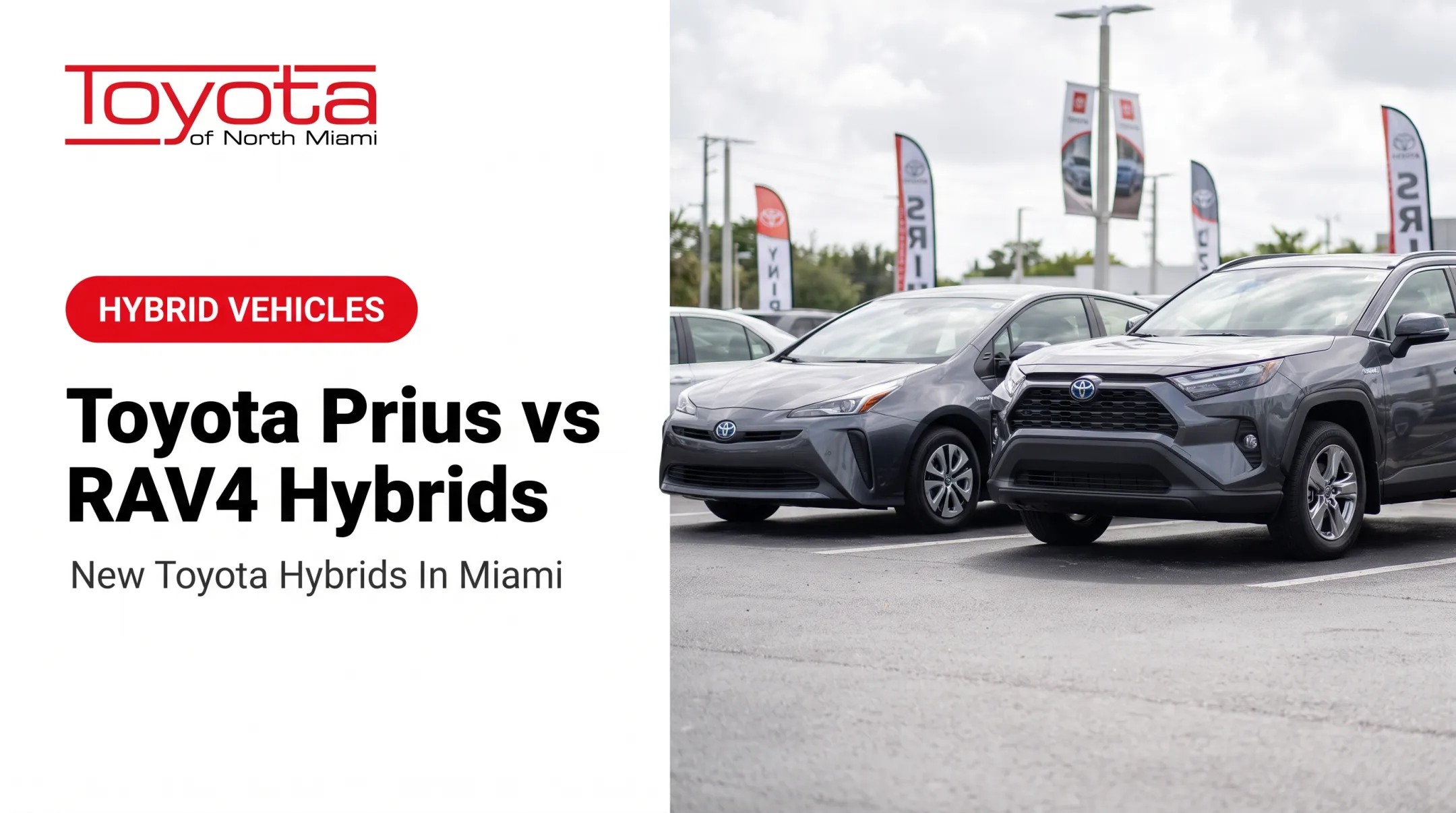
Many shoppers comparing hybrids this year struggle with one question — is the standard Prius hybrid enough, or does the Plug-in Hybrid's higher price actually pay for itself? This review covers both versions, since their powertrains, fuel economy, charging needs, and pricing all differ. By the end, you'll know whether the Prius is a good fit, which version offers better value, how practical the hatchback really is, and when a Camry Hybrid or RAV4 Hybrid makes more sense.
Key Takeaways
- Conventional hybrid reaches up to 57 mpg combined and offers optional all-wheel drive.
- Plug-in Hybrid delivers 220 hp and up to 44 miles of EPA-estimated electric range.
- Rear headroom is tight under the sloped roofline, and the PHEV is front-wheel drive only.
- Standard hybrid buyers get maximum simplicity; PHEV buyers need home charging to see the biggest benefit.
- Confirm current Toyota MSRP, EPA ratings, and incentives before you buy.
2026 Toyota Prius Powertrain and Specifications
Toyota sells the 2026 Prius two ways: a conventional hybrid and a Prius Plug-in Hybrid. Both pair a 2.0-liter four-cylinder gas engine with electric motors, a lithium-ion battery, and an electronically controlled continuously variable transmission (eCVT). Regenerative braking recaptures energy during deceleration and feeds it back into the battery in both versions. The difference is that the PHEV also plugs in.
Specifications at a Glance
| Spec | Prius Hybrid | Prius Plug-in Hybrid |
|---|---|---|
| Gas engine | 2.0L 4-cyl, 150 hp, 139 lb-ft | 2.0L 4-cyl, 150 hp, 139 lb-ft |
| Combined output | 194 hp FWD / 196 hp AWD | 220 hp |
| Electric motor | Standard + optional rear motor for AWD | 161-hp permanent-magnet motor |
| Transmission | eCVT | eCVT |
| Battery | 222.0V, 4.08Ah lithium-ion | 13.6 kWh lithium-ion |
| Drivetrain | FWD standard; AWD optional | FWD only |
| Curb weight | 3,097 lb (LE FWD) | 3,461 lb (SE) |
Front-wheel drive is standard across the hybrid lineup. Step up to the optional Electronic On-Demand All-Wheel Drive and Toyota adds a second electric motor at the rear axle, bumping output from 194 hp to 196 hp. That extra motor helps with traction on wet or snowy roads, though Toyota hasn't published a separate efficiency figure comparing FWD and AWD beyond the EPA ratings below.
The Plug-in Hybrid skips AWD entirely. It's FWD only across SE, XSE, Nightshade, and XSE Premium trims. According to Toyota's newsroom release, the combined 220 hp comes from blending the 150-hp engine with a 161-hp electric motor, not simply adding the two figures together.
One naming note: Toyota retired the "Prius Prime" badge after the 2022 model year. What you'll see on 2026 window stickers and Toyota.com is "Prius Plug-in Hybrid" (same concept, new name), so don't be confused if older reviews or forum posts still reference the Prime.
Driving Experience, Fuel Economy, Electric Range, and Charging
Behind the wheel, the 2026 Prius feels livelier than past generations. The extra horsepower (especially in the 220-hp PHEV) makes merging onto a packed highway far less stressful than it used to be. The eCVT still drones under hard acceleration (that's unavoidable hybrid-system character), but around-town cruising is smooth and quiet.
How Efficient Is the Standard Hybrid?
EPA ratings vary by trim and drivetrain, based on the 2026 Fuel Economy Guide:
| Configuration | City | Highway | Combined |
|---|---|---|---|
| LE FWD | 57 | 56 | 57 |
| LE AWD | 53 | 54 | 54 |
| XLE / Nightshade / Limited FWD | 52 | 52 | 52 |
| XLE / Nightshade / Limited AWD | 49 | 50 | 49 |
PHEV Range and Efficiency
The Plug-in Hybrid's electric-only range depends on trim: the SE is rated for up to 44 miles, while XSE, Nightshade, and XSE Premium trims land around 39-40 miles. Once the battery depletes, the SE still returns 52 mpg combined on gasoline alone (53 city/51 highway); upper trims drop slightly to 48 mpg combined.
Real-world results can vary with:
- Outside temperature (cold weather reduces both electric range and gas mileage)
- Highway speed versus stop-and-go driving
- Passenger and cargo load
- Wheel size (larger wheels on upper trims add rolling resistance)
Edmunds' road test of the PHEV actually beat its EPA estimate, measuring 51.1 miles of electric range at a 35-mph average city-driving speed, well above the car's 39-mile EPA figure. That's a city-focused result, not a highway test, so don't expect it to hold at 70 mph.
Charging Basics
A standard 120V household outlet fully charges the PHEV in roughly 11 hours. A Level 2 (240V) home charger cuts that to about four hours. Regenerative braking tops off the battery somewhat during driving, but it's not a substitute for plugging in. You'll only capture the PHEV's fuel savings if you actually charge it regularly.
Decision framework: If your daily commute is under 40 miles and you can charge at home overnight, the PHEV's gas savings add up fast. If you mostly drive highway miles, road-trip often, or can't charge at home, the standard hybrid's lower price and comparable gas-mode efficiency make more sense.

Interior, Technology, Comfort, and Practicality
The driving position sits lower than a typical sedan, which contributes to that sportier silhouette, but taller drivers may want to test the seat before buying. Visibility out the rear is limited by the sloped roofline and a narrow back window, a trait shared by most swoopy hatchbacks.
Cargo and Rear Seats
The Prius offers up to 23.8 cubic feet of cargo space behind the 60/40 split-folding rear seats. That's workable for a grocery run or a couple of suitcases, but rear headroom suffers under the coupe-like roof, so six-footers in back will likely brush the headliner.
Technology by Trim
| Grade | Standard screen | Notable tech |
|---|---|---|
| LE | 8-inch | 7-inch driver display |
| XLE / Nightshade | 8-inch (12.3-inch optional) | Qi wireless charging |
| Limited | 12.3-inch | Fixed glass roof, 8-speaker JBL audio |
| PHEV SE | 8-inch | 7-inch driver display |
| PHEV XSE / Nightshade | 8-inch | Qi wireless charging |
| PHEV XSE Premium | 12.3-inch | Fixed glass roof, JBL audio, six USB-C ports |
Wireless Apple CarPlay and Android Auto come standard across the entire lineup. Every 2026 Prius also includes Toyota Safety Sense 3.0 standard:
- Pre-Collision System with Pedestrian Detection
- Full-Speed Dynamic Radar Cruise Control
- Lane Departure Alert with Steering Assist
- Lane Tracing Assist
- Road Sign Assist
- Automatic High Beams
Blind Spot Monitor is separate equipment, not part of the core TSS 3.0 suite. None of this replaces attentive driving. Treat these as backup systems, not autopilot.
Best fit: Commuters and couples will find the Prius comfortable and well-equipped. Families with car seats or anyone who regularly hauls rear-seat adults should sit in the back and load the cargo area before signing anything.
2026 Prius Trims, Pricing, and Which Version to Buy
Toyota's published 2026 MSRPs (before the $1,195 destination charge) look like this:
| Hybrid Grade | MSRP | Key Addition |
|---|---|---|
| LE | $28,550 | Base equipment |
| XLE | $31,995 | 19-inch wheels, SofTex seats, Qi charging |
| Nightshade | $32,800 | Black-finish wheels, dark interior accents |
| Limited | $35,565 | 12.3-inch screen, glass roof, JBL audio |
| PHEV Grade | MSRP | Key Addition |
|---|---|---|
| SE | $33,775 | Base equipment, 44-mile range |
| XSE | $37,025 | 19-inch wheels, SofTex seats, Qi charging |
| Nightshade | $37,795 | Black-finish wheels, dark interior accents |
| XSE Premium | $40,470 | 12.3-inch screen, glass roof, JBL audio |

For context, a 2026 Prius Limited FWD listed at Toyota of North Miami's Miami, FL store recently priced out at $37,983, and a Prius Plug-in Hybrid XSE listed around $39,254.
Both figures include dealer-specific pricing that moves with inventory and incentives, so treat the brand's published MSRP as your starting reference point.
Which version makes sense for you?
- Maximum mpg, lowest cost: Hybrid LE FWD
- All-weather traction: Hybrid with AWD
- Home charger, short commute: PHEV SE
- Premium tech and comfort: Limited or XSE Premium
If you're ready to compare trims in person, Toyota of North Miami's inventory tools let you check live Prius stock, run trade-in estimates, and schedule a test drive before you commit. That step is worth doing, since dealer pricing and incentives shift from week to week.
Competitors and Alternatives to Consider
The Prius isn't the only efficient Toyota on the lot. The Camry Hybrid starts around $29,600 and returns up to 51 mpg combined — a roomier sedan if you don't need hatchback flexibility. The Corolla Hybrid, starting near $25,175, trades some power for an even lower price point and similar 50 mpg combined efficiency.
If cargo height, ground clearance, or rear-seat space matters more than squeezing out the last few mpg, the RAV4 Hybrid (from $31,900, 43 mpg combined) is worth a look. Its 236-hp hybrid system and SUV-style seating position suit families better than the Prius's low-slung cabin.
Outside Toyota's lineup:
- Honda Civic Hybrid ($29,395, 49 mpg combined) — more conventional sedan driving position
- Hyundai Elantra Hybrid ($25,650, 54 mpg combined) — lower price, bigger trunk
- Kia Niro HEV ($27,390, 53 mpg combined, 63.7 cu ft folded cargo) — more cargo room than the Prius
None of these match the Prius's blend of hatchback efficiency and available AWD. That combination remains the Prius's calling card, even if a Niro beats it on cargo or an Elantra beats it on price.

Final Verdict: Is the 2026 Toyota Prius Worth Buying?
Yes, for the right buyer. Efficiency-focused commuters, city drivers, and anyone wanting a more stylish alternative to a standard sedan will find the 2026 Prius genuinely satisfying. The hybrid's fuel economy and the PHEV's electric range are both strong for the segment.
The trade-offs are real, though. Rear headroom is tight, the roofline limits rear visibility, and the PHEV costs more while offering FWD only, with no AWD option. Cargo space trails what you'd get from an SUV.
Standard hybrid shoppers get the best value and simplicity, especially with AWD for winter traction. PHEV shoppers need home charging access and a commute under roughly 40 miles to make the premium worthwhile. If cargo room or rear-seat space outranks maximum mpg, look at the RAV4 Hybrid or Camry Hybrid instead.
Before you decide, confirm current EPA ratings and Toyota pricing, calculate your expected charging or fuel costs, and check Toyota of North Miami's current Prius availability for a test drive.
Frequently Asked Questions
Is the 2026 Prius hybrid a good car?
Yes, for efficiency-minded drivers. It delivers strong fuel economy, standard driver-assistance tech, and sharper styling than past generations. The main drawbacks are tight rear headroom and a lower cargo capacity than an SUV.
Will a 2026 Prius still run if the hybrid battery dies?
A dead 12-volt battery can prevent the hybrid system from starting, but that's different from a failed high-voltage traction battery. According to J.D. Power's research, proper servicing can extend traction battery life significantly; check with Toyota service if you suspect a problem.
How many miles will a 2026 Toyota Prius last?
Lifespan depends on maintenance, driving conditions, accident history, and hybrid-battery health. There's no guaranteed mileage figure. Consistent service and prompt repairs matter more than the odometer number.
What is the difference between the 2026 Prius hybrid and Prius plug-in hybrid?
The standard hybrid charges only through driving and costs less upfront. The Plug-in Hybrid adds home charging, up to 44 miles of electric-only range, and more power (220 hp vs. 194-196 hp), but it's FWD only and pricier.
How long does it take to charge the 2026 Prius plug-in hybrid?
About 11 hours on a standard 120V household outlet, or roughly four hours with a Level 2 (240V) home charger. Actual times vary with battery state, temperature, and your charging equipment.