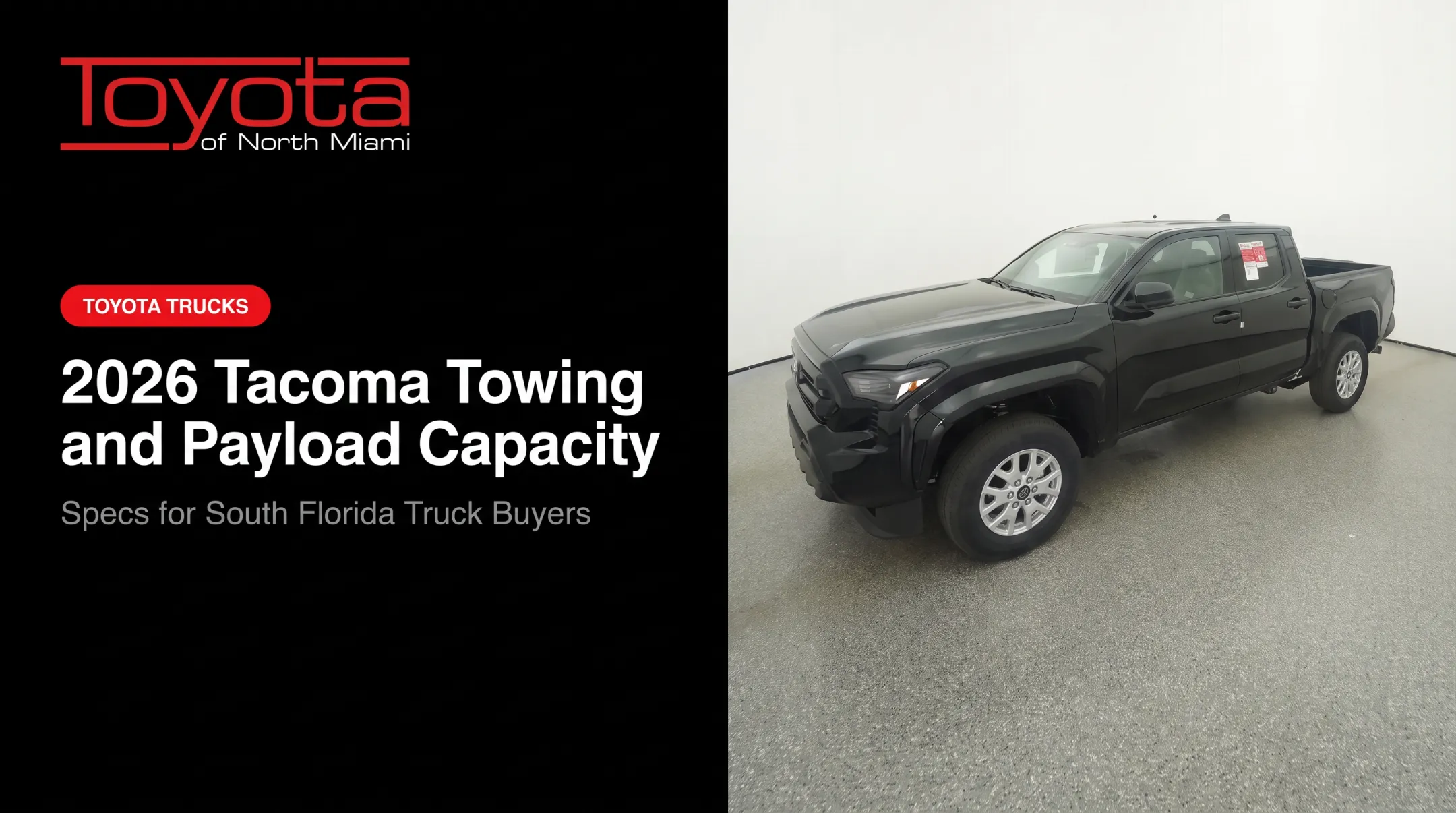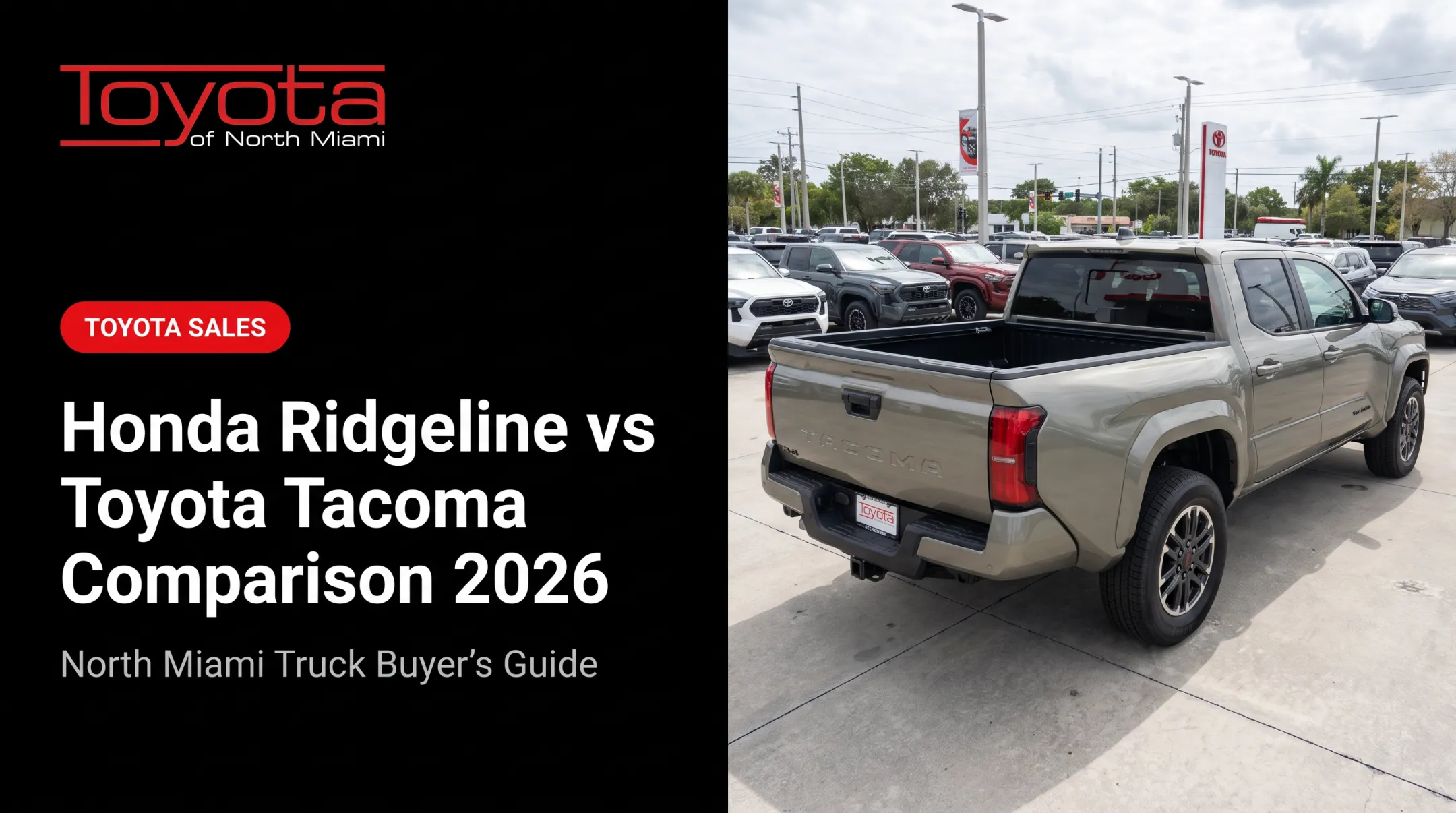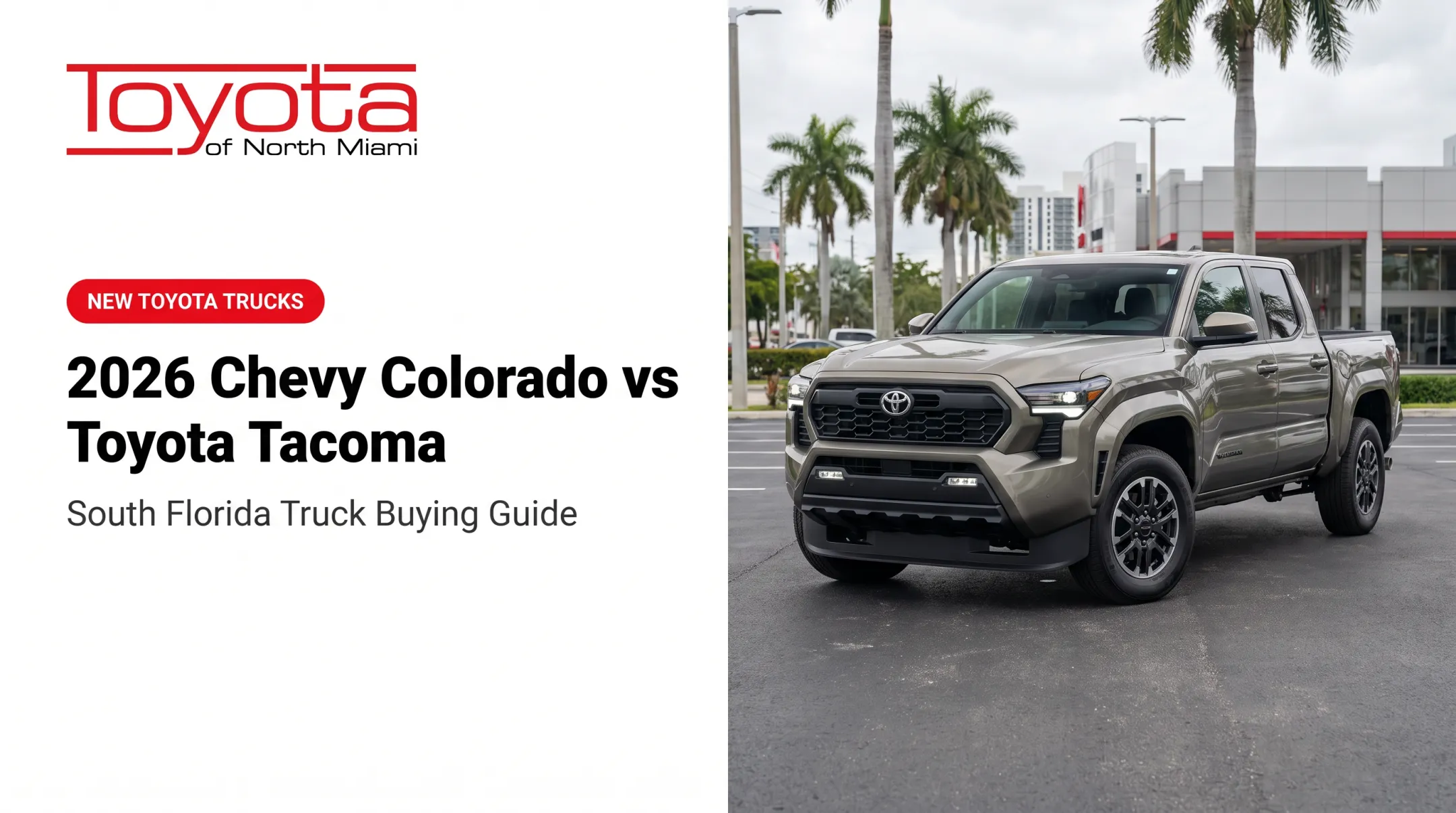

The real question is which powertrain philosophy and feature set fits how you actually drive.
The Frontier sticks with a familiar 3.8-liter V6 and a traditional truck layout. The Tacoma runs a newer turbocharged four-cylinder platform, plus an available i-FORCE MAX hybrid that adds serious low-end torque. Those differences show up fast in towing capacity, payload, fuel economy, and price, and they shift depending on trim and drivetrain.
This comparison breaks down current manufacturer specs, EPA estimates, and safety data so you can compare equivalent configurations instead of a base model against a loaded one.
Key Takeaways
- Frontier's 3.8L V6 makes 310 hp and 281 lb-ft; Tacoma's turbo four tops at 278 hp, hybrid at 326 hp and 465 lb-ft
- Frontier King Cab tows up to 7,150 lb; Tacoma's published max is 6,500 lb
- Tacoma's base SR undercuts Frontier entry pricing by about $400 before destination
- Tacoma leads on hybrid torque and off-road tech; Frontier wins on V6 simplicity
- Match trims before comparing numbers: a base Frontier vs. a TRD Pro Tacoma isn't a fair fight
2026 Nissan Frontier vs. Toyota Tacoma: Quick Comparison
Cost
| Truck | Starting MSRP | Top trim MSRP | Destination treatment |
|---|---|---|---|
| Nissan Frontier | $32,150 (S) | $42,370 (PRO-4X Crew Cab 4x4 Long Bed) | $1,775 destination listed separately |
| Toyota Tacoma | $32,545 (SR) | $64,750 (TRD Pro) | Delivery/processing fee excluded from MSRP |
The hybrid i-FORCE MAX Tacoma starts at $47,235, which puts it well above any Frontier configuration. Before you compare sticker prices, confirm whether four-wheel drive, cab size, and off-road packages are factored in. Those additions close or widen the price gap fast.
Powertrain and Performance
| Powertrain | Engine | Output | Transmission | Drivetrain |
|---|---|---|---|---|
| Frontier | 3.8L V6 | 310 hp / 281 lb-ft | 9-speed automatic | 4x2 or 4x4 |
| Tacoma gas | 2.4L turbo four | Up to 278 hp / 317 lb-ft | 8-speed automatic or 6-speed manual (SR, TRD Sport, TRD Off-Road) | 2WD or 4WD |
| Tacoma i-FORCE MAX | 2.4L turbo hybrid | 326 hp / 465 lb-ft | 8-speed automatic | 4WD |
Toyota is the only one of the two still offering a manual transmission on a midsize truck, which matters if you want more driver involvement. The hybrid's torque bump is real, but don't assume it's primarily a fuel-economy play. The EPA numbers below tell a more complicated story.
Towing and Payload
- Frontier maximum: 7,150 lb towing and 1,590 lb payload, achieved on the S King Cab, 6-ft bed, 4x2 configuration
- Frontier PRO-4X 4x4 Crew Cab (short bed): 6,680 lb towing / 1,220 lb payload
- Tacoma headline figures: 6,500 lb towing and up to 1,705 lb payload, though Toyota's release doesn't specify the exact cab/bed/drivetrain combination that earns those numbers
For a small boat or utility trailer, either truck has plenty of margin. For a loaded camper or heavy equipment trailer, Frontier's base-configuration tow rating is the stronger published number — just know it comes from the lightest, two-wheel-drive setup, not a loaded PRO-4X.
Fuel Economy
| Configuration | City | Highway | Combined |
|---|---|---|---|
| Frontier 4x2 V6 | 19 | 24 | 21 |
| Frontier 4x4 (non-PRO-4X) | 17 | 21 | 19 |
| Frontier PRO-4X 4x4 | 16 | 20 | 18 |
| Tacoma 2WD gas | 21 | 26 | 23 |
| Tacoma 4WD gas | 19 | 24 | 21 |
| Tacoma TRD Off-Road i-FORCE MAX | 22 | 24 | 23 |
Figures reflect EPA's 2026 guide and manufacturer-published estimates. Real-world mileage drops with cargo, trailer weight, aggressive tires, and cold weather — don't expect to hit these numbers while towing.
The trade-off is straightforward: Frontier's naturally aspirated V6 is simpler and predictable but thirstier at the top end. Tacoma's turbocharged and hybrid options close that gap, with the hybrid's combined rating essentially matching a 2WD gas Tacoma rather than crushing it.

Technology, Safety, and Off-Road Equipment
Frontier's base S trim gets an 8-inch touchscreen with wired Apple CarPlay and Android Auto. Step up to SV or PRO-4X and you get a 12.3-inch display with wireless connectivity. Standard Safety Shield 360 includes automatic emergency braking with pedestrian detection, rear automatic braking, blind spot warning, lane departure warning, and high beam assist.
Tacoma's SR starts with an 8-inch touchscreen too, but wireless CarPlay and Android Auto come standard from the base trim. A 14-inch display is available higher in the lineup, paired with JBL premium audio on upper trims. Toyota Safety Sense 3.0 is standard lineup-wide, adding lane tracing assist and road sign assist to the usual collision-prevention suite.
Off-road, Frontier's PRO-4X adds a locking rear differential and an available off-road camera view. Tacoma's TRD Off-Road matches that with its own locking diff, Bilstein shocks, and multi-terrain select, while TRD Pro adds FOX shocks and 33-inch tires.
Crash-test results are more mixed. In IIHS's crash tests, Frontier scored better on the updated moderate-overlap front test, while Tacoma scored better on the updated side test. Neither truck sweeps every category.
The 2026 Nissan Frontier: Overview and Use Cases
The Frontier is a conventional midsize pickup: body-on-frame construction, a 3.8-liter V6 under the hood, and a choice of rear-wheel or four-wheel drive. Nissan keeps the lineup simple across S, SV, and PRO-4X grades, with multiple cab and bed combinations.
That simplicity is the point. The V6 delivers predictable, linear power without turbo lag or hybrid-system complexity. You know what you're getting every time you put your foot down. Towing a trailer doesn't bring surprises from a transmission trying to manage electric assist.
The trade-off shows up at the pump. Against Tacoma's turbocharged and hybrid options, Frontier's fuel economy lags, especially in 4x4 trims. Cabin refinement is solid but less tech-forward than Tacoma's upper grades.
Cabin and tech:
- S trim: 8-inch touchscreen, wired smartphone integration
- SV and PRO-4X: 12.3-inch touchscreen, wireless Apple CarPlay and Android Auto
- Safety Shield 360 standard across the lineup
Where the Frontier Fits
Frontier makes the most sense for buyers who want a traditional truck feel without chasing the newest tech. Good use cases include:
- Daily commuting with occasional job-site hauling
- Regular trailer use, such as a utility trailer or small equipment
- Fishing and boating trips where predictable towing matters more than torque figures
- Weekend recreation and light off-road driving
Ownership note: Nissan backs the Frontier with a 3-year/36,000-mile basic warranty and a 5-year/60,000-mile powertrain warranty. J.D. Power's quality and reliability score for the 2026 Frontier sits at 84 out of 100, a solid predictor rather than a guarantee. Confirm current scheduled maintenance costs and parts availability with your dealer before buying.
The 2026 Toyota Tacoma: Overview and Use Cases
Tacoma shares Frontier's body-on-frame bones but runs a newer platform built around a turbocharged 2.4-liter four-cylinder family. That includes a standard gas engine and an available i-FORCE MAX hybrid that adds an electric motor for extra torque.
Toyota spreads the Tacoma across more trims than Nissan offers for Frontier (SR, SR5, TRD Sport, TRD PreRunner, TRD Off-Road, Limited, and TRD Pro), giving buyers a wider range of work, sport, and off-road-focused builds.
The turbo-four's low-end torque makes Tacoma feel quicker off the line than its horsepower numbers suggest, and the hybrid pushes that further. Ride quality benefits from a newer suspension design, though the trade-off is a more complex drivetrain with more components that could eventually need service.
Cab and tech highlights:
- Double Cab layouts with a 60/40 split-folding rear seat and under-seat storage
- 5-foot bed with a deck rail system, adjustable tie-down cleats, and LED bed lighting
- 8-inch touchscreen standard, 14-inch available, with wireless CarPlay and Android Auto across the lineup
Toyota Safety Sense 3.0 comes standard, covering pre-collision detection, lane tracing assist, full-speed dynamic radar cruise control, and road sign assist , plus blind spot monitoring with rear cross-traffic alert.
Where the Tacoma Fits
Tacoma suits buyers who want more technology and trim-specific specialization:
- Work duty paired with a more premium cabin on higher trims
- Family use, though rear-seat space remains tighter than a full-size truck (worth checking in person if you regularly carry adult passengers)
- Camping, overlanding, and trail driving on TRD Off-Road or TRD Pro
- Long-distance travel where the turbo-four's highway manners and available hybrid torque add comfort
Ownership note: Toyota includes ToyotaCare, covering scheduled maintenance for 2 years or 25,000 miles plus 24/7 roadside assistance. Hybrid models add 8-year/100,000-mile coverage on hybrid control components and 10-year/150,000-mile coverage on the battery.
J.D. Power's 2026 reliability score for Tacoma is 80 out of 100. Toyota's resale reputation is well established, but confirm current depreciation data for your specific trim before assuming it will hold value automatically.

2026 Nissan Frontier vs. Toyota Tacoma: What Is Better?
There's no single winner here: only trade-offs by category.
| Factor | Frontier's edge | Tacoma's edge |
|---|---|---|
| Entry price | Comparable, slightly higher | Comparable, slightly lower |
| Powertrain feel | Simple, predictable V6 | Turbo torque, hybrid option |
| Max towing | Higher published figure (base config) | Lower published figure |
| Fuel economy | Lower across most configs | Higher in most configs |
| Technology | Solid, less extensive | Broader trim selection, bigger screens |
| Off-road hardware | PRO-4X locking diff | TRD Off-Road/TRD Pro suspension and electronics |
| Resale reputation | Decent, less documented | Historically stronger |
One warning worth repeating: don't compare a base Frontier S to a loaded Tacoma TRD Pro, or a $47,000+ hybrid Tacoma to an entry-level gas Frontier. The price and equipment gaps in those matchups are enormous and tell you nothing useful.
Choose the Frontier if you want:
- A conventional V6 with no turbo or hybrid complexity
- Strong available towing in a value-oriented package
- A more straightforward ownership experience
Choose the Tacoma if you want:
- Hybrid torque or a six-speed manual option
- A wider range of specialized trims, especially for off-roading
- Toyota's generally stronger resale reputation
Kelley Blue Book's forecast projects lower five-year depreciation for Tacoma than for Frontier, though the comparison uses different cab styles and isn't a perfect match.
Before deciding, build a checklist:
- Exact VIN or window sticker
- Drivetrain, cab, and bed length
- Tow package and payload label
- Standard safety equipment
- Full out-the-door price including fees
MSRP alone won't tell you what you're actually paying.
Real-World Buying Considerations
Specs on paper only go so far. A proper test drive should cover:
- Steering and braking feel at low speed and highway speed
- Visibility from the driver's seat, including blind spots
- Rear-seat access, especially if you're regularly carrying passengers
- Ride quality unloaded, since trucks often feel stiff with no cargo
- Infotainment usability and camera clarity while backing up
- Trailer hookup and bed access if towing or hauling is a priority
If budget is the deciding factor, a certified pre-owned Tacoma can bridge the gap between a loaded new Frontier and a bare-bones new Tacoma.
Toyota of North Miami's online tools let you compare trims side by side, value a trade-in, apply for financing, and schedule a test drive before visiting the lot. That prep helps if you're still weighing a new Tacoma against a used alternative.

Thinking it through before you walk into a dealership saves time and negotiating leverage later.
Conclusion
Neither truck is objectively better. Match the truck to what you value most:
- The Frontier suits buyers who want straightforward V6 power, available towing strength, and a simpler ownership experience
- The Tacoma suits buyers who want hybrid torque, more off-road trim options, and Toyota's track record for resale value
The right call depends on your exact configuration, workload, budget, and how long you plan to keep the truck. Compare verified out-the-door pricing, not just MSRP, and drive both before signing anything.
If you're leaning toward a Tacoma, Toyota of North Miami can walk you through current trim availability, financing options, and trade-in values, or get you behind the wheel for a test drive.
Frequently Asked Questions
Which holds value better, Nissan or Toyota?
Toyota has generally held a stronger resale reputation across its lineup, and current KBB forecasts show lower projected depreciation for Tacoma. Still, compare your specific trim, mileage, and local market before treating that as a guarantee.
Do Nissan Frontiers last as long as Toyota Tacomas?
Longevity depends more on maintenance history, driving conditions, and accident history than brand alone. Both trucks carry similar warranty terms, so check current independent reliability data for your exact configuration rather than assuming one brand wins outright.
Is a Nissan Frontier as good as a Toyota Tacoma?
Both are capable midsize trucks built for similar jobs. Frontier emphasizes V6 simplicity and value, while Tacoma offers newer tech and hybrid availability. The better truck depends on which trade-offs matter more to you.
Which is better for towing, the 2026 Nissan Frontier or Toyota Tacoma?
Frontier's published maximum is 7,150 lb versus Tacoma's 6,500 lb, but both figures come from specific, lighter configurations. Check your intended trim's actual rating and always follow the owner's manual for safe loaded towing.
Which truck is more fuel-efficient, the 2026 Nissan Frontier or Toyota Tacoma?
Tacoma generally posts better EPA combined numbers across comparable 2WD and 4WD gas configurations, and the hybrid roughly matches a 2WD gas Tacoma rather than beating it dramatically. Frontier's figures trail in most matched comparisons, particularly in 4x4 trims.