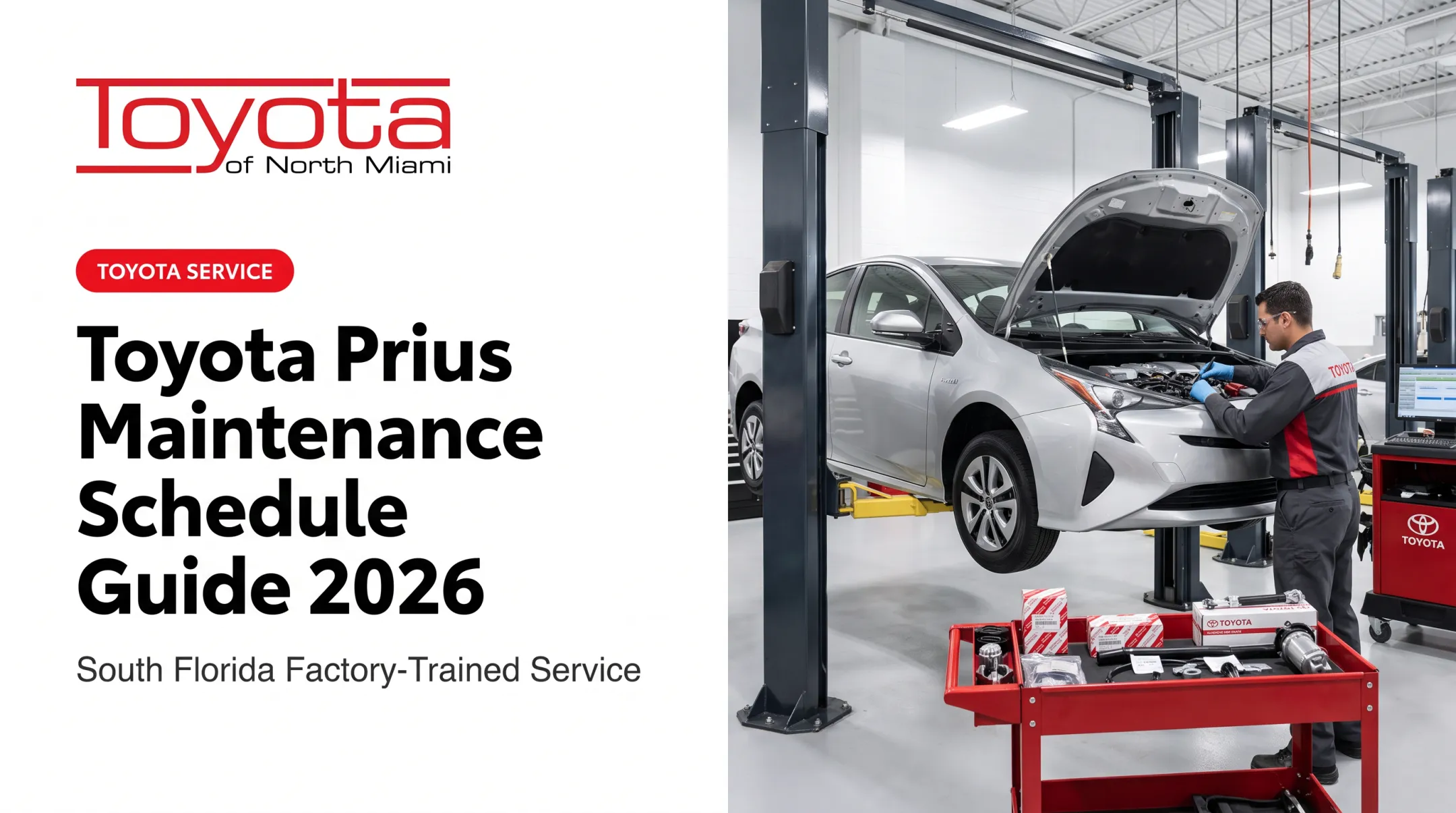
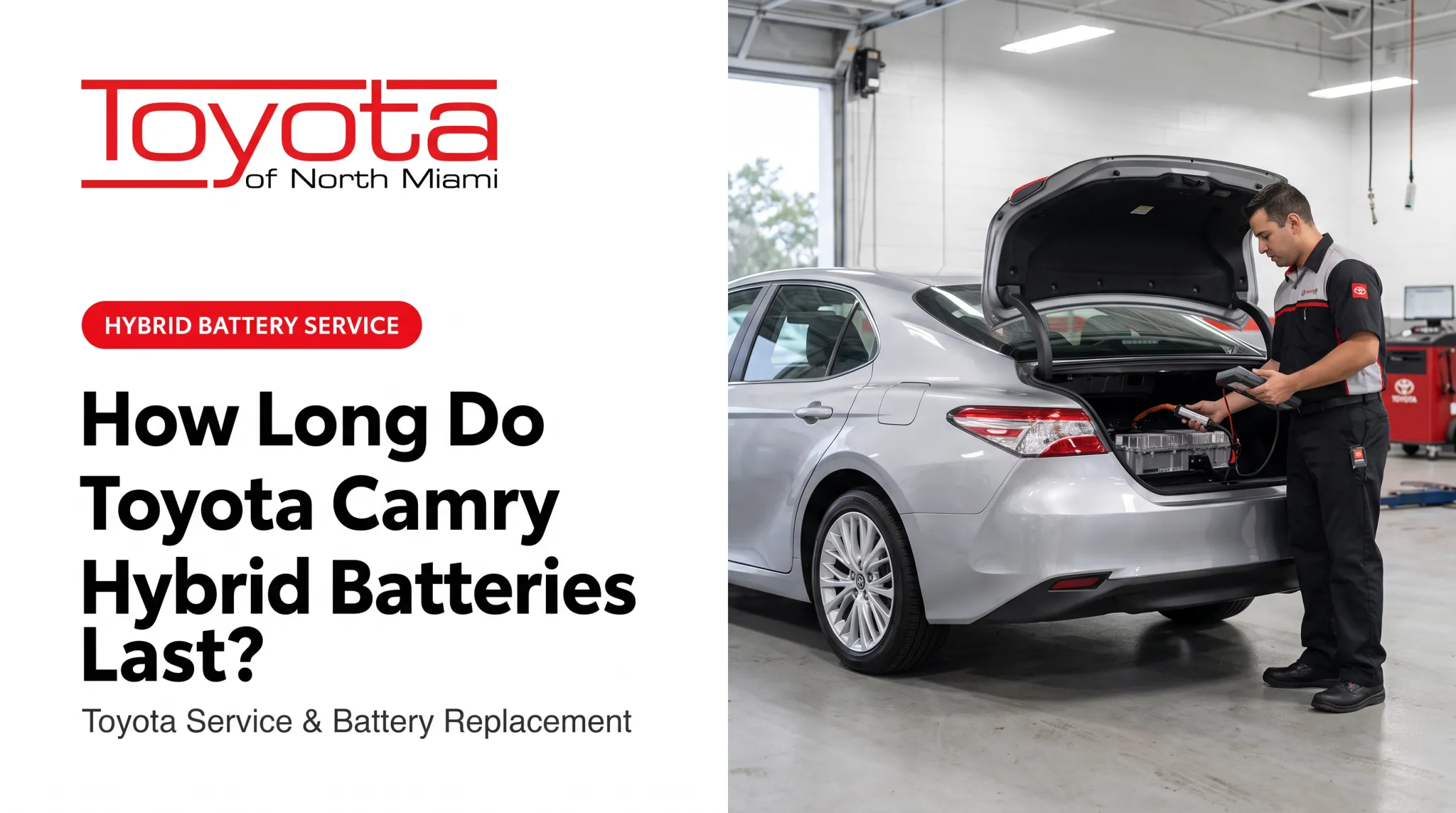
Neglecting the system can mean reduced fuel efficiency, less electric assist, unexpected warning lights, or a repair bill that could have been avoided with earlier attention. High-voltage components carry real risk, so diagnosis belongs with technicians who have the right training and equipment, not a home garage.
This guide covers why hybrid battery maintenance matters, the types of service your Toyota might need, warning signs worth watching for, general scheduling guidance, cost factors, and when it's time to bring your vehicle in for professional hybrid service.
Key Takeaways
- Hybrid battery maintenance covers cooling airflow, diagnostics, software, the 12-volt battery, brakes, and tires, not just the battery pack
- Reduced fuel economy, weaker electric assist, odd fan noise, or dashboard warnings justify a professional inspection
- Service intervals depend on your Toyota model, mileage, and driving conditions; the owner's manual is the final word
- Never attempt high-voltage battery repairs at home; leave testing and replacement to qualified technicians
- Early diagnosis often reveals a simple airflow, sensor, or 12-volt fix rather than a failed battery pack
Why Hybrid Battery Maintenance Is Important
Your hybrid's high-voltage battery holds the system together. It feeds the electric motor, captures energy from regenerative braking, and decides how often the gasoline engine kicks in. When the battery is healthy, you get the smooth handoff between electric and gas power that makes hybrids efficient in the first place.
As a battery ages, it holds less charge. That means less electric assist, a gasoline engine running more often, and a driving feel noticeably different from when the car was new. You might not notice day to day, but a technician comparing current data against prior service records will.
Temperature and Airflow Play a Bigger Role Than You'd Think
Most Toyota hybrid batteries rely on airflow, not an external radiator, to stay in their ideal operating range. Blocked intake vents, a clogged filter, or a failing cooling fan can push the battery toward conditions it wasn't designed for.
A Toyota service bulletin flags dust and debris buildup in the battery cooling fan as a real-world cause of dashboard warnings on certain Prius models. That is one reason the intake filter gets checked at scheduled visits.
That doesn't mean every warning light means the battery itself has failed. A blocked filter is a very different, and far cheaper, repair than a failing battery module. That's exactly why diagnosis comes before any replacement conversation.
Warranty Coverage and Ownership Value
Toyota backs its hybrid batteries for 10 years or 150,000 miles, whichever comes first, according to Toyota's warranty page. That's a meaningful safety net, but it only protects you if problems are diagnosed and documented properly. Keeping service records strengthens any warranty conversation and gives a future buyer confidence the hybrid system has been cared for.
Documentation also matters because hybrid battery work is high-voltage work. A safety note: these systems run on hundreds of volts, not the 12 volts under the hood of a conventional car. Insulated tools, manufacturer-specific procedures, and trained technicians aren't optional extras. They're the only safe way to test, inspect, or service these components.

Types of Maintenance for Hybrid Battery Systems
Hybrid battery service isn't one-size-fits-all. The right approach depends on your vehicle's age, battery type, current symptoms, and what a diagnostic scan actually finds.
Routine and Preventive Maintenance
This is the baseline: following your Toyota's scheduled maintenance, inspecting battery cooling vents and filters where applicable, and keeping service records up to date. It also includes the systems that support the hybrid setup:
- Tire condition and wheel alignment
- Brake inspection and brake fluid condition
- Cooling system checks
- Conventional 12-volt battery testing
Preventive care is usually sufficient when there are no warning lights, fuel economy and performance feel normal, airflow is clear, and no diagnostic trouble codes are stored.
Corrective or Reactive Maintenance
Reactive service gets triggered by warning signs such as:
- Hybrid-system warning lights
- Reduced fuel economy or weaker electric assist
- Overheating concerns or unusual fan noise
- Starting issues
On certain older Prius models, dust or debris in the HV battery cooling fan has been linked to specific dashboard codes. That is one reason a warning should not automatically be read as "the battery failed."
Continuing to drive without a diagnosis can let a related fault worsen or leave the vehicle stuck in reduced-power mode. Final repair cost depends on diagnostic complexity, parts availability, warranty status, and exactly which component is affected.
Predictive, Condition-Based Diagnostics
Technicians lean on scan tools, battery-management data, temperature readings, and stored codes alongside a physical inspection. Where supported, cell or module balance data adds another layer of insight.
Establishing a baseline at one visit and comparing it against later results is more reliable than judging health from dashboard symptoms alone. This differs from a simple 12-volt battery test or an OBD code read. Each checks a different part of the vehicle, and none alone tells the full story.
Major Repairs and Battery Replacement
Depending on what diagnosis turns up, major service might mean repairing or replacing a battery module, the full pack, a cooling component, wiring, a sensor, or an inverter-related part. Not every issue requires a full pack swap.
Genuine Toyota parts for hybrid maintenance can be surprisingly modest. A high-voltage battery intake filter, for instance, lists around $15.20 to $20.23, far less than a full battery replacement.
Weighing repair against replacement means looking at Toyota-approved procedures, parts compatibility, warranty coverage, labor, and how long you plan to keep the vehicle. Replacement pricing is model-specific and changes over time, so a current dealership quote beats any generic number you'll find online.

How to Check If a Hybrid Battery Needs Maintenance
These signs are reasons to book an inspection, not a DIY diagnosis. Several different faults can produce nearly identical symptoms.
Performance or Efficiency Changes
Compare any change against your usual pattern, and rule out tire pressure, weather, traffic, cargo weight, and AC use before assuming it's the battery.
Common red flags include:
- Sustained drops in fuel economy or less frequent electric assist
- Weaker acceleration, or a gasoline engine that runs more than it used to
- Falling MPG that may also stem from low tire pressure, alignment issues, or brake drag
- Repeated 12-volt battery failures or jump-starts (test these separately from the high-voltage system)
A gradual change still deserves a service appointment, even without a warning light.
Unusual Behavior and Warning Signs
Pay attention to repeated or unusually loud battery-cooling fan activity and new vibration near the battery area. Abrupt switching between electric and gas power, or hesitation, also deserves a closer look. Fan noise often points to blocked airflow or debris, not proof the battery itself has failed.
Some signs need prompt attention rather than a scheduled wait:
- A hybrid-system warning or overheating message
- Smoke or a burning odor
- A severe, sudden change in drivability
- A vehicle that won't enter READY mode
Dashboard warnings, repeated check-engine lights, or visible contamination around an accessible intake are also worth photographing.
Don't remove covers or touch orange high-voltage cables; leave that to a trained technician. Note when a message appears so your service advisor can reproduce the issue faster.
Recurring Issues and Downtime
These patterns usually mean the root cause still hasn't been found:
- Repeated warning-light resets
- Temporary improvement after a restart
- Hard starting after the vehicle has been sitting
- Clearing codes or jump-starting without a full diagnosis
Keep repair orders and diagnostic results on hand. Patterns across visits make warranty and repair decisions far easier to evaluate.
Hybrid Battery Maintenance Schedule (General Guidelines)
Your owner's manual and Toyota's maintenance schedule are the final word here. Timing shifts based on model, model year, mileage, battery type, climate, and driving conditions.
| Timing | What to check |
|---|---|
| Daily / per-use | Warning messages, unusual fan activity, fuel economy or acceleration changes, clear cooling vents |
| Scheduled visits | Toyota-recommended inspections, oil/filter service where applicable, tire and brake checks, 12-volt testing |
| Seasonal / periodic | Cooling airflow, tire pressure, 12-volt condition, storage prep before heat or long trips |
For vehicles sitting unused, Toyota's conventional hybrid guidance recommends driving at least once every few months, for roughly 30 minutes or 10 miles, so the engine can keep the hybrid battery charged. That's based on Toyota's owner's manual guidance for Prius owners; plug-in hybrids have separate charging instructions, so check your specific model's manual.

Neither long inactivity nor unusually heavy use should be managed with generic internet advice. If a warning light, reduced-power event, repeated starting issue, or noticeable efficiency decline shows up, schedule a diagnosis right away instead of waiting for the next routine visit.
Conclusion
Hybrid battery maintenance combines scheduled Toyota care, clean cooling airflow, related-system inspections, sensible driving and storage habits, and prompt diagnosis when something feels off. A symptom does not automatically mean the high-voltage battery needs replacing.
A qualified inspection can pinpoint whether the real issue is the battery, the cooling system, the 12-volt battery, software, or a sensor.
If your Toyota hybrid is showing any of the signs covered here, Toyota of North Miami's factory-trained technicians can run a full diagnostic using Toyota equipment and genuine parts. That may mean a quick Toyota Express Maintenance visit or a deeper hybrid-system evaluation.
Online scheduling is available, and the service department is open Monday through Saturday from 7 a.m. to 7 p.m., and Sunday from 8 a.m. to 3 p.m.
Frequently Asked Questions
How much does it cost to replace a hybrid battery?
Cost varies by Toyota model, battery type, model year, parts selected, labor, and whether warranty coverage applies. Get a current, vehicle-specific estimate from a Toyota dealer rather than relying on a generic figure found online.
What is the average lifespan of a hybrid car battery?
Lifespan depends heavily on the specific model, climate, mileage, and maintenance history, and Toyota doesn't publish one universal average. Toyota does note that lithium-ion battery capacity naturally decreases with time and use, which is why scheduled checks matter.
How often do you have to drive a hybrid car to keep the battery charged?
Conventional hybrids recharge the battery through the engine and regenerative braking, so they don't need to be plugged in. Plug-in hybrids have separate charging guidance; check your owner's manual for extended storage recommendations either way.
Can you drive a hybrid car if the battery dies?
It depends on which battery: a weak 12-volt battery may prevent starting, while a failed high-voltage battery can limit or stop drivability entirely. Any warning message should be diagnosed by a technician rather than bypassed or ignored.
Why does my hybrid car battery keep dying?
"Battery" could mean the 12-volt battery or the high-voltage system, and causes range from age and parasitic drain to a charging-system fault or cooling problem. Have both systems tested separately to find the actual cause.
Is it bad to leave a battery maintainer on all the time?
A compatible, quality maintainer can be appropriate for a 12-volt battery during storage, but it must match your vehicle's and maintainer's instructions exactly. Never connect any maintainer to high-voltage hybrid battery components.