
That assurance comes at a cost. A certified vehicle usually carries a higher price tag than an identical non-certified used Toyota, and the certification itself varies widely depending on whether you're looking at Gold or Silver tier. A clean CARFAX report and a 160-point inspection sticker don't automatically mean you're getting the best deal on the lot.
This guide breaks down what Toyota CPO actually includes, where Gold and Silver coverage differ, and how to figure out whether the premium on a specific vehicle is worth paying.
Key Takeaways
- Gold Certified covers vehicles up to 6 model years old with 85,000 miles or less, backed by comprehensive plus powertrain coverage.
- Silver Certified extends eligibility to 10 model years and 125,000 miles, but includes powertrain coverage only.
- Warranty mileage limits apply to the vehicle's total odometer reading, not miles driven since your purchase date.
- Every certified Toyota includes a free CARFAX report, but that doesn't replace an independent mechanical inspection.
- Compare the certification premium against a similar non-certified Toyota before assuming CPO is the better deal.
What Is Toyota Certified Pre-Owned?
Toyota Certified Used Vehicles (TCUV) is a manufacturer-run program, not a dealer marketing label. It's been around since 1996, and it sits in a specific spot in the market: more assurance than a standard used Toyota, lower cost than buying new.
A used 2024 Camry SE with around 35,000 miles might list in the mid-$20,000s, while a comparable new 2025 model starts well above that. CPO is meant to narrow that gap without asking buyers to gamble on an unknown vehicle's history.
"Certified" should mean one specific thing: the vehicle is enrolled in Toyota's official program, passed the required inspection, and comes with Toyota-backed warranty paperwork. A dealer calling a car "certified" after an in-house inspection alone is not the same thing.
Gold Certified vs. Silver Certified at a Glance
| Feature | Gold Certified | Silver Certified |
|---|---|---|
| Eligible age | Up to 6 model years | Up to 10 model years |
| Eligible mileage | 85,000 miles or less | 60,000–125,000 miles (outside Gold eligibility) |
| Inspection | 160-point minimum | 136-point minimum |
| Comprehensive warranty | 12 months/12,000 miles | Not included |
| Powertrain warranty | 7 years/100,000 total miles | 12 months/12,000 miles |
| Roadside assistance | 7 years/100,000 miles | 12 months/12,000 miles |

Always confirm current terms directly with Toyota or your dealer's warranty paperwork — these figures can shift, and coverage differs by vehicle and in-service date.
Key Advantages of Toyota Certified Pre-Owned
CPO benefits only matter if they translate into something you'd actually use: fewer surprise repair bills, a documented condition history, or a shorter financing gap compared to buying new.
Inspection and Documented Vehicle Condition
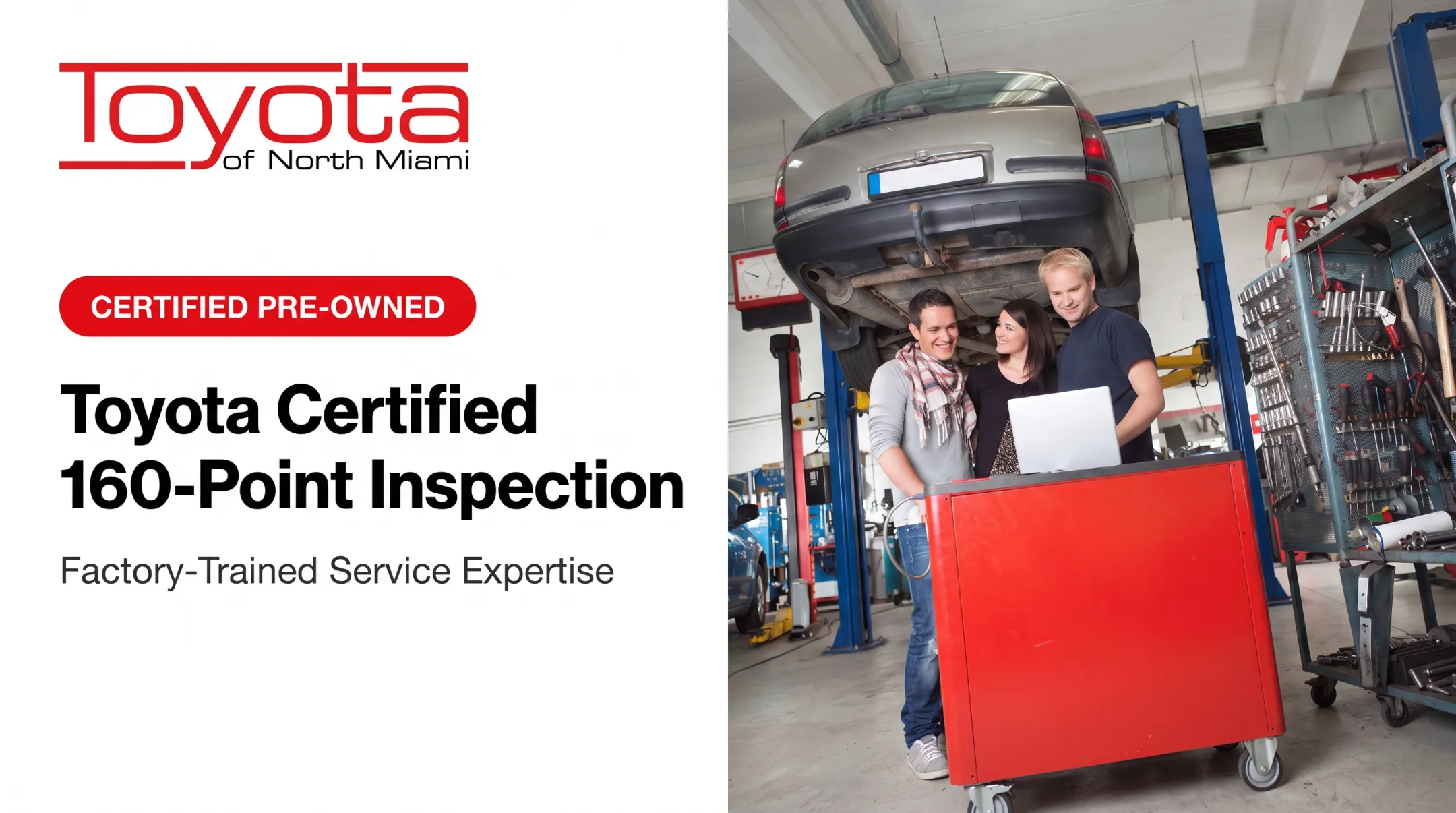
Every Gold Certified vehicle goes through a 160-point minimum inspection; Silver vehicles get at least 136 points checked. These cover:
- Powertrain: oil and filter condition, fluid leaks, transmission operation
- Brakes: calipers, lines, ABS function, and pad or shoe wear (must have at least 50% remaining)
- Tires and suspension: tread depth, matching tires, shocks, CV joints
- Safety systems: airbags, seatbelts, warning lights
- Body and interior: paint condition, panel alignment, signs of prior damage
That's a meaningfully higher bar than an unverified private-party sale. But an inspection is a snapshot, not a guarantee.
A vehicle can pass every checkpoint and still develop an issue six months later. Ask for the completed inspection checklist, the CARFAX report, and any reconditioning paperwork before you sign anything.
Manufacturer-Backed Warranty and Roadside Assistance
Gold Certified includes a 12-month/12,000-mile limited comprehensive warranty with a $0 deductible, plus a 7-year/100,000-mile limited powertrain warranty. Silver includes 12 months/12,000 miles of powertrain coverage only, with no comprehensive protection.
Here's the detail that trips people up: that 100,000-mile powertrain cap is a total odometer figure, not 100,000 miles added from your purchase date. If you buy a Gold Certified vehicle with 60,000 miles already on it, you get roughly 40,000 miles of remaining powertrain coverage, not a fresh 100,000.
Common exclusions across Gold coverage include:
- Tires, glass, and fluids
- Brake linings, pads, shoes, rotors, and drums
- Damage from improper maintenance or pre-existing conditions
- Vehicles with altered mileage or salvage titles
Roadside assistance covers towing, flat-tire service, battery jump-starts, lockouts, and emergency fuel delivery (capped at 3 gallons, twice monthly). It runs 7 years/100,000 miles on Gold and 12 months/12,000 miles on Silver. This matters most if you're buying a higher-mileage vehicle or you'd rather not absorb a tow bill out of pocket.
Gold Certified vs. Silver Certified Value
Gold and Silver aren't the same package at different price points: the coverage itself is different. Gold gives you comprehensive plus powertrain protection on a newer, lower-mileage vehicle. Silver gives you powertrain-only protection but opens the door to older, higher-mileage Toyotas at a lower entry price.
Neither Toyota nor its dealers publish a fixed dollar difference between the tiers. The only reliable way to see whether the premium makes sense is to compare two real listings:
- Find a Gold Certified and a Silver Certified vehicle with similar trim and mileage
- Line up the remaining warranty months and mileage on each
- Check whether the price gap matches the coverage gap
If you want a newer vehicle with broader protection, Gold earns its premium. If you're comfortable with an older Toyota and want powertrain peace of mind at a lower price, Silver might make more sense.
Lower Cost and Access to Newer Features
CPO Toyotas typically land in a price band between a comparable non-certified used vehicle and a brand-new one. General market data gives a sense of the premium: Consumer Reports, citing Kelley Blue Book figures, puts the certified pre-owned premium at around 1.8% over non-certified pricing, though the gap varies by model and can run into the thousands of dollars for some vehicles.
A 2021 RAV4 XLE Premium with roughly 19,000 miles might list around $27,500, while a comparable 2019 model with over 82,000 miles might sit closer to $24,000.
Compare either against a new 2025 RAV4 XLE Premium near $36,500, and the value of buying certified becomes clearer. You get a newer vehicle with modern safety tech and infotainment features without paying full new-vehicle price.

Just remember: insurance, financing rates, taxes, and dealer fees can erode an apparent bargain fast. Run the full cost comparison, not just the sticker price.
Greater Confidence When Buying and Planning Ownership
Every Toyota Certified Used Vehicle includes a free CARFAX report, documented reconditioning, and access to Toyota-trained service departments. For buyers replacing an aging car or buying their first used vehicle, that paper trail makes the decision easier to evaluate than guessing at a stranger's maintenance habits.
A dealership like Toyota of North Miami carries both Gold and Silver inventory side by side, along with financing and trade-in tools to help compare options. That's useful for research, but the dealership's reputation shouldn't substitute for checking the individual vehicle's VIN, coverage dates, and condition yourself.
What Happens When Toyota CPO Benefits Are Overvalued or Ignored
Certification helps, but it's not a substitute for due diligence. A few common mistakes undercut the value of a CPO purchase:
- Paying too much of a premium. If a Silver Certified vehicle costs nearly as much as a similar Gold model, you're not getting proportional value.
- Misreading warranty terms. Assuming "certified" means every repair is covered ignores exclusions like brake wear items, tires, and pre-existing conditions.
- Skipping the history check. A clean CARFAX doesn't guarantee a crash-free past; these reports can miss mechanical issues entirely.
- Ignoring open recalls. Certification doesn't automatically clear outstanding safety recalls; check the VIN separately through NHTSA.
The Federal Trade Commission is blunt about this: shoppers should arrange an independent inspection even on a certified, warrantied vehicle, since dealer inspections and history reports typically don't catch every mechanical problem.
Sometimes a standard used Toyota is the smarter buy, especially one with strong maintenance records, a clean independent inspection, and a meaningfully lower price. And if the CPO price creeps close to a new model's cost, factory financing and the latest features may tip the scale toward buying new instead.
How to Get the Most Value from Toyota Certified Pre-Owned
Before you commit, build a simple comparison sheet. Include:
- Out-the-door price, certification tier, and remaining warranty coverage
- Mileage, maintenance records, and CARFAX report
- VIN, model year, trim, and original in-service date
- Estimated insurance and financing costs, including APR and total interest
- Open recalls, checked directly through NHTSA's VIN lookup
Then take the vehicle for a real test drive, not a quick loop around the block. Watch for warning lights, uneven tire wear, unusual noises, and panel gaps that don't line up. Any of these can signal reconditioning shortcuts.
Ask whether an independent mechanic can inspect the vehicle, and compare their notes against the dealer's reconditioning paperwork. A dealer who hesitates on that request is a red flag.
Separate the financing conversation from the vehicle price entirely. A lower CPO sticker price can be wiped out by a higher interest rate on a used-vehicle loan, so compare total loan cost, not just the monthly payment. Resources like Toyota of North Miami's certified inventory listings, trade-in tool, and financing application are useful starting points for research, but the final call should rest on the specific vehicle's paperwork and condition, not the dealership's name.

Conclusion
A Toyota Certified Pre-Owned vehicle is worth buying when its inspection, warranty, and roadside coverage justify the price over a comparable non-certified Toyota. That answer changes from listing to listing.
Before you commit, run through these checks:
- Compare Gold against Silver terms side by side
- Confirm when the warranty clock actually starts
- Read the exclusions and pull the full maintenance history
- Weigh total cost, financing included, against a non-certified used Toyota and a new one
Then shortlist a certified vehicle, request its documents, schedule a test drive, and get an independent inspection if you can. That is how you turn "certified" from a marketing word into a real decision.
Frequently Asked Questions
What is the advantage of Toyota certified pre-owned?
CPO vehicles get a manufacturer-required inspection, a warranty backed by Toyota, a free CARFAX report, and roadside assistance — reducing the uncertainty of an unverified used-car purchase. Always confirm current terms through official Toyota materials, since coverage can vary by vehicle.
Are Toyota extended warranties worth the money?
It depends on your remaining CPO coverage, the contract's exclusions and deductible, and how long you plan to keep the car. A Toyota CPO warranty is included with certification; an extended service agreement is a separate, optional purchase.
Which Toyota has the least problems?
Reliability varies by model year, powertrain, and maintenance history rather than one universal answer. The 2026 Vehicle Dependability Study recognized the Corolla, Camry, Tacoma, Sienna, and 4Runner, but you should still research the specific model year and inspect the individual vehicle.
Is Toyota CPO better than buying used?
CPO adds inspection and warranty protection that a private-party sale lacks. But a well-maintained non-certified Toyota with strong records and a meaningfully lower price can still be the better financial choice.
What should I check before buying a Toyota Certified Pre-Owned vehicle?
Confirm the VIN, certification tier, warranty start and end dates, and exclusions. Review the CARFAX report, maintenance records, inspection paperwork, open recalls, and out-the-door price, then test-drive the vehicle and consider an independent inspection.