Picking the right one affects more than your first monthly payment. It shapes your fuel budget, how much gear fits behind the back seat, and whether you feel confident merging onto the highway every morning.
This guide compares current Toyota Camry, Prius, and Corolla models on pricing, fuel economy, space, performance, and ownership costs. Specifications, trims, and hybrid availability shift by model year, so confirm the latest details before you sign anything.
Key Takeaways
- Corolla delivers the lowest entry price and the easiest footprint for parking and city driving.
- Prius leads in fuel efficiency and offers more flexible hatchback cargo space than either sedan.
- Camry provides the most passenger room, standard hybrid power, and the steadiest highway ride.
- Your best pick depends on budget, commute length, cargo needs, and powertrain preference.
- Verify current MSRP, EPA ratings, and trim lineups before finalizing a purchase decision.
Camry vs Prius vs Corolla: Quick Comparison
Vehicle Positioning
- Camry: midsize sedan built for highway comfort, passenger room, and road presence, with hybrid power standard across the lineup.
- Prius: dedicated hybrid hatchback designed around aerodynamics, fuel savings, and flexible cargo access.
- Corolla: compact sedan or hatchback for shoppers who want a lower purchase price and simple daily transportation.
Powertrain and Efficiency
| Model (example trim) | Powertrain | EPA combined MPG | Starting MSRP |
|---|---|---|---|
| Camry LE | 2.5L hybrid, FWD | 51 | $29,700 |
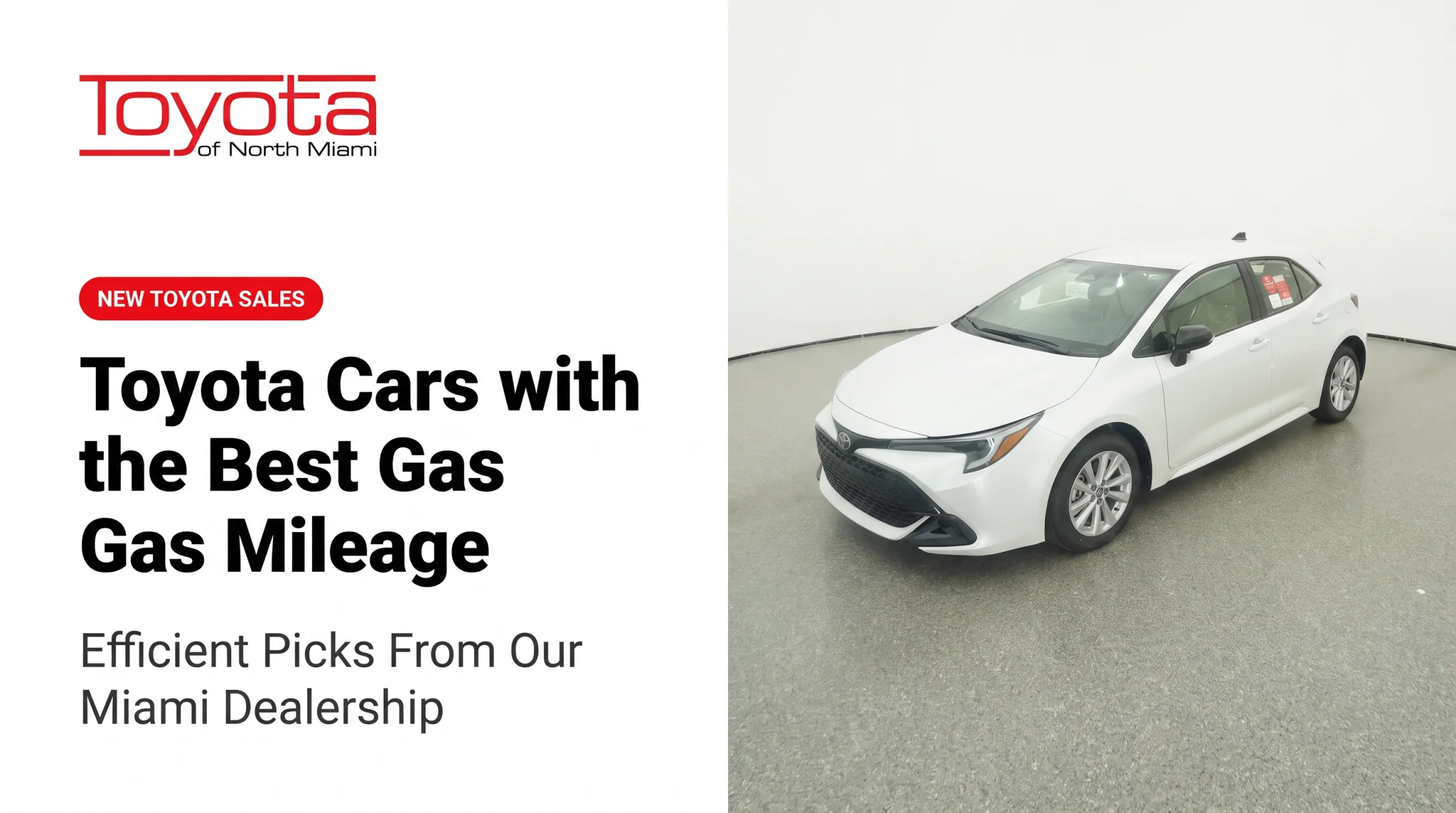
| Prius LE | 2.0L hybrid, FWD | 55 | $28,755 |
| Prius Plug-in Hybrid SE | 2.0L PHEV, up to 44 electric miles | 52 (gas mode) | $33,980 |
| Corolla LE (gas) | 2.0L gasoline, FWD | 35 | $23,325 |
| Corolla Hybrid LE | 1.8L hybrid, FWD | 50 | $25,175 |

Every current Camry grade, from LE through XSE, now runs on hybrid power, according to Toyota's 2027 Camry release. There's no gas-only Camry left to shop.
Real-world mileage typically falls below the window sticker in cold weather, heavy traffic, or with a full car. Treat EPA numbers as a baseline, not a guarantee.
Size, Passenger Room, and Cargo Practicality
- Camry: roughly 99.9 cu ft of passenger volume, 38.0 inches of rear legroom, 15 cu ft trunk.
- Prius: seats five, with 23.8 cu ft of cargo room behind the rear seats, more usable space than either sedan's trunk offers.
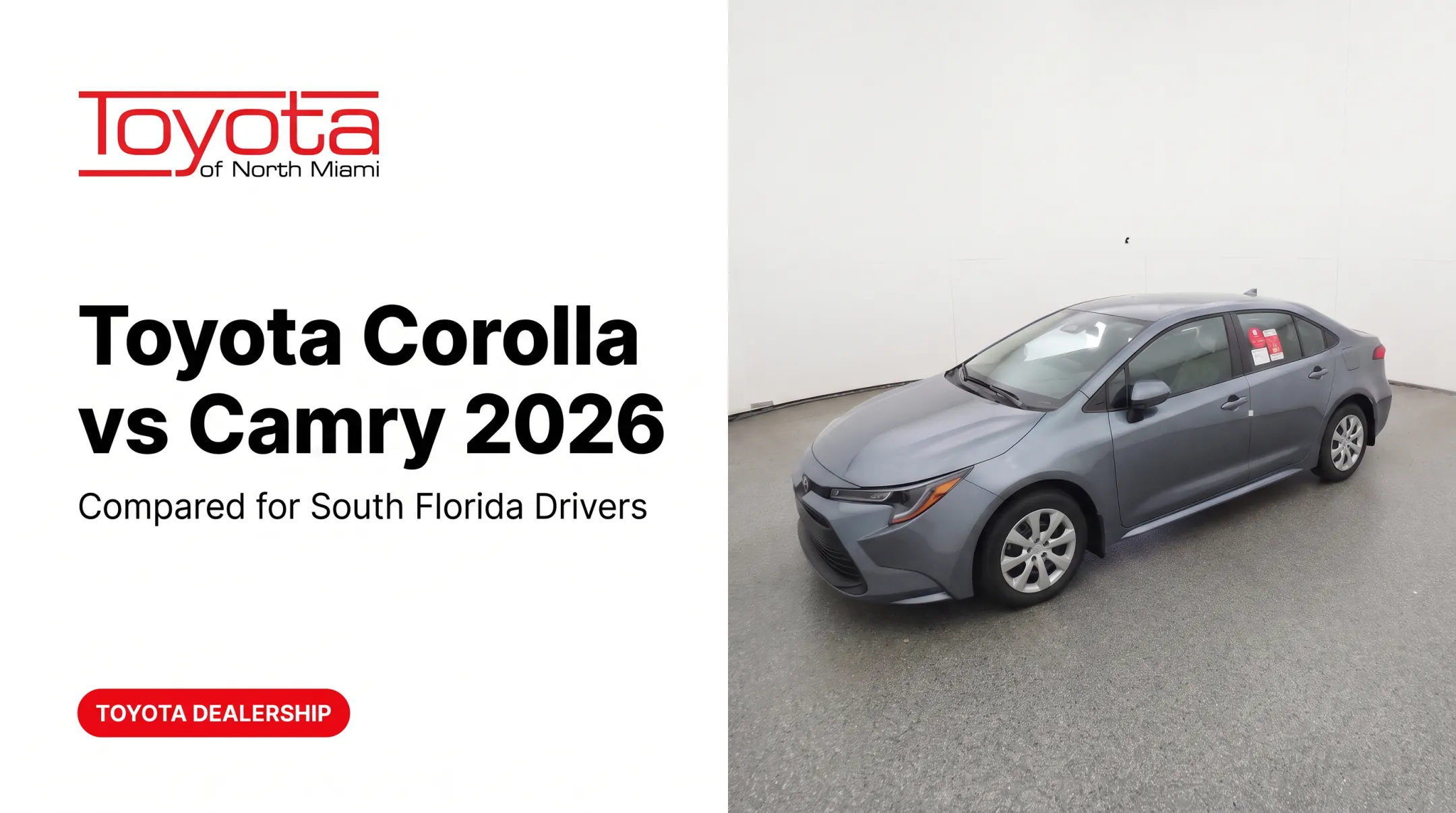
- Corolla sedan: 88.6 cu ft passenger volume, 13.1 cu ft trunk; the Corolla Hatchback trades trunk depth for a wider loading opening.
A sedan trunk works fine for groceries and suitcases, but it has a fixed shape. The Prius's hatch lets you slide in a stroller, a bike, or flat-pack furniture without fighting a narrow opening.
Performance and Driving Character
- Camry: Most substantial feel, with 225 hp (232 hp with AWD) and a quiet, settled highway ride.
- Prius: Smooth acceleration off the line and secure cornering, with tighter rear headroom and more road noise at speed.
- Corolla: Lightest and easiest to maneuver in tight lots, though it leans more in corners and lets in more highway noise than the Camry.
Price and Ownership Considerations
- Corolla Hybrid LE costs about $1,850 more than the equivalent gas LE, a premium most owners recover in fuel savings within roughly five years.
- All three models carry Toyota's 3-year/36,000-mile basic warranty, 5-year/60,000-mile powertrain coverage, 8-year/100,000-mile hybrid component coverage, and a 10-year/150,000-mile hybrid battery warranty.
- Scheduled maintenance coverage typically runs 1 year or 10,000 miles, whichever comes first, so plan for routine service costs afterward.
- Financing terms, available incentives, insurance rates, and trade-in value can move your real monthly cost more than the sticker price does.
Understanding Each Toyota Sedan
Camry: The Spacious, Balanced Sedan
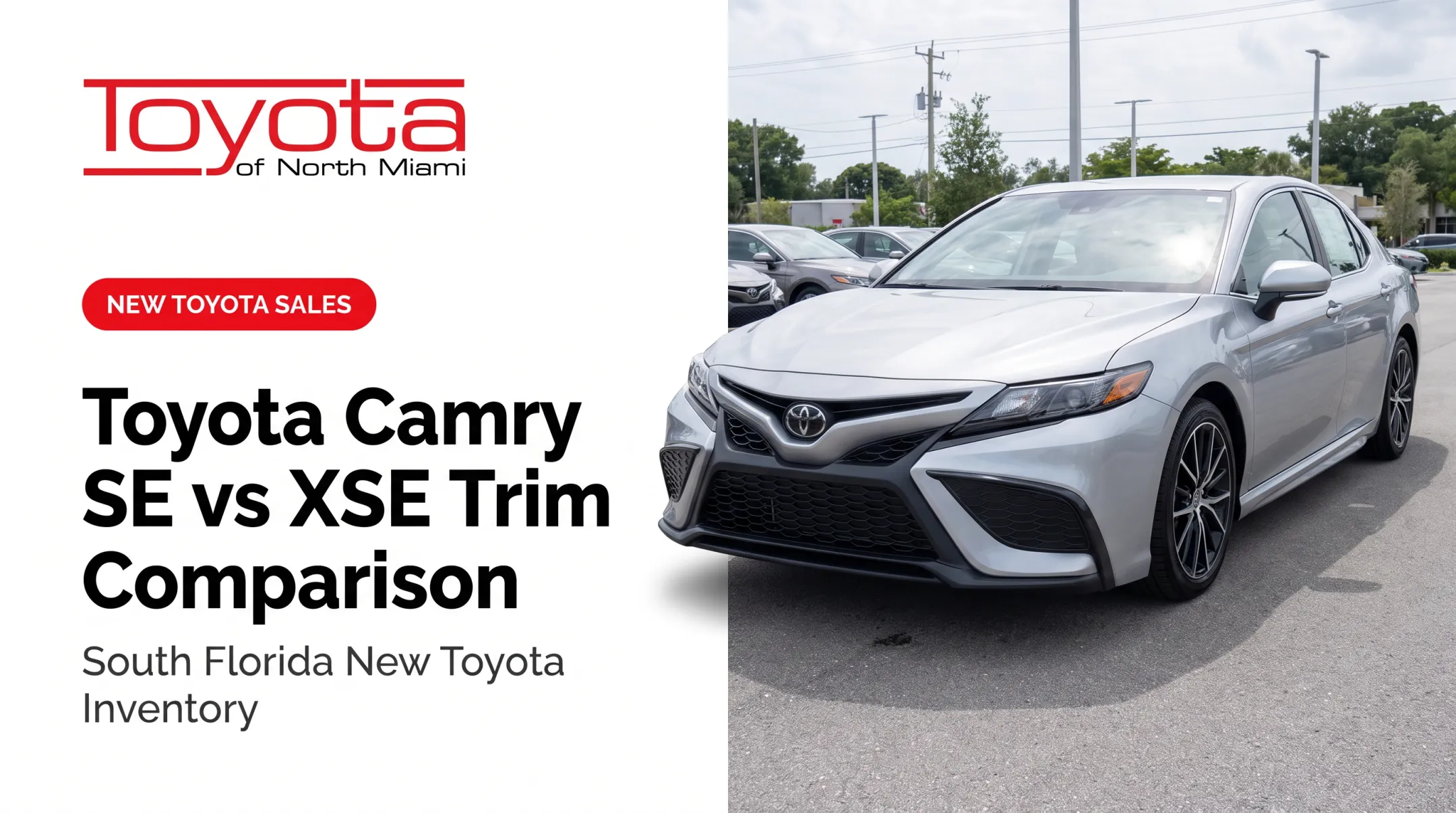
The Camry suits commuters, small families, and anyone who spends real time on the highway. Rear-seat room, ride refinement, and trunk capacity all land ahead of the Corolla, and higher trims add a 12.3-inch touchscreen with navigation, heated seats, and a heated steering wheel.
Every grade (LE, SE, Nightshade, XLE, XSE) ships as a hybrid, available in front-wheel drive or electronic all-wheel drive. There is no separate gas-only trim, so the choice is which grade and drivetrain fit your needs, not whether to pay a hybrid premium.
Trade-offs: a higher starting price than the Corolla, a larger footprint for city parking, and a fixed trunk instead of a flexible hatch opening.
Prius: The Efficiency-Focused Hatchback
The Prius hybrid system pairs a gas engine with electric motor-generators that charge the battery, while regenerative braking recovers energy that would otherwise be lost. Standard Prius hybrid models never need to be plugged in; they manage their own charging as you drive.

That setup makes the Prius a strong fit for frequent urban commuters, high-mileage drivers, and anyone who wants hatchback flexibility without giving up fuel economy.
Edmunds' 2027 review notes smart initial acceleration and a smooth, composed ride. Tire and wind noise, plus tighter rear headroom, are the main trade-offs versus a larger sedan.
Standard hybrid vs. plug-in hybrid: the Prius Plug-in Hybrid (SE, XSE, Nightshade, XSE Premium) adds a 13.6-kWh battery with up to 44 miles of electric-only range, based on Toyota's Prius PHEV brochure.
A full charge takes roughly 11 hours on a standard outlet or about 4 hours on a Level 2 charger. Once the battery depletes, the car drives like a standard hybrid.
Corolla: The Compact Value Choice
The Corolla works for shoppers who want a smaller footprint, easier parking, and the lowest entry price in Toyota's sedan lineup. The gas sedan starts at $23,325, while the Corolla Hybrid starts at $25,175.
- Gas Corolla: 2.0L engine, 169 hp, 151 lb-ft of torque, 35 combined MPG.
- Corolla Hybrid: 1.8L hybrid system, roughly 138 net hp, 50 combined MPG.
Standard equipment includes Toyota Safety Sense driver-assist features and straightforward, accessible controls. That setup suits first-time buyers or anyone who wants simple ownership.
Trade-offs: less rear legroom and cargo room than the Camry or Prius, a firmer ride character, and noticeably less power than the Camry across comparable trims.
Camry vs Prius vs Corolla: What Is Better?
There's no universal winner here. The right call depends on total ownership needs, not just the lowest sticker price or the highest MPG number.
- Go with the Corolla for a compact exterior, the lowest purchase cost, easy parking, and the option to pick between gas and hybrid power.
- Pick the Prius when max fuel efficiency, fewer fuel stops, and flexible hatchback cargo space matter more than sedan styling or quick acceleration.
- Take the Camry for more passenger space, a steadier highway ride, and extra comfort on longer trips or with a growing family.
To compare total cost of ownership, weigh:
- Purchase or lease payment against your monthly budget, not just the advertised starting price.
- Fuel costs based on your actual commute distance and local gas prices.
- Insurance premiums, which vary by trim, powertrain, and driver history.
- Maintenance and warranty coverage, especially once ToyotaCare's included service period ends.
- Resale value, which depends heavily on mileage, condition, and demand in your area.
Before you decide, take a structured test drive:
- Sit in both rows of each vehicle
- Load a typical bag or box into the trunk or hatch
- Check rear visibility from the driver’s seat
- Compare acceleration on the roads you drive every day
Toyota of North Miami can help you run that side-by-side comparison and map total ownership cost to your commute and budget.
Real-World Buying Scenarios
Here's how these three models typically match up against common driving needs:
| Buyer profile | Likely best match | Why |
|---|---|---|
| City commuter | Corolla or Prius | Compact size or hatchback flexibility for tight streets and parking |
| Long-distance highway driver | Camry | Quieter cabin, more stable ride at speed |
| Small family | Camry | More rear legroom and trunk space for car seats and gear |
| First-time buyer | Corolla | Lowest starting price, simple controls, accessible financing |
| High-mileage fuel saver | Prius | Strongest combined MPG rating among the three |
A different trim or powertrain can shift any of these recommendations. A Corolla Hybrid might outperform a base Prius trim for a budget-conscious commuter, while a Camry Hybrid AWD could suit a family that also wants efficiency.
Toyota of North Miami carries new and pre-owned Camry, Prius, and Corolla inventory across trims and model years, with financing and lease options for a range of credit backgrounds. If you're weighing these three side by side, scheduling a test drive is the fastest way to see which one actually fits your daily routine, not just your spreadsheet.

Conclusion
Each model fills a clear role:
- Corolla: compact, value-oriented daily driver
- Prius: efficiency and cargo-flexibility specialist
- Camry: larger, more comfort-focused sedan
None of them is objectively "best."
The right pick depends on current model-year specs, your daily driving pattern, passenger and cargo needs, and your budget. A side-by-side test drive at Toyota of North Miami is the practical way to confirm fit, not a single ranking from a spec sheet.
Frequently Asked Questions
Toyota Camry vs Toyota Prius: which is better?
The Camry generally prioritizes space, comfort, and a steadier highway ride, while the Prius emphasizes fuel efficiency and hatchback practicality. The better choice depends on whether you value passenger room or fuel savings more.
Which lasts longer: Toyota Corolla or Toyota Camry?
Both can offer long service life when properly maintained. Longevity depends more on model year, mileage, maintenance history, and driving conditions than on which model you choose.
Which is more reliable: Toyota Corolla or Toyota Prius?
Both have strong reliability reputations, but exact rankings should come from current, model-year-specific reliability data. Hybrids also carry a few unique service items, so review each model's maintenance schedule before you compare.
Is the Toyota Camry bigger than the Toyota Prius?
The Camry offers more passenger volume and rear legroom as a sedan. However, the Prius's hatchback design often provides more flexible cargo loading despite its smaller overall footprint.
Which gets better fuel economy, the Prius, Camry, or Corolla?
The Prius typically leads in combined MPG among standard hybrids, but exact figures depend on trim, drivetrain, and current EPA ratings. Check the window sticker on the specific vehicle you're considering.
Should I buy a Toyota Camry, Prius, or Corolla?
Pick the Corolla for compact value, the Prius for maximum efficiency and hatchback flexibility, or the Camry for added space and comfort. Compare current trims and take a test drive before deciding.