That gap trips up a lot of trade-in customers. A dealer's offer isn't just about how clean your car looks or what a website estimated. It reflects expected resale value, current condition, demand for that specific vehicle, its history, and the work needed before it goes back on the lot.
Sellers usually want straight answers: Will the dealer test-drive the car? Which flaws actually matter? What happens if you still owe money on the loan? How do you know if an offer is fair?
This guide covers what dealers evaluate, how the appraisal process works, what paperwork to bring, how equity affects your numbers, and how to prepare and negotiate with confidence.
Key Takeaways
- No single factor decides value; dealers weigh condition, mileage, age, history, equipment, demand, and reconditioning together
- A clean car and full service records ease appraisal but don't guarantee a higher offer
- Trade-in value trails private-party and retail because dealers absorb prep and resale risk
- Loan payoff and comparable listings show your real equity, separate from the next vehicle's price
What Do Car Dealers Look For in a Trade-In?
Year, Trim, and Equipment
Age, make, model, trim level, mileage, drivetrain, fuel type, and factory-installed equipment all shape how desirable your car is to the next buyer. A loaded trim or a popular configuration, such as an SUV with all-wheel drive in a colder region, can help your number, but only if current demand backs it up.
J.D. Power's 2024 guide notes that model popularity, seasonal timing, location, and current market value all factor into a dealer's trade-in calculation. A convertible might appraise higher in March than in November. A diesel truck might fetch more in a region that tows for a living.

Condition Inside, Outside, and Under the Hood
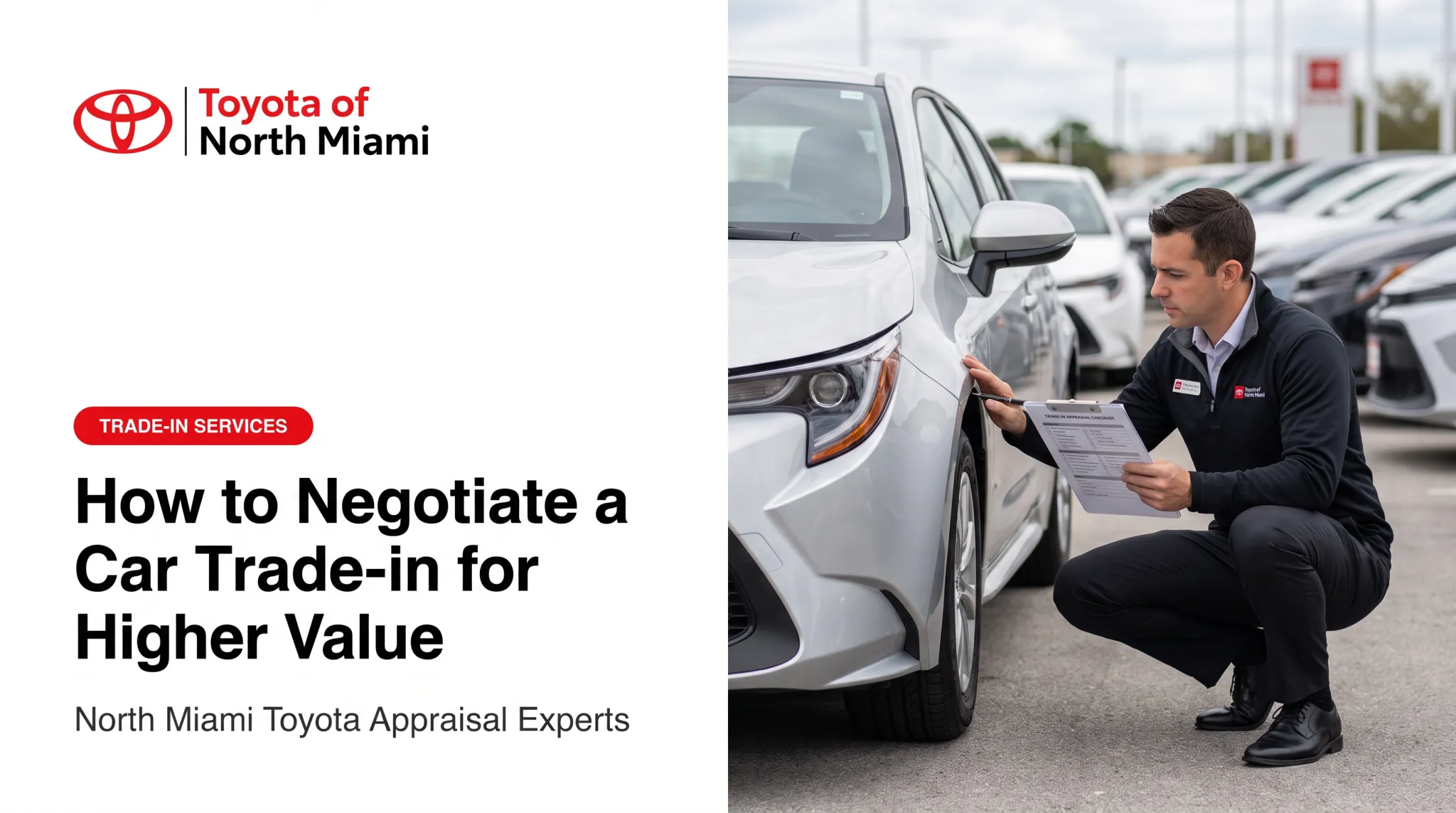
Dealers look at exterior and interior wear separately from mechanical health. On the outside and in the cabin, they're checking for:
- Dents, scratches, paint damage, and rust spots
- Cracked or chipped glass
- Stains, odors, and upholstery wear
- Missing trim pieces or broken controls
Ordinary wear (a worn driver's seat bolster, light swirl marks) reads differently than damage that needs real reconditioning, like a cracked windshield or torn seats.
Mechanically, appraisers watch for:
- Dashboard warning lights
- Rough shifting, soft brakes, or steering play
- Suspension noise and weak air conditioning
- Battery health and tire tread depth across matching sets
A lot of this only shows up on the road. That's why a test drive matters: idle noise, hesitation on acceleration, or a pull under braking rarely surfaces during a walk-around.
History, Demand, and Modifications
Vehicle history carries real weight: accidents, flood or storm damage, branded titles, odometer discrepancies, number of prior owners, and maintenance consistency all factor in. If your car has a known issue, disclose it. Hiding a prior accident or a salvage title doesn't protect your offer; it just delays the deal when the dealer finds it anyway.
Market and dealership-specific demand also move the number. A dealer already stocked with five similar sedans has less appetite for a sixth. Seasonal interest, regional preference, and whether the car is headed for the dealer's own retail lot or straight to auction all play a role.
As for accessories and modifications: factory options generally help, but aftermarket wheels, lift kits, custom audio, window tint, roof racks, and towing packages don't automatically add their purchase price to the offer. Removed original parts (like a swapped-out factory exhaust) can actually hurt it.
How Does a Dealer Appraise and Price a Trade-In?
The Appraisal Walk-Through
Most appraisals follow a similar sequence:
- Collect vehicle details and verify the VIN and mileage
- Walk-around inspection of the body and exterior
- Check interior features and review your documents
- Mechanical inspection, plus a test drive when conditions allow
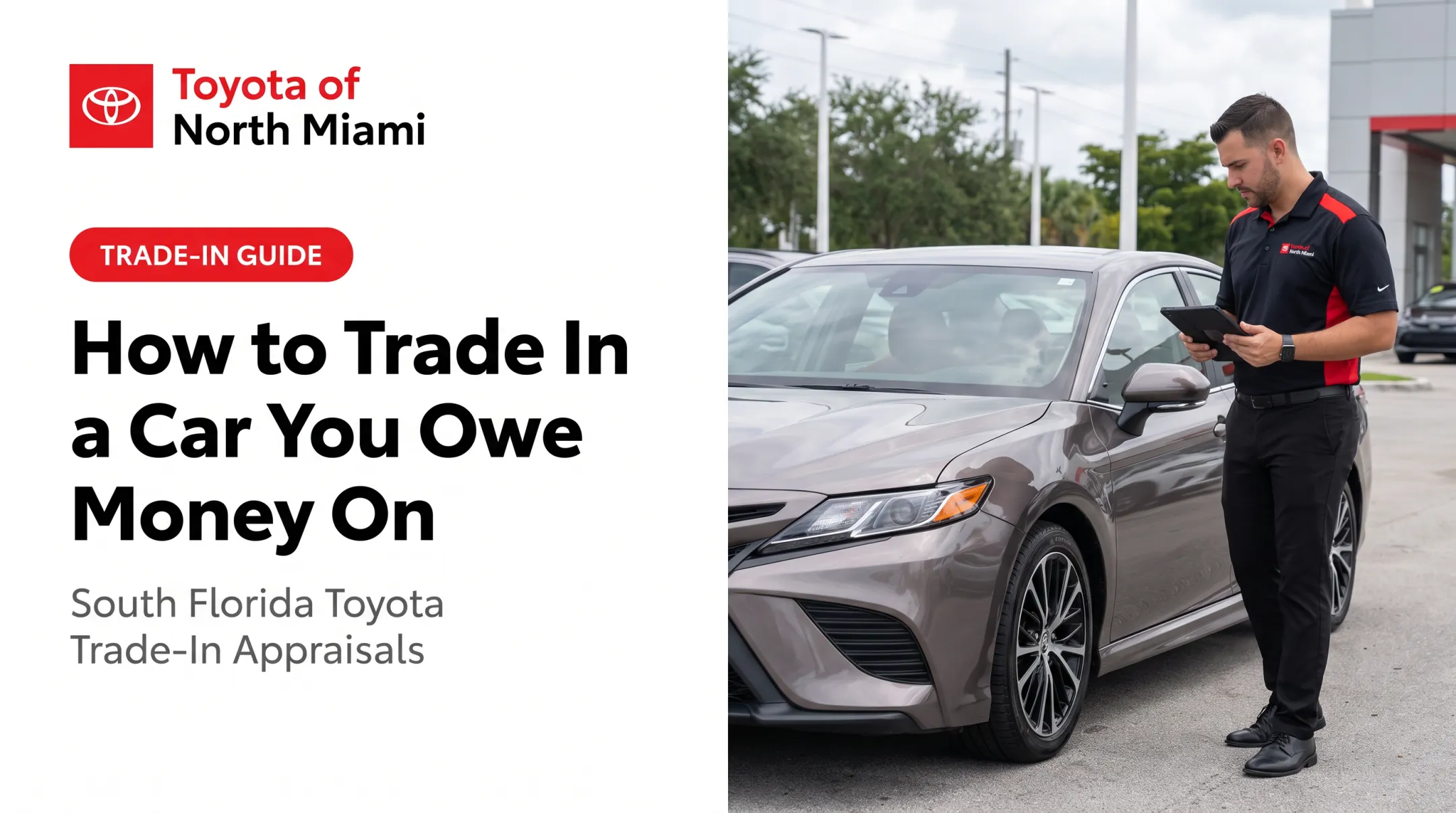
Toyota of North Miami's online Trade-In Appraisal form, for example, requests year, make, model, VIN, and mileage up front. It then collects condition ratings for the body, engine, glass, exhaust, tires, transmission, and interior, along with vehicle-history and title details. The in-person portion typically runs 20 to 30 minutes.

Trade-In vs. Retail vs. Wholesale Value
These terms get used interchangeably, but they mean different things:
| Value type | What it reflects |
|---|---|
| Retail asking price | What a dealer lists the car for on its lot |
| Private-party value | A starting point for a sale between two individuals, as-is |
| Wholesale/auction value | What a dealer might pay or receive at auction, before retail prep |
| Trade-in value | What a dealer pays assuming an accurate condition appraisal |
A dealer's trade-in offer sits below retail because it has to account for the cost and risk of acquiring, preparing, marketing, and reselling your car, not just what it might eventually sell for.
Reconditioning and Why the Offer Can Change
Expected reconditioning work gets factored into the number:
- New tires, brake service, or paint correction
- Deep interior cleaning and glass repair
- Deferred maintenance or diagnostics
The more uncertain the cost, the more conservative the offer tends to be.
That's also why an initial online estimate can shift once you arrive. If your car's actual condition, mileage, title status, loan balance, or equipment differs from what you entered online, expect the number to move. Review the whole transaction (trade amount, selling price, fees, financing terms, and payoff) rather than fixating on the monthly payment alone.
What Documents and Information Should You Bring?
Bring these items to speed up the appraisal:
- Valid state-issued photo ID for all title holders
- Title or current payoff information (all title holders should plan to attend)
- Current registration and proof of insurance
- Loan account details and payoff quote
- Service records, repair receipts, and the owner's manual
- All keys and remotes
If a previously paid-off lien is still listed on your title, bring the lien release too. Missing originals or paperwork can lead to an adjusted offer.
Service records help, but they don't replace a physical inspection. A folder of oil-change receipts tells a dealer about maintenance habits, not current brake wear. Include digital records, warranty paperwork, and recall completion documentation if you have them.
Before you hand over the keys, clear personal data: delete paired phones and synced contacts, remove garage-door programming, and disconnect any connected-vehicle app or subscription.
Disclose known issues up front. A warning light, a past fender-bender, a branded title, or a non-factory modification won't disappear during inspection. Flagging it early prevents a renegotiation later.
How Equity Affects Your Trade-In
Equity is simply your trade-in value minus your loan payoff.
| Scenario | Trade-in value | Loan payoff | Result |
|---|---|---|---|
| Positive equity | $15,000 | $12,000 | $3,000 toward your next vehicle |
| Negative equity | $15,000 | $18,000 | $3,000 shortfall to cover or finance |
Positive equity can be applied toward your next purchase. Negative equity usually means an additional payment at signing or rolling the shortfall into a new loan, subject to lender approval.
That shortfall adds principal and interest over the life of the loan, not just a few dollars to the payment.
CFPB's 2024 report found that 11.6% of vehicle loans in its sample carried negative equity. Those borrowers paid an average monthly payment of $626, compared to $496 for positive-equity trade-ins and $493 for loans with no trade-in at all.

Get a current payoff quote directly from your lender. The balance on last month's statement rarely matches the exact amount needed to close the account. Toyota of North Miami's trade-in appraisals often show customers who owe more than the car is worth, which is one reason to check this number before you negotiate anything else.
Timing matters too. Weigh reliability, upcoming repairs, remaining warranty coverage, loan balance, and affordability, not just whether the odometer hit a round number.
How to Prepare and Negotiate a Trade-In
Low-Cost Prep That Actually Helps
Start cheap:
- Wash and vacuum the car thoroughly
- Clear out clutter and personal items
- Inflate tires to spec
- Replace burned-out bulbs
- Confirm all included equipment (floor mats, cargo covers, chargers) is present
Think carefully before spending on bigger repairs. Edmunds' trade-in guide cautions that fixing dents or installing new tires rarely pays back its full cost in a higher offer. A dealer can often handle the same work for less through its own shop.
Research, Ask Questions, and Negotiate as Separate Deals
Check several valuation guides and comparable listings using your exact year, trim, mileage, drivetrain, and condition. Treat those numbers as a starting point, not a guaranteed offer.
When you get an appraisal, ask what specifically affected the value: condition findings, assumptions made, or whether the offer depends on verifying history or condition.
Negotiate your trade-in value and your new vehicle's price as two separate numbers before combining them. Then double-check the math across the buyer's order, payoff amount, taxes, fees, down payment, and financing total.
Avoid these moves at the table:
- Calling the car "perfect" when you know about a problem
- Withholding accident or title information
- Treating one online estimate as the final word
- Revealing a fixed monthly-payment target before discussing the full deal
- Signing anything under pressure without reading it first
If you'd rather skip the guesswork, Toyota of North Miami's Trade-In Appraisal process starts online. Enter your vehicle's details for an initial estimate, then bring the car in for a no-obligation, 20-to-30-minute inspection. The value can go toward a new Toyota purchase, financing, a lease, or a straight cash sale. Reach the sales team at (305) 402-4536. As with any dealership, the final offer still depends on inspection results, documentation, loan details, and current market conditions.
Frequently Asked Questions
Do car dealers test drive your trade-in?
Yes, when practical. Dealers typically test-drive a trade-in to check starting, acceleration, shifting, braking, steering, suspension, warning lights, and unusual noises that a walk-around inspection won't reveal.
What do car dealerships look at when evaluating a trade-in?
They assess condition, mileage, age, vehicle history, title status, maintenance records, installed equipment, current market demand, your loan payoff, and the reconditioning work the car will likely need before resale.
What should I avoid saying to a car dealer?
Don't exaggerate your car's condition, hide known damage or title issues, treat a single online estimate as guaranteed, or focus only on the monthly payment instead of the full transaction.
How can I prepare my car for a trade-in?
Give it a basic wash and vacuum, remove personal items and connected data, gather your service records and all keys, and handle inexpensive fixes. Skip major repairs that are unlikely to pay for themselves.
Is trade-in value the same as private-party value?
No. Trade-in and private-party values differ because a dealer has to account for acquisition, inspection, reconditioning, selling costs, and inventory risk — plus the convenience of handling everything in one visit.