
The outcome depends on three things: your vehicle's current trade-in value, your lender's official payoff amount, and how any gap between those two figures gets handled. Many drivers assume an outstanding loan is automatically a problem. It isn't.
If your car is worth more than you owe, that positive equity can fund part of your next purchase. If you owe more than it's worth, that negative equity doesn't vanish — it has to be paid upfront or built into your new loan. This guide walks through verifying your payoff, estimating your car's value, calculating equity, comparing your options, and checking the paperwork before you sign anything.
Key Takeaways
- A financed car can generally be traded in before the loan is paid off in full
- Always request an official payoff quote — don't rely on your monthly statement balance
- Negative equity must be paid separately or rolled into the new loan; it doesn't disappear
- Compare the full amount financed, APR, loan term, and total cost, not just the monthly payment
- Get every promise about your old loan and trade-in balance in writing on the final contract
How to Trade In a Car You Owe Money On
Step 1: Request the Current Loan Payoff Amount
Your monthly statement balance isn't your payoff amount. Call your lender or loan servicer and ask for a payoff quote valid through a specific date. This figure accounts for accrued interest, fees, and timing adjustments that a statement simply doesn't capture.
Per-diem interest keeps adding up daily, so a payoff quote is only good through its stated expiration date. The CFPB's trade-in guidance recommends confirming the payoff figure directly with your lender rather than estimating from old statements.
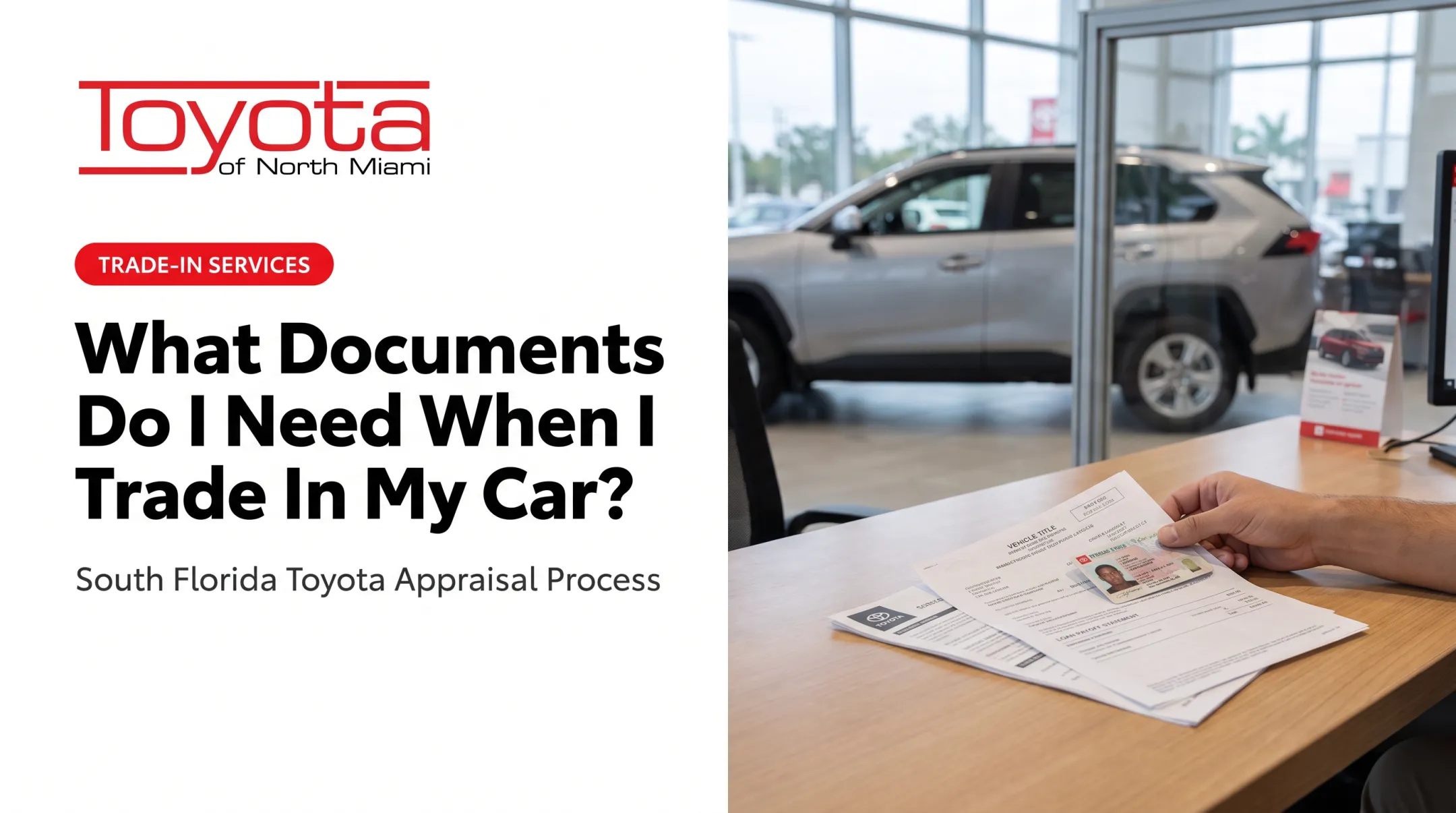
Before you head to a dealership, gather:
- Lienholder name and payoff mailing or electronic payment address
- Your loan account number
- Any title or lien-release instructions your lender requires
Step 2: Determine the Vehicle's Trade-In Value
Research your car's trade-in value using a reputable pricing guide, then be honest about condition, mileage, accident history, and installed equipment. Title status matters too — a salvage or rebuilt title drags down value no matter how clean the car looks.
Treat any online number as a starting point, not a guaranteed offer. Most dealers require a physical inspection before issuing a firm trade-in figure, and reconditioning needs or accident history can shift that number lower than expected.
Toyota of North Miami's trade-in appraisal tool walks you through this directly: enter your vehicle's year, make, model, VIN, mileage, and condition details for body, engine, glass, tires, and interior. The dealership returns an Edmunds Instant Cash Offer, typically within 20 to 30 minutes. You can bring that figure in for a no-obligation in-person appraisal before deciding anything.
Step 3: Calculate Equity and Choose How to Handle It
The math is simple:
Estimated trade-in value − official payoff amount = estimated equity

- Positive number: you have positive equity
- Negative number: you have negative equity
From there, you have options:
- Apply positive equity as a down payment toward your next vehicle
- Pay negative equity in cash to close the gap before financing
- Negotiate a less expensive replacement so the new loan absorbs less shortfall
- Wait and pay down your current loan until equity improves
- Roll the shortfall into a new loan — only after you understand exactly what that costs over time
Toyota of North Miami's "Sell Us Your Car" program is built for drivers in the negative-equity situation, aiming to get customers into a new Toyota with little to no money down and, in some cases, a lower monthly payment than they currently have.
Step 4: Review and Complete the Transaction
Before signing anything, compare the buyer's order and financing disclosures against what you agreed to:
- Trade value and payoff amount
- Cash down payment
- Amount financed, APR, term, and monthly payment
- Total of payments over the life of the loan
Confirm in writing how and when the old lender gets paid. Keep copies of everything you sign, and follow up with your previous lender a week or two later to verify the account shows as closed and the lien has been released.
When and Whether to Trade In — and What You Need Beforehand
Trading in a financed vehicle makes sense when the replacement solves a real transportation need and the full deal , not just the payment, fits your budget. It's a weaker move when the only goal is shrinking an unaffordable payment, since rolling debt forward rarely fixes that problem.
Positive-Equity and Negative-Equity Situations
Positive equity functions like a credit toward your next car : it reduces the amount you need to finance. Negative equity does the opposite: it increases what you'll borrow and leaves you with less financial cushion from day one of the new loan.
Consider waiting if:
- You have substantial negative equity
- Your budget is already stretched thin
- You still have a long remaining loan term
- There's no urgent need to replace your current vehicle
Documents, Tools, and Readiness
Before you start shopping, pull together:
- Lender payoff quote and current loan account details
- Registration and title information, plus your vehicle's VIN
- Service records and any accident history
- All keys, remotes, and owner's manuals
Toyota of North Miami's intake process asks all title holders to be present with valid photo ID and payoff information, and notes that missing keys or manuals can adjust the offer. Set a maximum affordable budget first, then compare financing options before you fall in love with a specific trim level.
Key Factors That Affect the Trade-In Result
Several connected figures determine your final outcome. Change the replacement vehicle or the loan structure, and the whole transaction shifts.
Payoff Amount and Timing
Payoff quotes expire. Per-diem interest keeps accruing daily until the lender actually receives payment, so a quote from three weeks ago won't match what you owe today. Ask about early-payoff terms and expect a short delay before the lien release processes.
Trade-In Appraisal and Condition
Mileage, maintenance history, damage, tire wear, modifications, and title status all shape a dealer's appraisal. A trade-in offer will typically land lower than what you might get selling privately. That gap reflects the dealer's reconditioning costs and resale risk, not just haggling.
Equity Treatment and Amount Financed
Ask your dealer specifically whether equity is:
- Credited as a down payment
- Paid out in cash
- Deducted from another line item
- Added to the new loan balance
"Paying off" your old loan isn't the same as forgiving negative equity. The shortfall just moves into your new contract unless you pay it separately.
Loan Term, Interest, and Loan-to-Value Risk
Rolling negative equity forward increases your amount financed, your total interest, and your monthly payment burden.
It's a real pattern right now: in Q2 2026, 29.6% of new-vehicle trade-ins carried negative equity averaging $6,884, according to Edmunds' negative-equity report. Buyers in that group paid considerably more in projected lifetime interest than buyers without rolled-over debt.

Starting a new loan already underwater on the vehicle's value raises the odds you'll be in the same spot again at your next trade-in.
Mistakes, Troubleshooting, and Alternatives
Mistake #1: Fixating on the monthly payment. A lower payment can hide a longer term, a higher amount financed, or rolled-in fees. Always check APR, trade allowance, negative-equity amount, add-ons, and total repayment cost together.
Mistake #2: Assuming "payoff" means the balance disappears. An advertised payoff just means the dealer is handling that step: it doesn't mean the shortfall was forgiven. Reconcile your lender's payoff figure against the new contract line by line.
If the numbers don't match your expectations (trade value, payoff, down payment, or amount financed), pause before signing. Ask for an itemized buyer's order and financing disclosure.
If title or payoff timing looks unclear, call both your old lender and the dealership's finance office to confirm lienholder details and who's responsible for any payment due during the transition.
Waiting and Paying Down the Current Loan
Sometimes the better move is no move at all. If your loan allows principal-only payments, continuing to pay down the balance, or simply waiting for the vehicle's value to catch up, can avoid carrying negative equity into a new contract entirely.
Selling Privately or Paying the Difference
A private sale often nets more than a trade-in, and paying the equity gap in cash avoids financing it at all. The tradeoff: more time, more paperwork, and you'll need your lender's exact payoff and title-release requirements before you can legally sell.
Financing or Trading Through a Dealership
Toyota of North Miami offers an online trade-in appraisal tool, a payment calculator, and a credit application that shoppers can complete from home before visiting the lot, useful whether you're comparing new, pre-owned, or certified pre-owned Toyota models. None of that replaces doing your own math first.
Whatever route you take, independently check any dealership-assisted numbers against your lender's payoff quote, the written appraisal, and your own budget before signing.

Conclusion
Trading in a car with an outstanding loan is entirely possible once you understand three numbers: the payoff amount, the trade-in value, and the resulting equity position. Getting those straight before you negotiate puts you in control of the conversation instead of reacting to whatever the finance desk presents.
The safest approach is comparing the complete transaction (not just the payment) and getting any negative-equity handling spelled out in writing. Decide based on whether the deal fits your budget, not on urgency.
If you're weighing a trade-in, start by gathering your loan and vehicle details. Toyota of North Miami can walk through your payoff, appraisal, and equity numbers with you before you commit.
Frequently Asked Questions
Can you trade in a car you owe money on?
Yes. A financed car can generally be traded in, with your existing lender's payoff handled as part of the transaction. You'll still need to account for any positive or negative equity in the deal.
How do I trade in a car with negative equity?
The gap between your payoff amount and trade value must be paid separately or added to your new loan. Compare the resulting amount financed and total cost before agreeing to roll it forward.
Can I roll my current car loan into a new one?
Many lenders allow negative equity to be included in a new loan, depending on your credit, the vehicle, and the loan structure. Doing so increases your balance and often extends your repayment timeline.
Can I get another car if I already have one financed?
Yes. An existing financed vehicle doesn't automatically block a second purchase. Lenders will still evaluate your income, credit, current debt obligations, down payment, and how your existing loan is being handled.
How soon can you trade in a financed car?
There's generally no mandatory waiting period. Get a current payoff quote and confirm title, lien, and lender requirements before you start the trade-in process.
When should you not trade in your car?
Avoid trading in when the replacement payment would be unaffordable, your negative equity is substantial, the contract terms are unclear, or you're replacing a reliable vehicle without a real financial or practical reason.