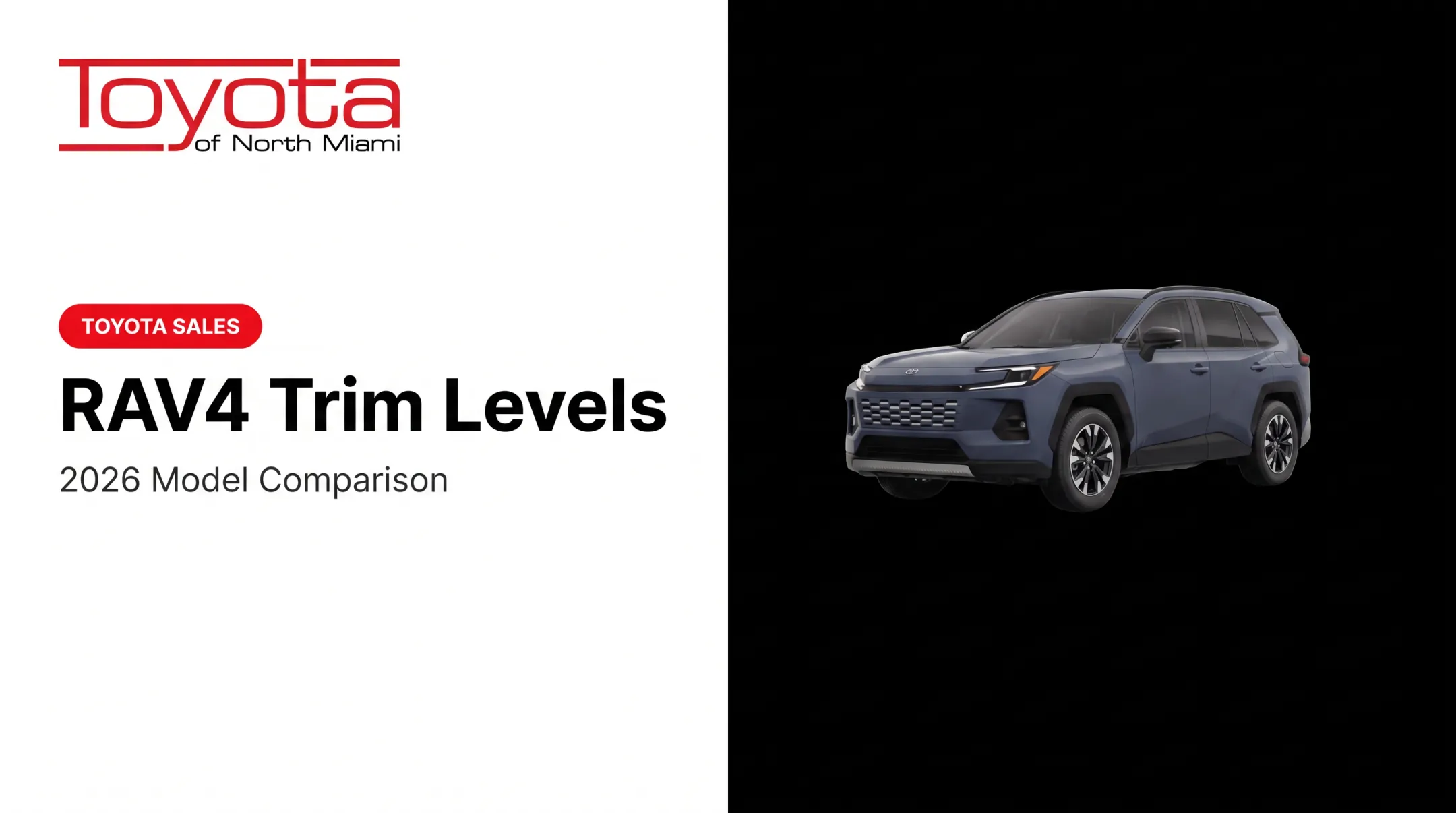
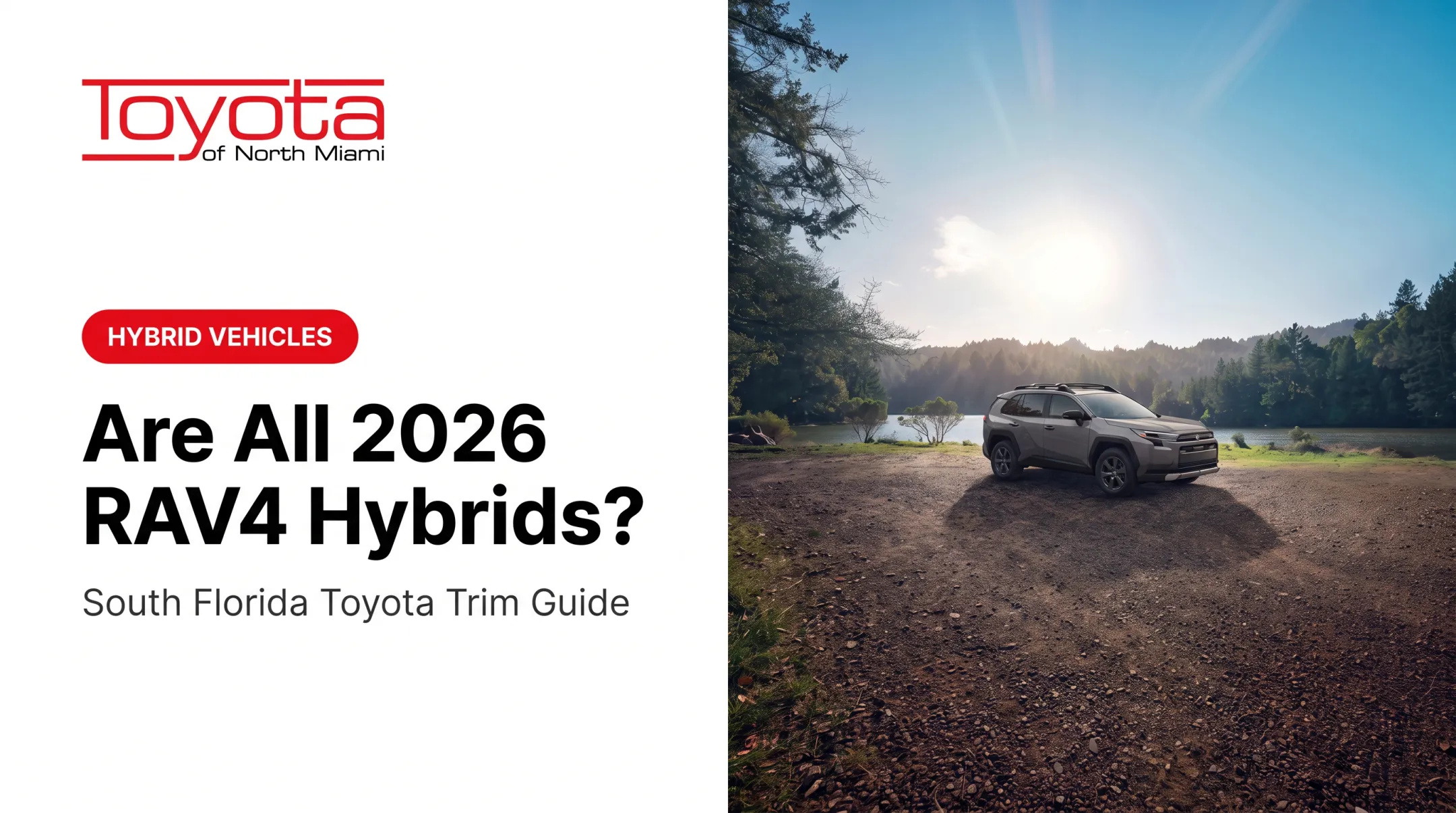
That shift matters. Many shoppers struggle with a simple question: is a hybrid-only RAV4 still the practical, affordable choice it used to be, or does the redesign introduce new trade-offs? The lineup now spans a conventional hybrid starting at $31,900 and a plug-in hybrid starting at $41,500, according to Toyota's official pricing.
This guide evaluates the 2026 RAV4 as it actually is today, using Toyota's own specifications and independent test results, not assumptions carried over from older model years. We'll cover powertrains, fuel economy, comfort, technology, space, pricing, and how it stacks up against rivals like the Honda CR-V and Subaru Forester.
Key Takeaways
- Every 2026 RAV4 is now a hybrid or plug-in hybrid, with EPA combined ratings reaching 43 mpg
- Rear legroom (37.8 inches) trails the CR-V Sport Hybrid AWD and Forester Hybrid, worth checking in person
- Toyota Safety Sense 4.0 comes standard across the lineup, with pricing starting at $31,900
- Reliability predictions remain based on prior generations, not confirmed data on the redesigned model
- The right pick depends on your priorities: efficiency and cargo room, or rear-seat space and ride comfort
A quick source note: figures below come from Toyota's official specifications, independent outlets like Car and Driver and Edmunds, and current dealer pricing. We've flagged predictions versus confirmed data where it matters.
What Is New or Different About the 2026 Toyota RAV4?
This is a full generational redesign, not a mid-cycle refresh. Toyota rebuilt the suspension with new coil springs, shocks, and bushings, and added a new Arene software platform that supports over-the-air updates.
The biggest change sits under the hood: there is no gas-only RAV4 for 2026. Every trim runs hybrid or plug-in hybrid power.
Hybrid vs. Plug-in Hybrid: The Real Difference
The conventional Hybrid (HEV) never needs to be plugged in. It uses electric assistance and regenerative braking to boost efficiency, then runs on gasoline otherwise.
The Plug-in Hybrid (PHEV) adds a larger battery you charge externally. Depending on trim, you get 49 to 54 miles of EPA-rated electric-only range, per Toyota's PHEV brochure.
Practical differences:
- HEV: No charging required, lower purchase price, FWD or AWD available
- PHEV: AWD only, 324 horsepower, Level 2 charger recommended for daily use
- HEV fuel economy: 38-43 mpg combined, depending on trim
- PHEV efficiency: 86-101 MPGe, depending on trim
Trim Walk-Through and Pricing
The Hybrid lineup runs six trims: LE, SE, XLE Premium, Woodland, XSE, and Limited. Base MSRP spans $31,900 to $43,300 before destination charges. The PHEV offers four trims (SE, Woodland, XSE, and GR SPORT) priced from $41,500 to $48,500.

Standard on every trim:
- 12.3-inch digital gauge cluster
- 10.5-inch touchscreen (12.9-inch available on higher trims)
- Wireless Apple CarPlay and Android Auto
- Toyota Safety Sense 4.0
Toyota backs the hybrid battery with a 10-year/150,000-mile warranty, separate from the standard 3-year/36,000-mile basic coverage.
What Are the Biggest Pros of the 2026 Toyota RAV4?
Hybrid Efficiency Without Plugging In
The LE, SE, and XLE Premium FWD trims hit 43 mpg combined (47 city/40 highway), per EPA fuel economy data. Real-world results track reasonably close: Edmunds recorded 38.9 mpg over a 2,709-mile long-term test with an XLE Premium FWD.
Highway driving tells a different story. Car and Driver measured just 36 mpg at 75 mph in a Limited AWD, a reminder that EPA numbers reflect mixed driving rather than sustained interstate speeds.
Practical SUV Utility
The Hybrid offers 37.8 cubic feet of cargo space behind the second row, expanding to 70.4 cubic feet with seats folded. That's more seats-up room than the Mazda CX-50 Hybrid (29.2 cu ft) and Subaru Forester Hybrid (27.5 cu ft). Standard touches include:

- 60/40 split, fold-flat rear seats
- Height-adjustable cargo deck board
- Tonneau cover and cargo-area light
- Covered center console with reversible armrest tray
Updated Technology and Safety
Toyota Safety Sense 4.0 is standard across every trim and includes pre-collision braking with pedestrian detection, Lane Tracing Assist, and automatic high beams. Higher trims add:
- Panoramic View Monitor with 3D 360-degree camera
- Traffic Jam Assist
- Front and rear parking assist with automatic braking
- Wi-Fi Connect hotspot capability
All-Weather Capability (With Limits)
Available AWD and the Woodland trim's 8.5-inch ground clearance, all-terrain tires, and 3,500-lb tow rating give the RAV4 genuine light-adventure chops. It handles snow, gravel, and light trails well, but it is not a 4Runner substitute for serious rock crawling.
Ownership and Resale
Consumer Reports predicts above-average reliability for the 2026 Hybrid, but that forecast leans on prior-generation data, not measured results from this redesign.
Toyota issued a recall in October 2026 covering roughly 31,000 PHEVs for a software issue that could cut power while driving. Check VIN status before buying.
What Are the Biggest Cons of the 2026 Toyota RAV4?
Cabin Materials May Feel Less Polished
MotorTrend's first test praised the redesigned center console but flagged hard plastics, thinly padded armrests, and rear doors that open less widely than competitors. Car and Driver echoed the hard-plastic complaint, though that assessment came from a preproduction vehicle; retail units may differ slightly.
Comfort Requires an In-Person Check
Specs don't capture ride feel. MotorTrend noted jitteriness over broken pavement on larger-wheel trims, while Car and Driver described the ride as "supple" on a different configuration. That inconsistency alone is a reason to test-drive before buying:
- Check lumbar and thigh support on a drive longer than a parking-lot loop
- Compare center-console width against your daily items
- Listen for road and engine noise at highway speed
Space Gains Are Incremental
Rear legroom sits at 37.8 inches, noticeably behind the CR-V Sport Hybrid AWD's 41.0 inches and the Forester Hybrid Premium's 39.4 inches. Families regularly carrying adult rear passengers or installing rear-facing car seats should measure this against their actual needs.

Price and Availability Affect Value
Toyota's quoted MSRP excludes destination charges and dealer fees. A current lease example from Toyota of North Miami lists a RAV4 LE FWD at $299 per month with $4,993 due at signing, but these terms shift monthly and require approved credit. Always ask for an out-the-door number before comparing vehicles.
Strong Competition Means Trade-offs
| Vehicle | RAV4 Advantage | Rival Advantage |
|---|---|---|
| Honda CR-V Hybrid | More cargo room (HEV) | 41.0-in rear legroom, quieter cabin |
| Subaru Forester Hybrid | More seats-up cargo | 39.4-in rear legroom |
| Hyundai Tucson Hybrid | — | MotorTrend rates ride/steering higher |
| Mazda CX-50 Hybrid | More cargo room | — |
Who Should Buy the 2026 Toyota RAV4?
The RAV4 Hybrid suits buyers who want a two-row compact SUV with strong fuel economy, real cargo capacity, and the option to skip charging entirely. If you want AWD confidence for snow or light trails without a second thought about range anxiety, the LE AWD at $35,892 (46/39 mpg) is a solid entry point.
When the Plug-in Hybrid Makes Sense
The PHEV earns its higher price tag when:
- You have reliable Level 2 charging at home or work
- Your daily commute falls within the 49-54 mile electric range
- You can justify the roughly $10,000 premium over the base Hybrid LE
Without consistent charging access, you won't see the PHEV's efficiency advantage. You'll just be hauling a heavier battery.
Who Should Compare Alternatives First
- Buyers wanting the roomiest possible rear seat (look at the CR-V or Forester)
- Shoppers prioritizing cabin refinement over cargo capacity
- Anyone wanting a lower entry price than $31,900
- Drivers who want a fully electric vehicle rather than a hybrid
Pre-Purchase Checklist
- Get an out-the-door quote, not just the MSRP, since destination and fees add up fast
- Verify the window sticker matches advertised equipment
- Check current incentives and financing terms, since they change monthly
- Sit in the back seat with your actual car seat or gear
- Confirm recall status by VIN, especially for PHEV models
- Test-drive on both city streets and highway to judge ride and noise
If you're ready to compare trims in person, Toyota of North Miami's inventory includes 2026 RAV4 Hybrid and Plug-in Hybrid models in stock, in transit, or in the build pipeline. Their team can walk through current lease and loan options, value a trade-in, or schedule a test drive around North Miami.
Frequently Asked Questions
Should I buy a Toyota RAV4 right now?
It depends on current pricing, inventory, and incentives in your area, plus whether the RAV4's efficiency and cargo space outweigh its rear-seat room and cabin trade-offs. Get an out-the-door quote and compare it against rival hybrid SUVs before deciding.
What years should I avoid when buying a Toyota RAV4?
There's no universal "bad year" list that replaces checking recalls, service history, and reliability data for the specific model year you're considering. This 2026 evaluation applies only to the new redesign, not used RAV4s from prior generations.
Is the 2026 Toyota RAV4 available as a hybrid or plug-in hybrid?
Yes, both. The conventional Hybrid never needs charging and starts at $31,900. The Plug-in Hybrid offers 49-54 miles of electric-only range but requires a Level 2 charger for practical daily use and starts at $41,500.
How fuel-efficient is the 2026 Toyota RAV4?
EPA combined ratings range from 38 mpg (Woodland AWD) to 43 mpg (LE, SE, and XLE Premium FWD). Real-world results vary with weather, speed, and driving habits. Independent testers have recorded 35 to 39 mpg depending on conditions.
Is the 2026 Toyota RAV4 good for families?
It offers solid cargo space and standard Toyota Safety Sense 4.0, but rear legroom (37.8 inches) trails some rivals. Test-fit car seats and rear-door width before buying; MotorTrend flagged a narrower door swing than competitors.